The Antique Wrench Patent Archive
In 1841, Loring Coes of Worcester, Massachusetts patented a wrench whose jaw was moved by a knurled worm at the handle — thumb rolls, jaw glides, done. The design was so right that his company made it, barely altered, for the next hundred years, and "Coes wrench" and "monkey wrench" became close to the same word.
This site collects what every other inventor of the nineteenth century did about it. The pre-1900 wrench record is one long argument with Coes: sliding jaws locked by cams, eccentrics, wedges, and gravity pawls; spring-loaded quick-adjusts that promised one-hand operation to a man on a ladder; alligator jaws that bit anything approximately hexagonal; combination tools that were a wrench, hammer, screwdriver, and regret in one forging. Implement wrenches rode along free with every mower and buggy. And at the century's end came the bicycle wrenches — small, precise, and lovely, tools for a machine people were in love with.
Wrench collecting is organized exactly the way this site is: by mechanism and by the patent date stamped or cast into the tool. Read the date off the wrench in your hand, look it up here, and you get the original drawing at full size, the claim in plain English, and our view of whether the mechanism was a real improvement or a beautiful way to skin a knuckle.
The tool-patent record is documented by the collector-built DATAMP project, which we gladly point to. The drawings here are U.S. government work — public domain, free to print, frame, or put on a shop wall.
⚙ Begin here
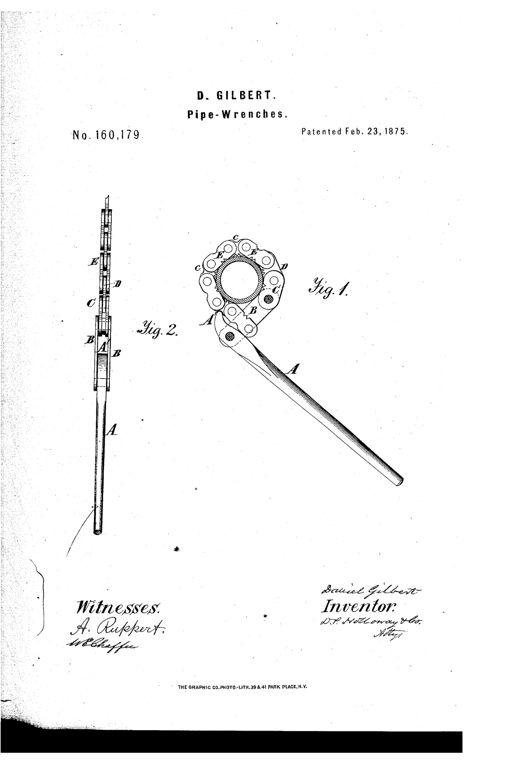 IMPROVEMENT IN PIPE-WRENCHES.Daniel Gilbert · February 23, 1875
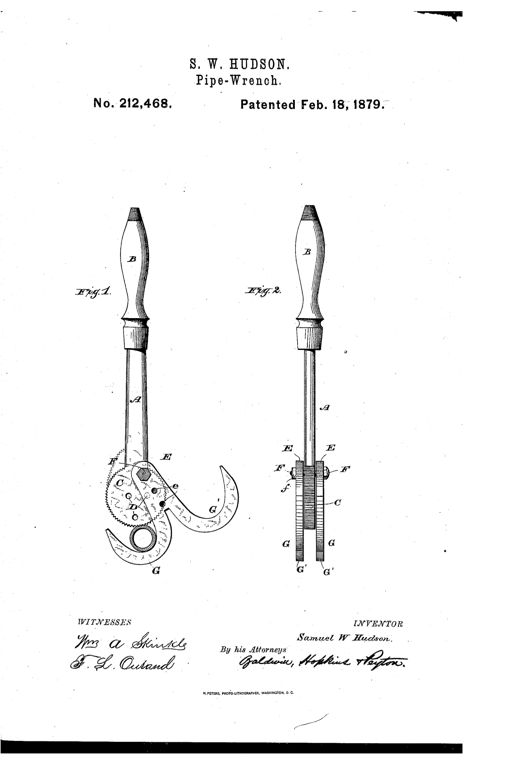 IMPROVEMENT IN PIPE-WRENCHESSamuel W. Hudson · February 18, 1879
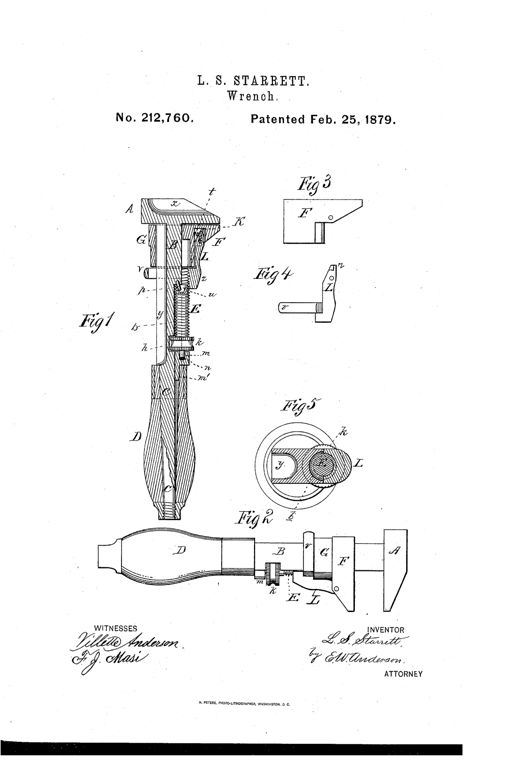 IMPROVEMENT IN WRENCHESLaroy S. Starrett · February 25, 1879
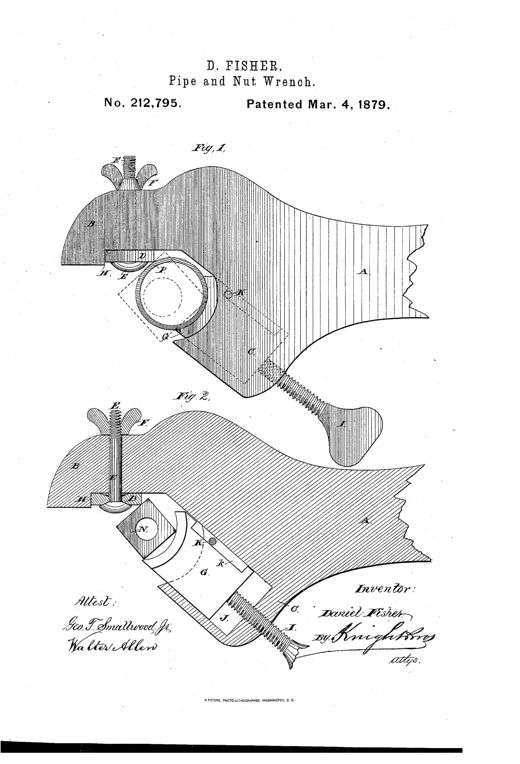 IMPROVEMENT IN PIPE AND NUT WRENCHESDaniel Fisher · March 4, 1879
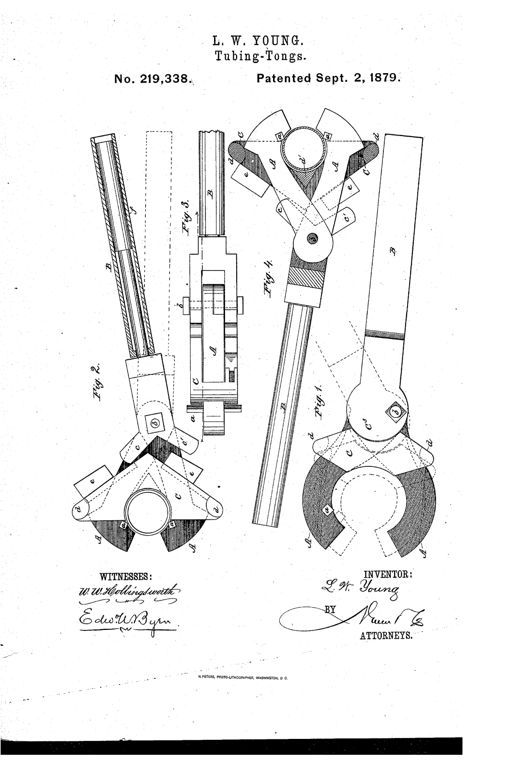 IMPROVEMENT IN TUBING-TONGSLemuel W. Young · September 2, 1879
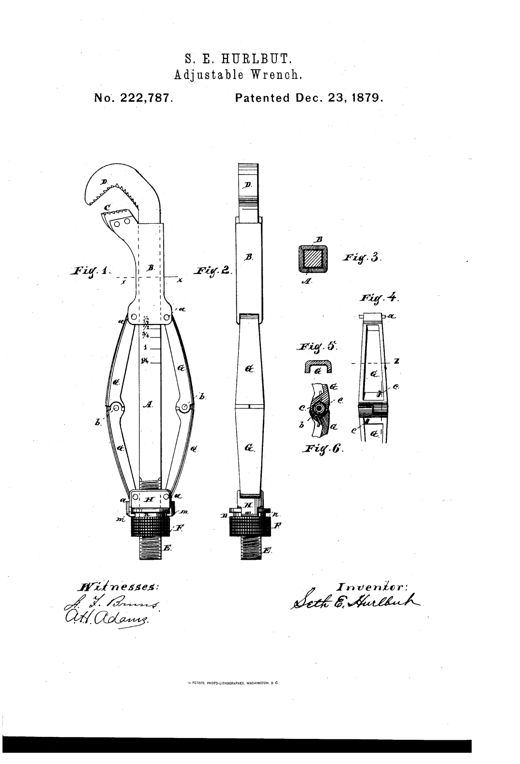 IMPROVEMENT IN ADJUSTABLE WRENCHES.Seth E. Hurlbut · December 23, 1879
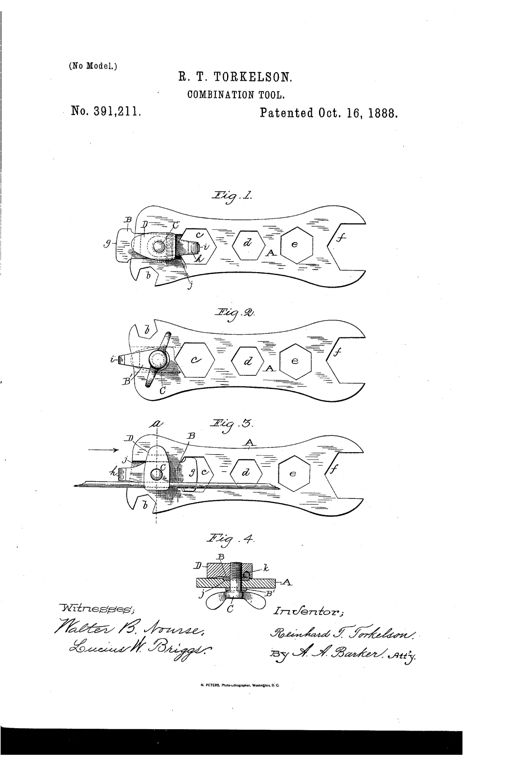 COMBINATION-TOOLReinhard T. Torkelson · October 16, 1888
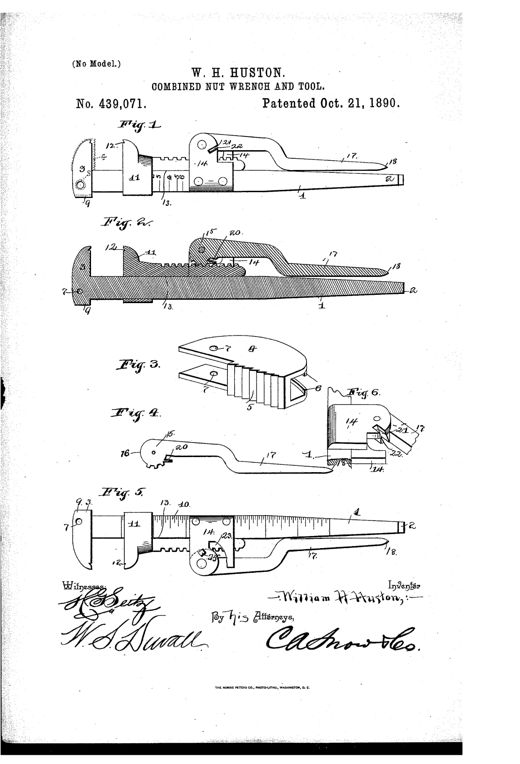 COMBINED NUT-WRENCH AND TOOLWilliam Henry Huston · October 21, 1890