COMBINATION-TOOL
Assigned to Iver Johnson: an 1888 bicycle multi-tool with a spoke-clamping trick
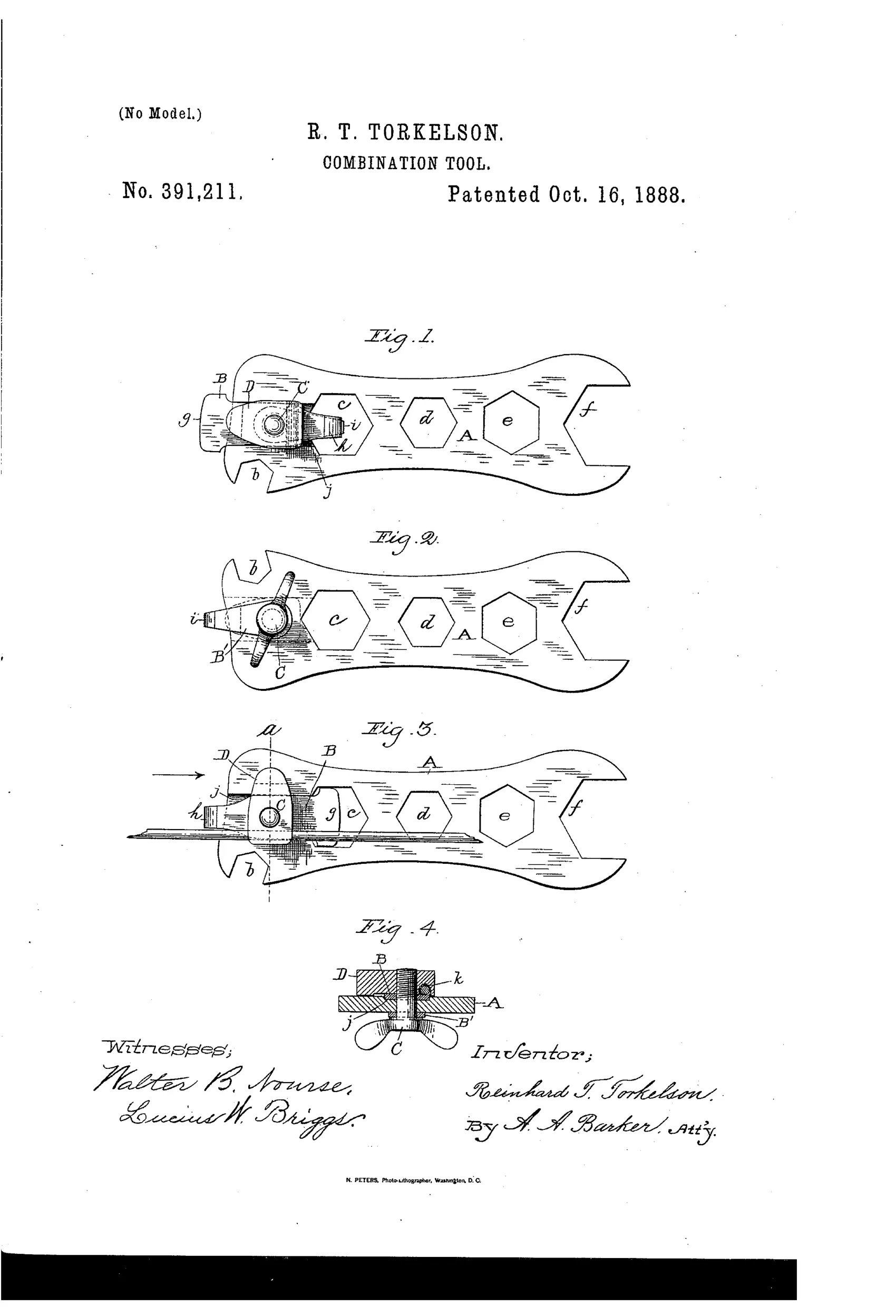
Combination wrench and screw-driver tool for bicycles
⚙ How it works
A flat wrench body A has several hexagonal openings of different sizes to fit the various bolts of a velocipede. One or more detachable, adjustable screw-drivers (B, B') are mounted on one end of the wrench, held in position by a set-screw C and a clamping plate D. The clamping plate also has a grooved recess k that can grip a bicycle spoke, allowing the tool to be used as a spoke wrench by clamping the spoke between the plate and the wrench when the set-screw is tightened.
⚙ What was claimed
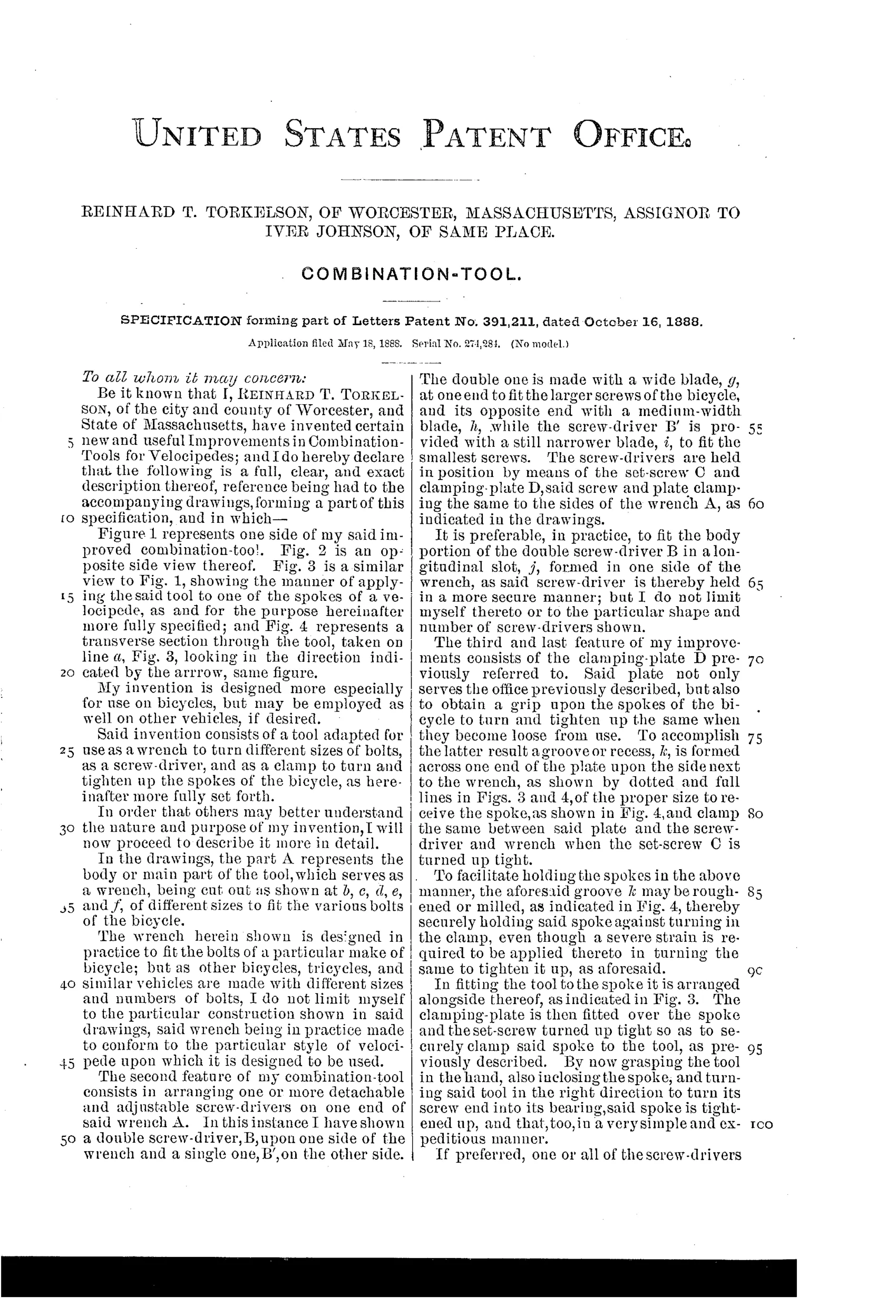
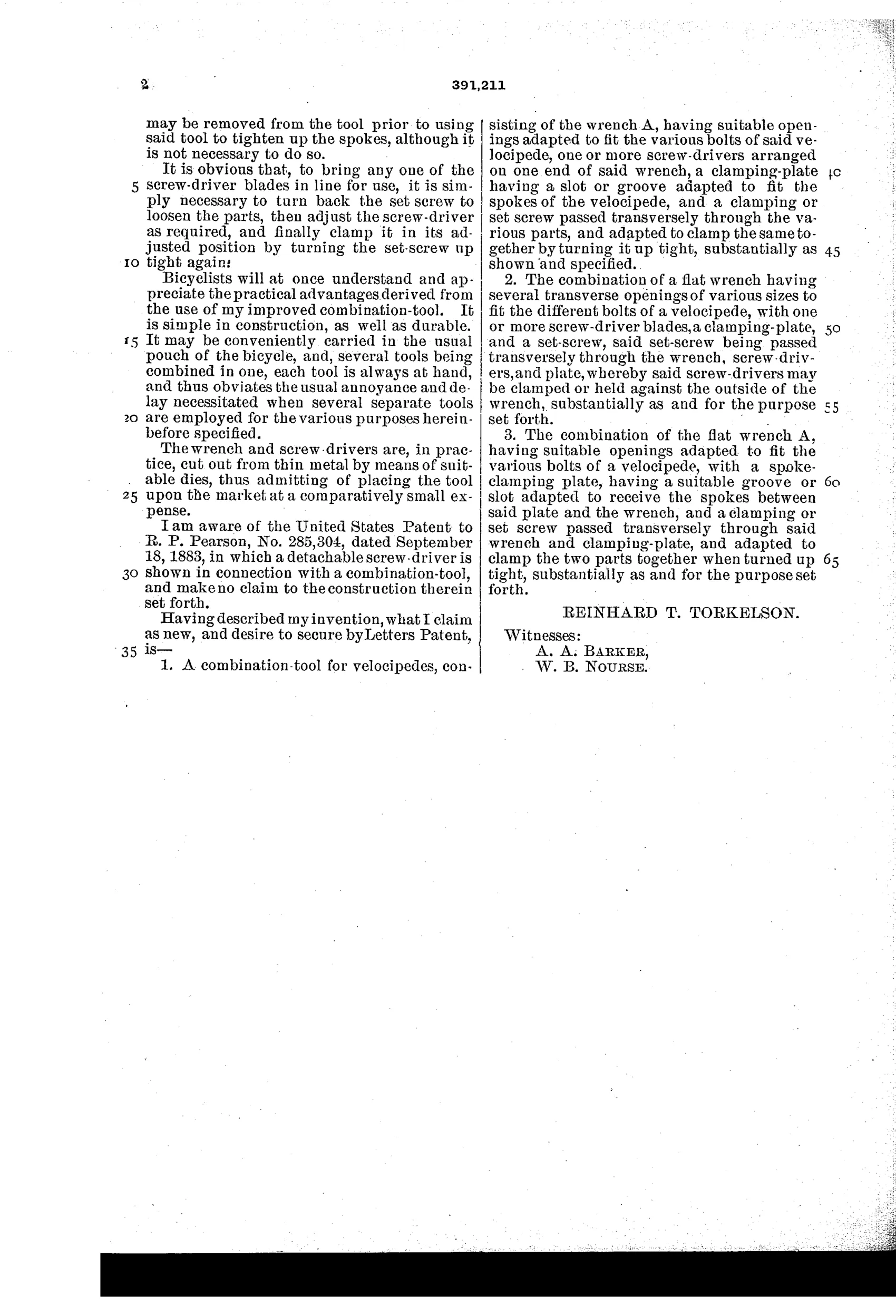
“A combination-tool for velocipedes, consisting of the wrench A, having suitable openings adapted to fit the various bolts of said velocipede, one or more screw-drivers arranged on one end of said wrench, a clamping-plate having a slot or groove adapted to fit the spokes of the velocipede, and a clamping or set screw passed transversely through the various parts, and adapted to clamp the same together by turning it up tight, substantially as shown and specified.”
In plain English: A bicycle tool combining a multi-size wrench, one or more screwdrivers, and a spoke-clamping plate, all held together and tightened by a single transverse set screw.
⚙ In the inventor’s words
“Bicyclists will at once understand and appreciate the practical advantages derived from the use of my improved combination-tool.”— Reinhard T. Torkelson, from the specification
Fate unknown
The Iver Johnson assignment argues for production intent, but no marked specimen is documented to my knowledge; one turning up in an Iver Johnson tool kit or catalog would settle it.
⚙ Commentary
The flat wrench with graduated hex openings is old news by 1888 — implement makers had shipped them for decades. What earns Torkelson his patent is the business at the left end: a double-bladed screwdriver clamped between the wrench body and a plate D, all cinched by one transverse set-screw C. Loosen the screw, swing or swap the driver blade, tighten again. One fastener does three jobs — retention, adjustment, and, cleverest of all, spoke gripping.
That last function is the part a casual reader would skim past. The clamping plate carries a grooved recess k, and Fig. 3 shows a spoke laid into it and pinched fast when the set-screw is run home. The whole wrench then becomes the lever for truing a wheel — a spoke wrench improvised from parts that were already there for another purpose. It's economical thinking of the kind the 1890s bicycle boom would soon demand in quantity.
The context matters too: Worcester, Massachusetts, 1888, assigned to Iver Johnson — the firearms house then pushing hard into cycles. This isn't a lone tinkerer's fantasy; it's a tool designed with a manufacturer standing behind the filing. Whether the wing-nut clamp would hold a screwdriver blade rigid under real torque is a fair question — clamped blades tend to rock — but as a kit tool for roadside fixes it's entirely plausible. DATAMP documents the patent; the tool sits at the front edge of the bicycle-wrench wave.
Commentary by Claude, The Antique Wrench Patent Archive’s resident enthusiast