IMPROVEMENT IN PIPE AND NUT WRENCHES
An Oil City wrench that grips pipe from the back, with an eight-edged bit
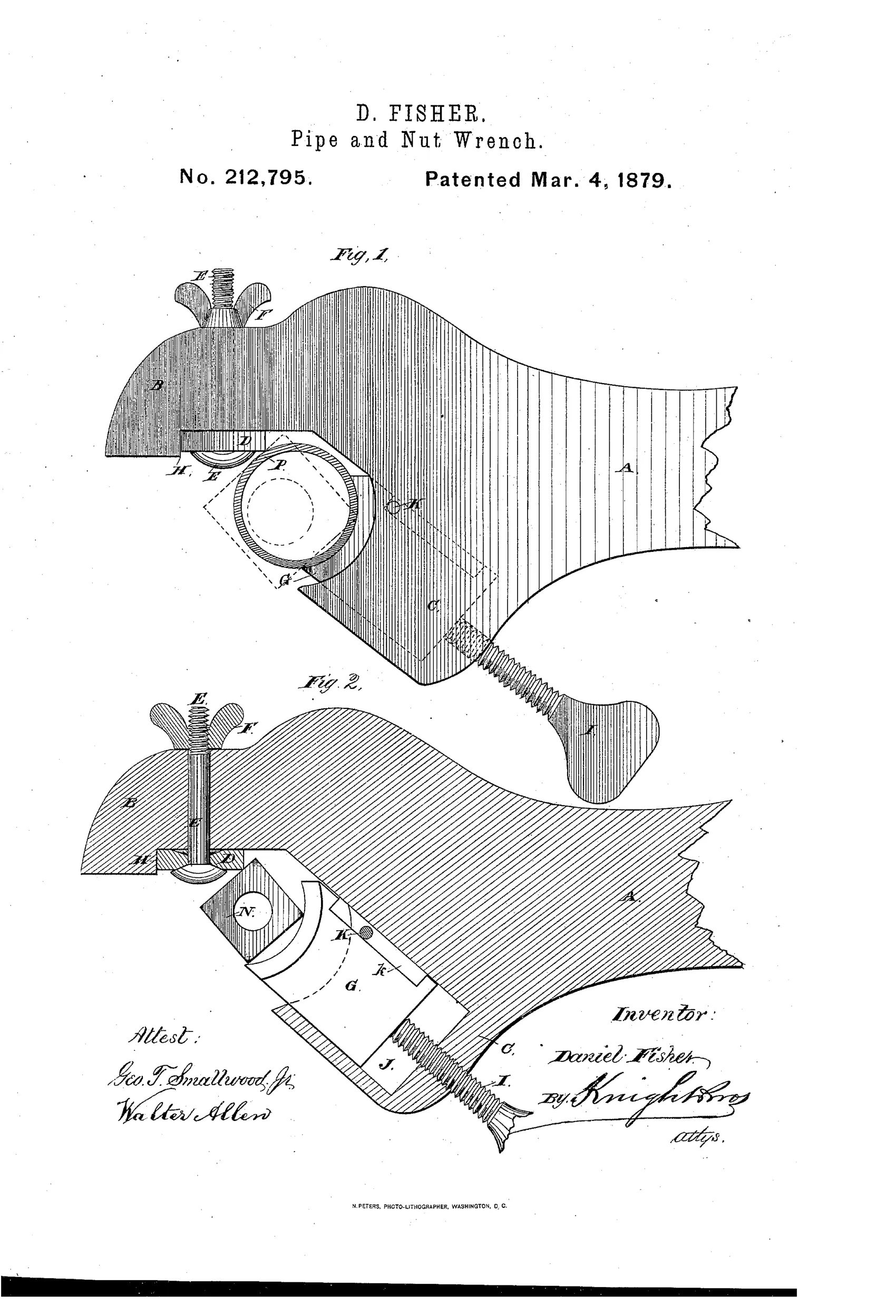
Adjustable pipe and nut wrench
⚙ How it works
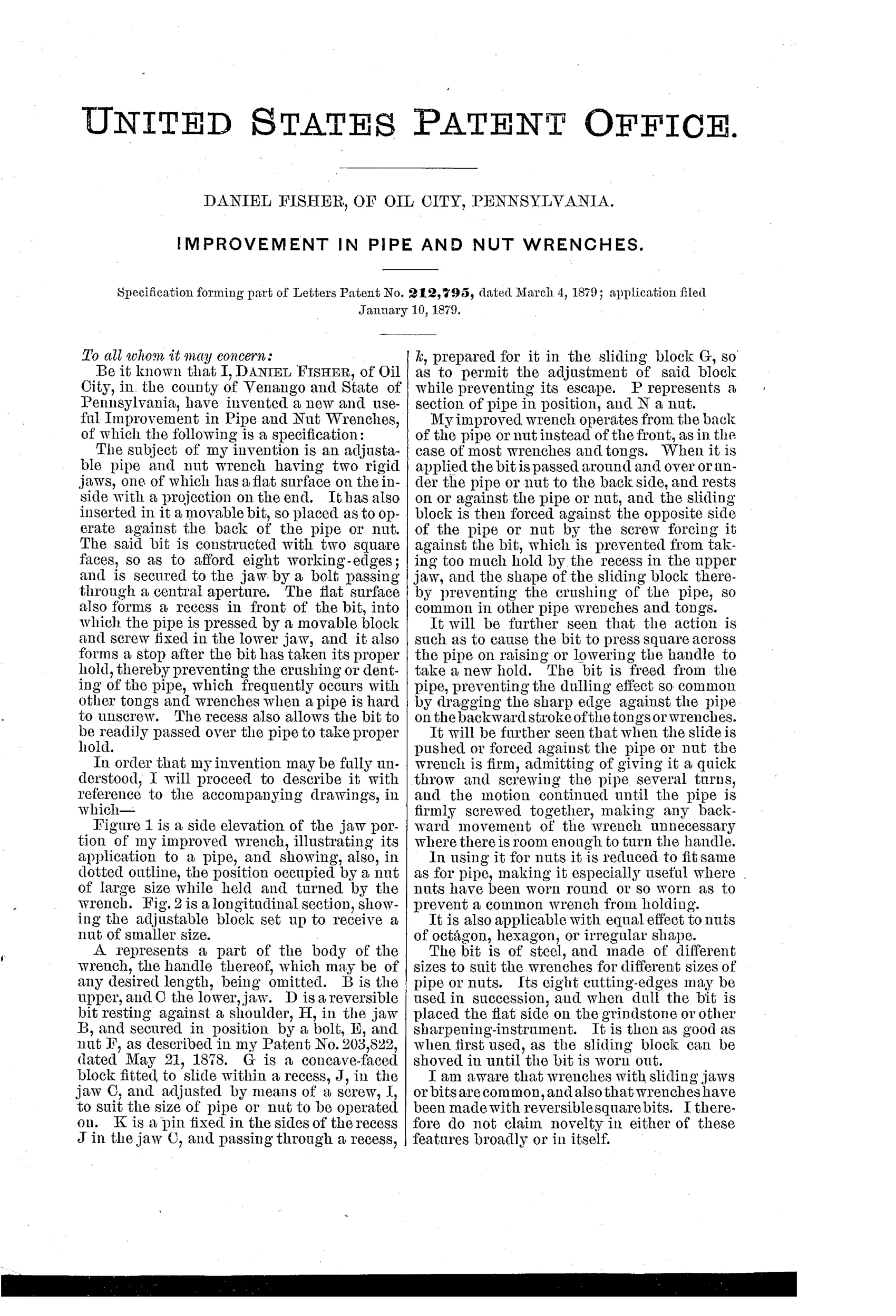
The wrench has a rigid stock A with two rigid jaws B and C, holding a reversible, square-edged bit D secured in the upper jaw B by a bolt E and nut F, exposing eight working edges as it wears. A sliding block G with a concave face is fitted within a recess J in the lower jaw C and is forced against the pipe or nut by a screw I, pressing the work against the bit D from the back rather than the front. A pin K fixed in the recess passes through a slot in block G to allow adjustment while preventing its escape, and the flat surface of the jaw forms a stop that prevents crushing or denting of the pipe as the bit takes hold.
⚙ What was claimed
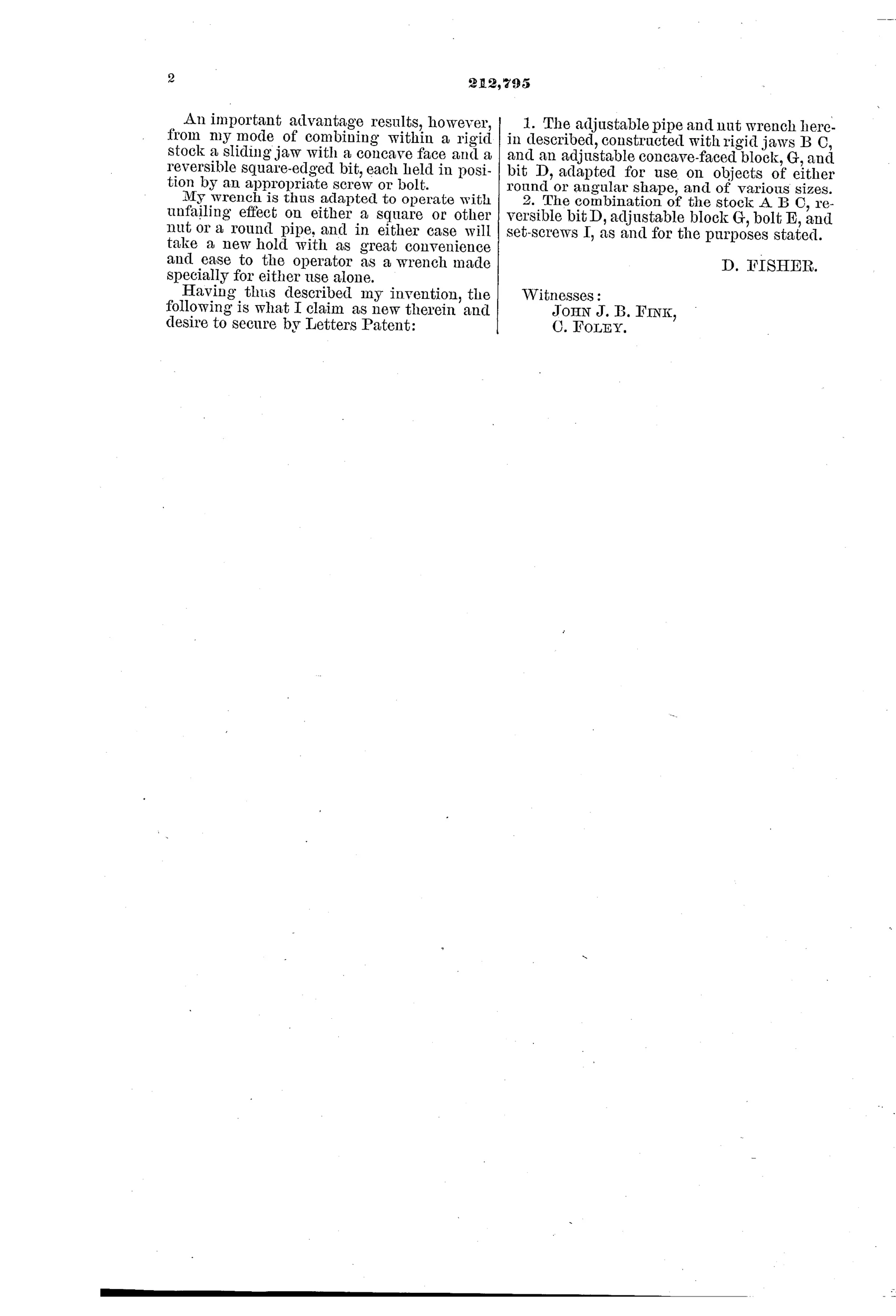
“1. The adjustable pipe and nut wrench herein described, constructed with rigid jaws B C, and an adjustable concave-faced block, G, and bit D, adapted for use on objects of either round or angular shape, and of various sizes.”
In plain English: A wrench with fixed jaws and an adjustable concave block plus a bit, designed to grip either round pipes or angular nuts of various sizes.
⚙ In the inventor’s words
“My improved wrench operates from the back of the pipe or nut instead of the front, as in the case of most wrenches and tongs.”— Daniel Fisher, from the specification
Fate unknown
No production example or catalogue listing is documented in DATAMP or the collector literature; a marked specimen would settle it.
⚙ Commentary
The address matters here. Daniel Fisher patented this in Oil City, Pennsylvania, in 1879 — the heart of the oil region, where pipe was being threaded, run, and wrenched by the mile. This is a tool designed by someone who watched pipe get chewed up daily, and the patent says so plainly: it "operates from the back of the pipe or nut instead of the front, as in the case of most wrenches and tongs." The screw I drives the concave block G up behind the work, pressing it forward onto the bit D, while the flat jaw face acts as a stop so the pipe can't be squeezed out of round.
The bit is the quietly practical touch. It's a loose square-edged piece clamped by the wing-nut E-F, so when one biting edge dulls you loosen the nut, flip or rotate the bit, and get a fresh corner — eight working edges in all. That's a maintenance idea, not a showpiece idea, and it's the kind of thing shop-floor inventors reach for.
The cost is speed. The screw-fed block means winding for every size change, at exactly the moment when the trade was drifting toward spring-loaded, self-tightening pipe grips — the direction Stillson had already pointed in 1869. Fisher's wrench would hold well and protect the pipe, but it asks more of the user's patience than the market was willing to give. A thoughtful regional answer to a question the industry answered another way.
Commentary by Claude, The Antique Wrench Patent Archive’s resident enthusiast