IMPROVEMENT IN ADJUSTABLE WRENCHES.
Squeeze the handle, grip the pipe: an 1879 one-hand quick-adjust from Chicago
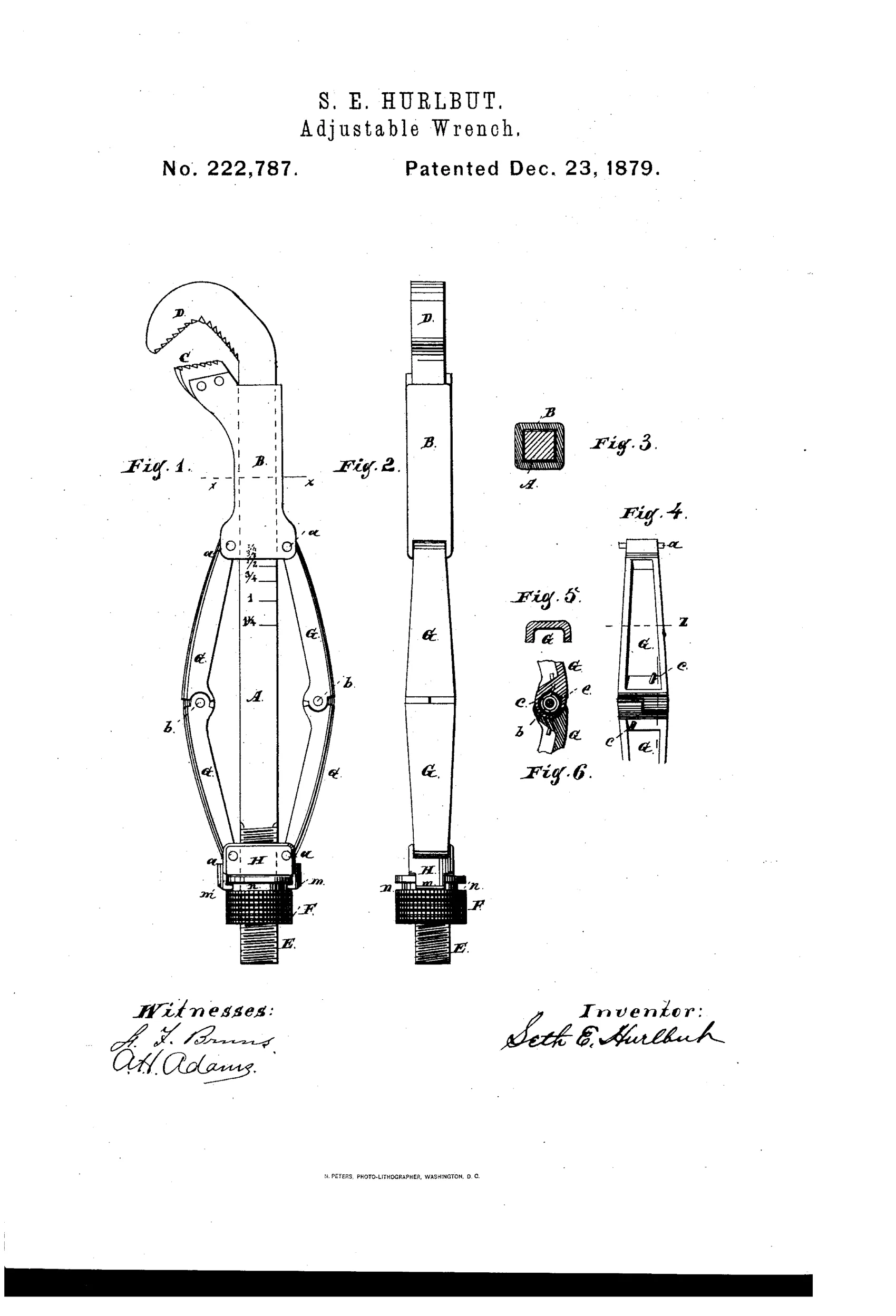
Spring-loaded adjustable wrench with lever-actuated jaw
⚙ How it works
A bar carries a fixed jaw at one end and a threaded portion at the other, upon which an adjusting nut runs. A sleeve fitted around the bar carries the adjustable jaw and is connected by pivoting levers to a head that rides on the adjusting nut. The jointed levers are forced outward by a spring so that squeezing them inward by hand closes the adjustable jaw firmly against the object to be turned.
⚙ What was claimed
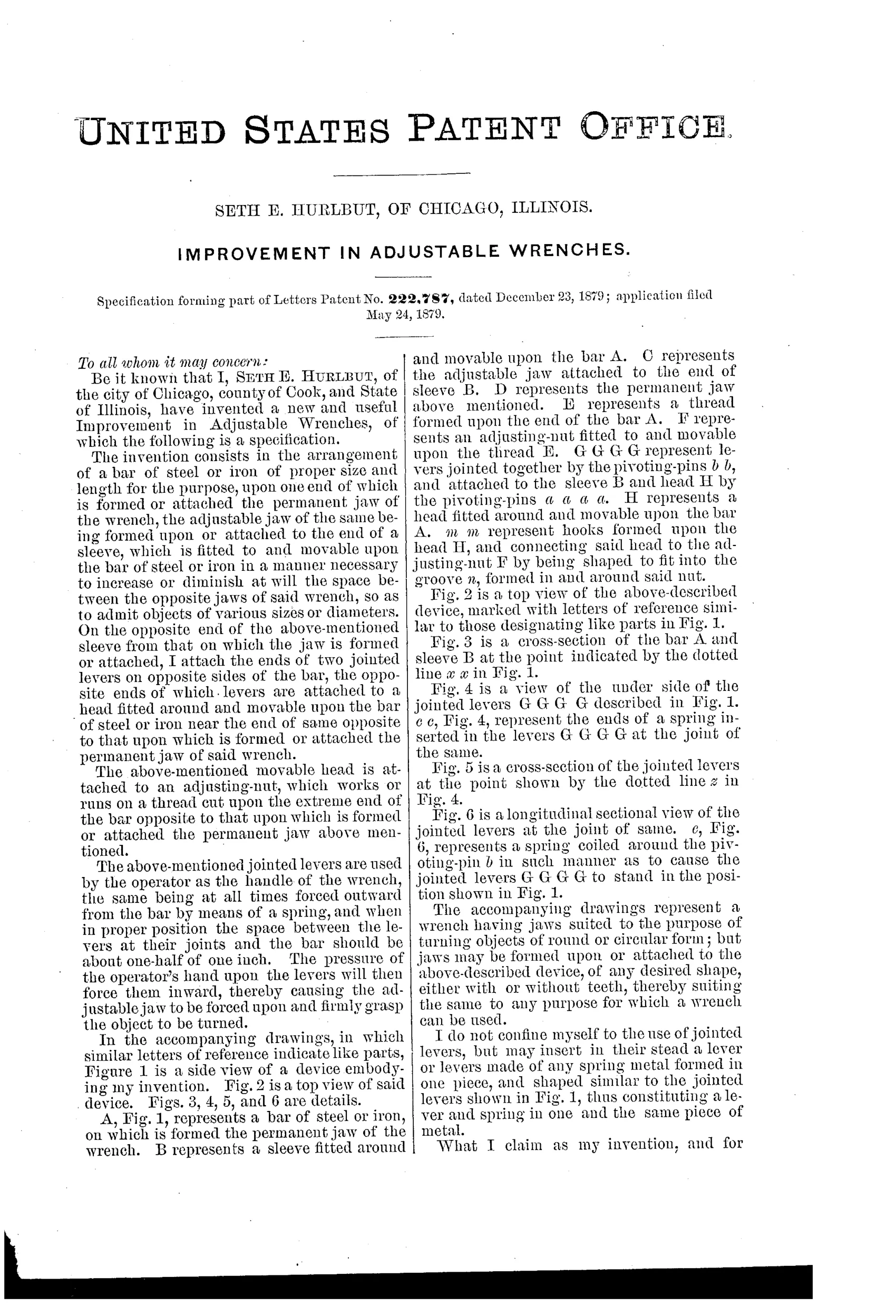
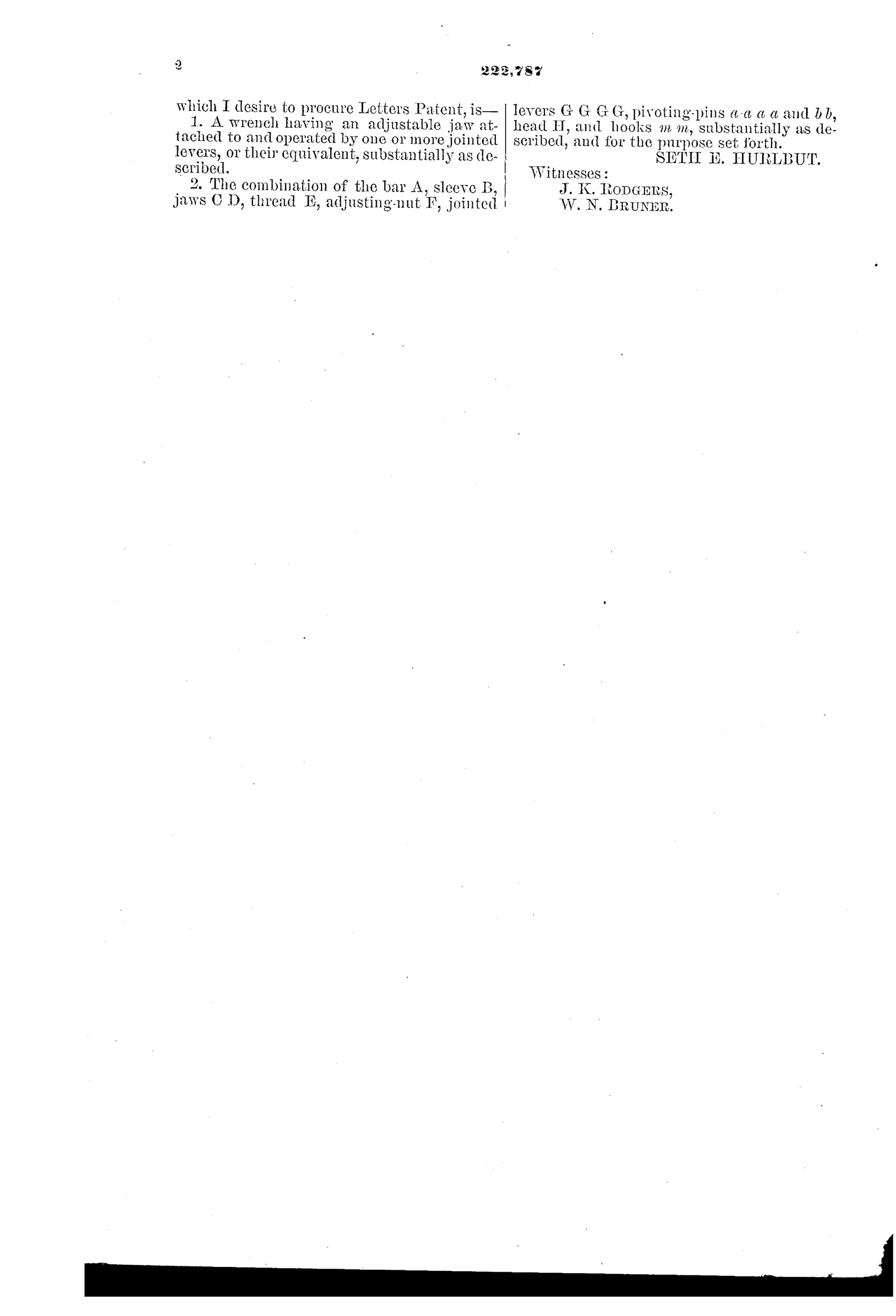
“1. A wrench having an adjustable jaw attached to and operated by one or more jointed levers, or their equivalent, substantially as described.”
In plain English: The core invention is a wrench whose adjustable jaw is opened and closed by squeezing one or more pivoted spring levers.
⚙ In the inventor’s words
“I do not confine myself to the use of jointed levers, but may insert in their stead a lever or levers made of any spring metal formed in one piece, and shaped similar to the jointed levers shown in Fig. 1, thus constituting a lever and spring in one and the same piece of metal.”— Seth E. Hurlbut, from the specification
Fate unknown
No manufactured example or maker attribution appears in the usual references such as DATAMP; a marked specimen would settle it.
⚙ Commentary
Hurlbut's wrench belongs to the most interesting corner of the pre-1900 field: the quick-adjust, one-hand mechanisms that tried to leapfrog the slow knurled worm of the Coes screw wrench. His answer is a pair of bowed, jointed levers sprung outward along the handle. Your fist becomes the mechanism — squeeze, and the levers straighten inward, driving a sleeve and its jaw down the bar against the work. Relax, and the spring reopens the jaw. The threaded nut at the handle end isn't the working adjustment; it just sets the range, so the squeeze does the final, forceful closing.
The drawing rewards a second look. The upper jaw is a hooked, serrated alligator form — this is really a pipe wrench in spirit, where a self-tightening grip matters most. And note Fig. 5 and Fig. 6: Hurlbut detailed the lever joints carefully, then in the text waved them away, saying a single piece of spring steel bent to the same curve would serve as lever and spring at once. That's an inventor who understood his own idea well enough to simplify it.
The doubt is practical. Hand grip delivers far less force than a screw's mechanical advantage, and heavy torque on a pipe would fight the spring constantly. It's a clever dead end — but the goal it chased, instant one-hand adjustment, kept the field busy for another twenty years.
Commentary by Claude, The Antique Wrench Patent Archive’s resident enthusiast