IMPROVEMENT IN PIPE-WRENCHES.
An 1875 chain pipe wrench that cinches itself tighter the harder you pull
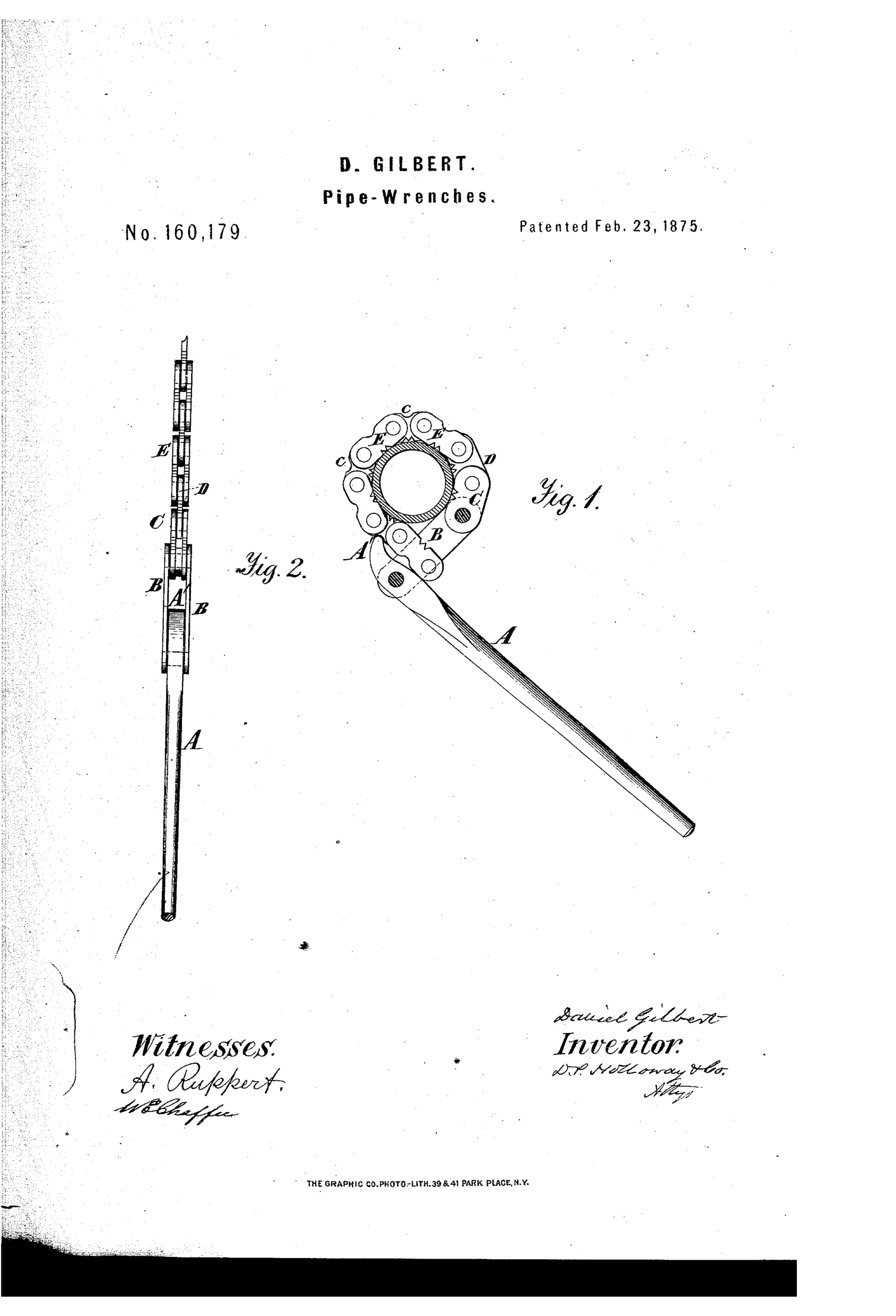
Chain-type pipe wrench for gripping pipes
⚙ How it works
A lever with a bent, dog-shaped point engages a chain made of alternating double and single plate-links pivoted together. The chain wraps around the pipe, and its free end passes through an open link near the lever's pivot point. Moving the lever causes its point to bear against the chain's outer edges, cinching the chain tightly around the pipe. The chain's inner edges are serrated for grip on the pipe, while the outer edges have indentations to receive the lever's bent end.
⚙ What was claimed
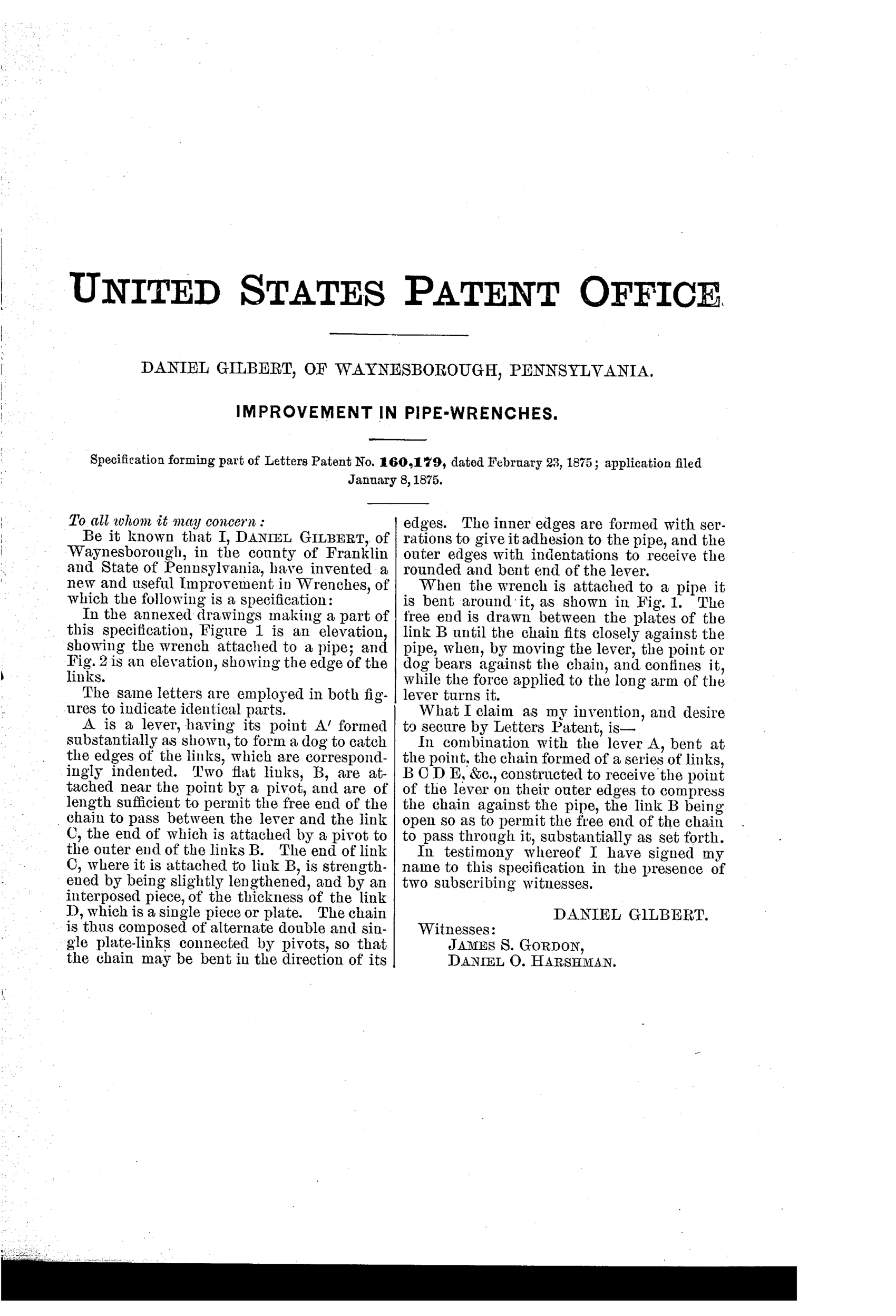
“In combination with the lever A, bent at the point, the chain formed of a series of links, B C D E, &c., constructed to receive the point of the lever on their outer edges to compress the chain against the pipe, the link B being open so as to permit the free end of the chain to pass through it, substantially as set forth.”
In plain English: The invention combines a bent lever with a chain of pivoted links, where the lever's point presses against the outer edges of the links to tighten the chain around a pipe, and one link is left open so the chain's free end can pass through it.
⚙ In the inventor’s words
“When the wrench is attached to a pipe it is bent around it, as shown in Fig. 1.”— Daniel Gilbert, from the specification
Fate unknown
No marked Gilbert chain wrench is documented to my knowledge; a surviving specimen matching this link-and-notch construction would settle it.
⚙ Commentary
Chain pipe wrenches are one of those ideas that feel inevitable once you see one, and Gilbert's 1875 patent is an early, quite complete statement of the type. The chain of alternating single and double plate-links wraps the pipe, its free end threads through an open link near the lever's pivot, and the lever's bent, dog-shaped point bears against notches on the chain's outer edges. Pull the handle and the point drives the chain tighter — a self-energizing grip, the same principle that makes the Stillson jaw and later commercial chain tongs so effective.
The detail worth pausing on is in Fig. 2: the inner edges of the links are serrated to bite the pipe, while the outer edges carry indentations to seat the lever's point. That means the chain does double duty as both gripping surface and ratchet rack, which keeps the part count admirably low. The open link B is the other quiet cleverness — it lets one chain fit a wide range of pipe diameters with no adjustment screw at all.
Where it sits in the story: chain tongs became a plumber's and oilfield staple by the 1880s and 90s, usually with the chain hooking into a toothed head rather than being pinched by a bent point. Gilbert's arrangement is cruder — that single bearing point concentrates a lot of load on small link edges — but the wrap-and-cinch logic is all here, a decade before the type matured. DATAMP documents the patent record around it.
Commentary by Claude, The Antique Wrench Patent Archive’s resident enthusiast