IMPROVEMENT IN COMBINED CLAMPS AND WRENCHES.
A track wrench that clamps the fish-plates tight while the ratchet turns the nut
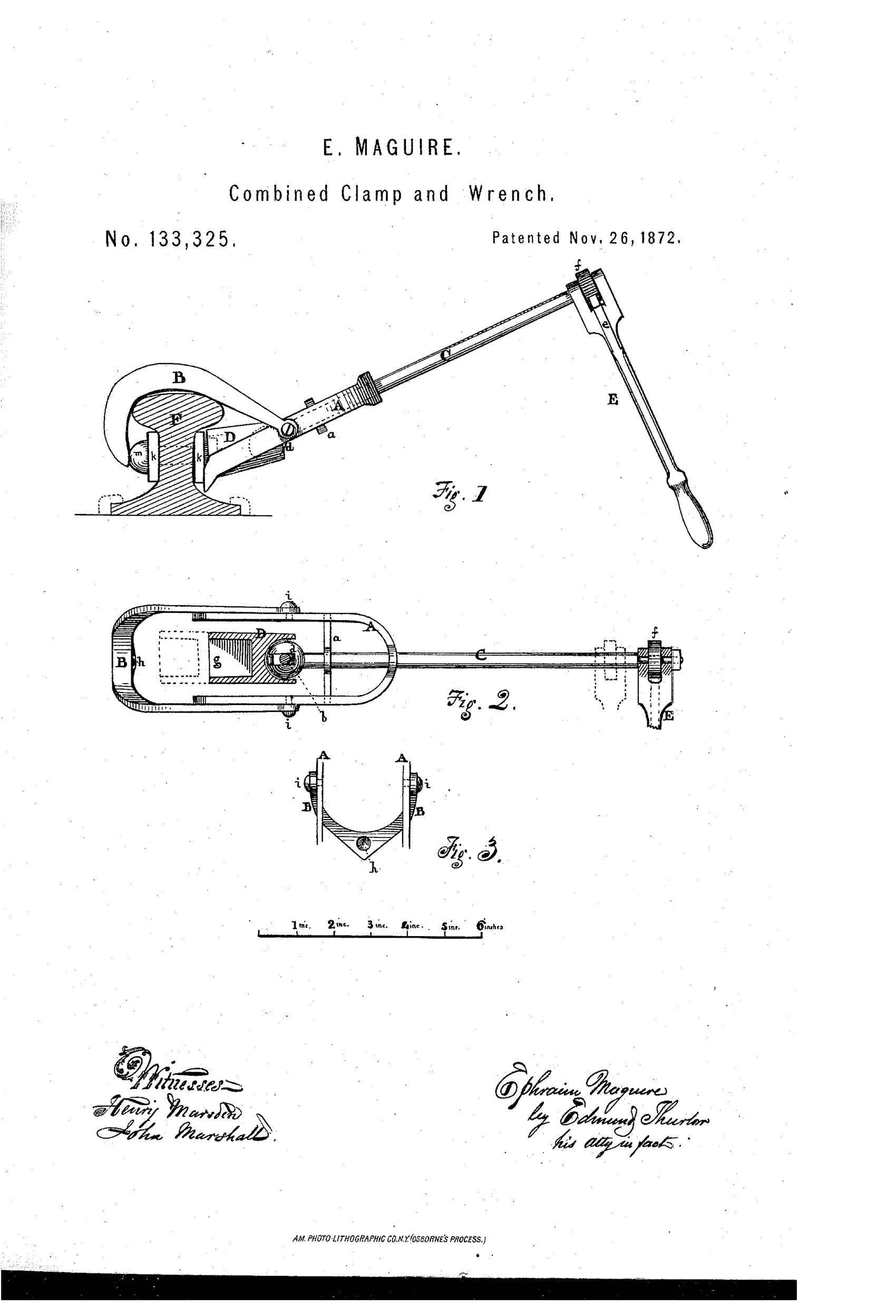
Combined railroad-track wrench and rail-clamping lever
⚙ How it works
A bent-bar claw B is pivoted to a bent iron frame A and hooks over the rail to press down on a fish-plate bolt head, while the frame's lower ends bear against the joint plates. A stout wrench-stem C passes loosely through the frame, ending below in a universal (ball-and-socket) joint d that couples it to a socket-wrench or nut-holder D with a square recess g for the nut. The upper end of stem C carries a ratchet wheel and handle E, e, f of common construction, allowing the nut to be turned home even at an angle. Turning the stem both draws the plates tight against the rail via the frame and claw, and simultaneously tightens the nut through the socket-wrench.
⚙ What was claimed
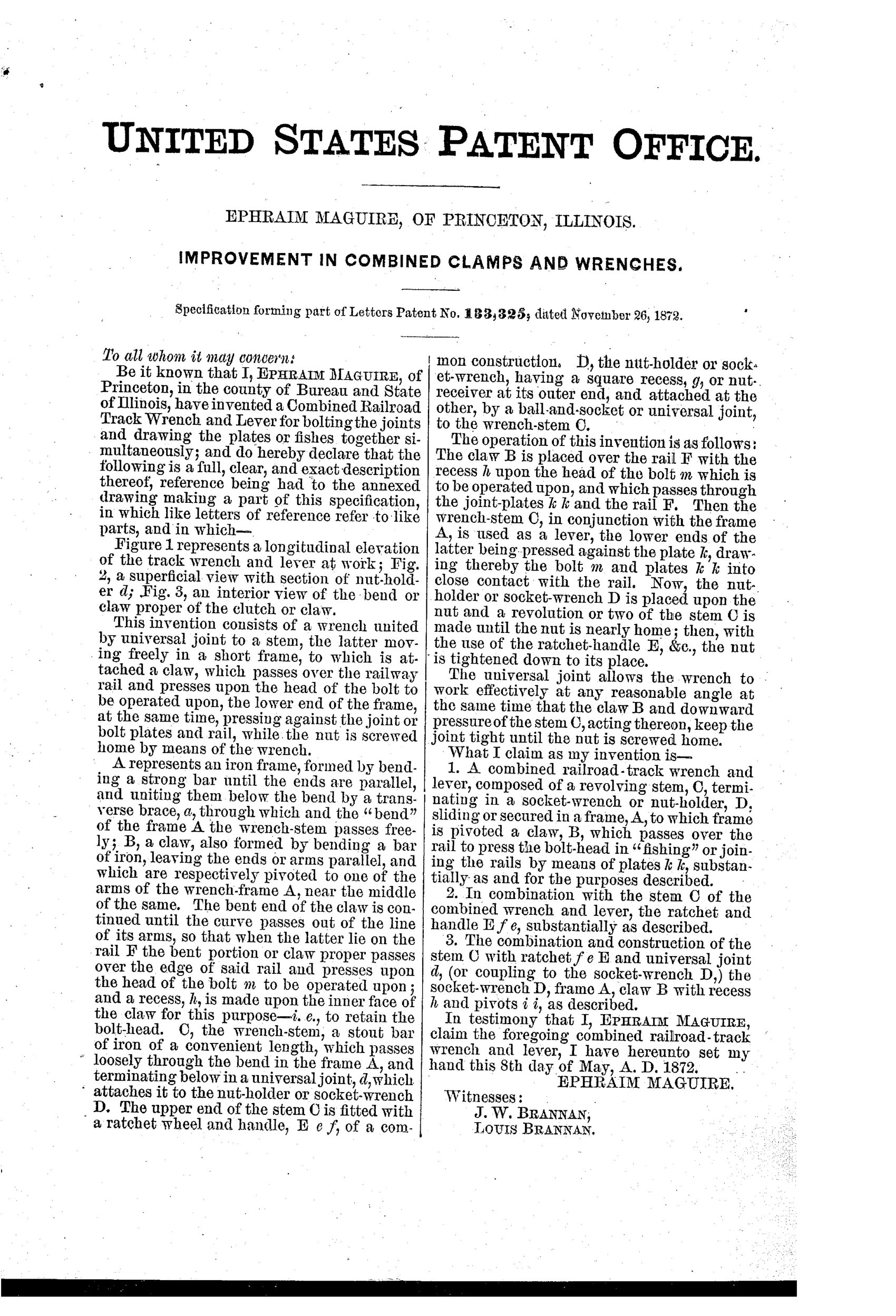
“A combined railroad-track wrench and lever, composed of a revolving stem, C, terminating in a socket-wrench or nut-holder, D, sliding or secured in a frame, A, to which frame is pivoted a claw, B, which passes over the rail to press the bolt-head in "fishing" or joining the rails by means of plates k k, substantially as and for the purposes described.”
In plain English: The invention claims a track wrench where a turning stem with a nut-socket slides in a frame that has a pivoted claw pressing down on the rail's bolt-head to hold the fish-plates together while the nut is tightened.
⚙ In the inventor’s words
“The universal joint allows the wrench to work effectively at any reasonable angle at the same time that the claw B and downward pressure of the stem C, acting thereon, keep the joint tight until the nut is screwed home.”— Ephraim Maguire, from the specification
Fate unknown
DATAMP records the patent but no manufactured example is documented; a marked specimen or railroad supply catalog listing would settle it.
⚙ Patented the same day
- IMPROVEMENT IN WRENCHES — Ovide Bonneville
- IMPROVEMENT IN WRENCHES. — Frank Leo Delfer
⚙ Commentary
Maguire's patent solves a real, specific railroad problem: when bolting fish-plates at a rail joint, the plates want to sag and shift while you crank the nut, and the bolt-head on the far side needs holding besides. His answer is to make the tool do all three jobs at once. The pivoted claw B hooks over the rail and bears on the bolt-head; the frame's feet press the plates against the web; and the long stem C, running down through the frame to a square-socket nut-holder, tightens the nut. The turning force itself keeps the assembly clamped as the nut goes home.
The detail worth a second look in Fig. 1 is the ball-and-socket joint d between the stem and the socket. Track work is not done from a comfortable angle — you stand beside the rail with the handle wherever your body can put it. The universal joint plus a ratchet handle of 'common construction' means the operator can work the nut at a slant while the clamp geometry below stays square to the joint. That is thoughtful ergonomics for 1872.
This sits outside the adjustable-jaw mainstream — no sliding jaw, no worm — in the trackside-specialty branch of the field, where the railroads' appetite for one-man joint tools produced many patents and fewer products. It would plausibly work, though the tool is long, awkward to carry, and competes with a plain wrench plus a second man with a bar.
Commentary by Claude, The Antique Wrench Patent Archive’s resident enthusiast