Wrench.
A monkey wrench built like sheet-metal toy: two cast halves riveted shut
Cast malleable-iron screw wrench with sliding jaw
⚙ How it works
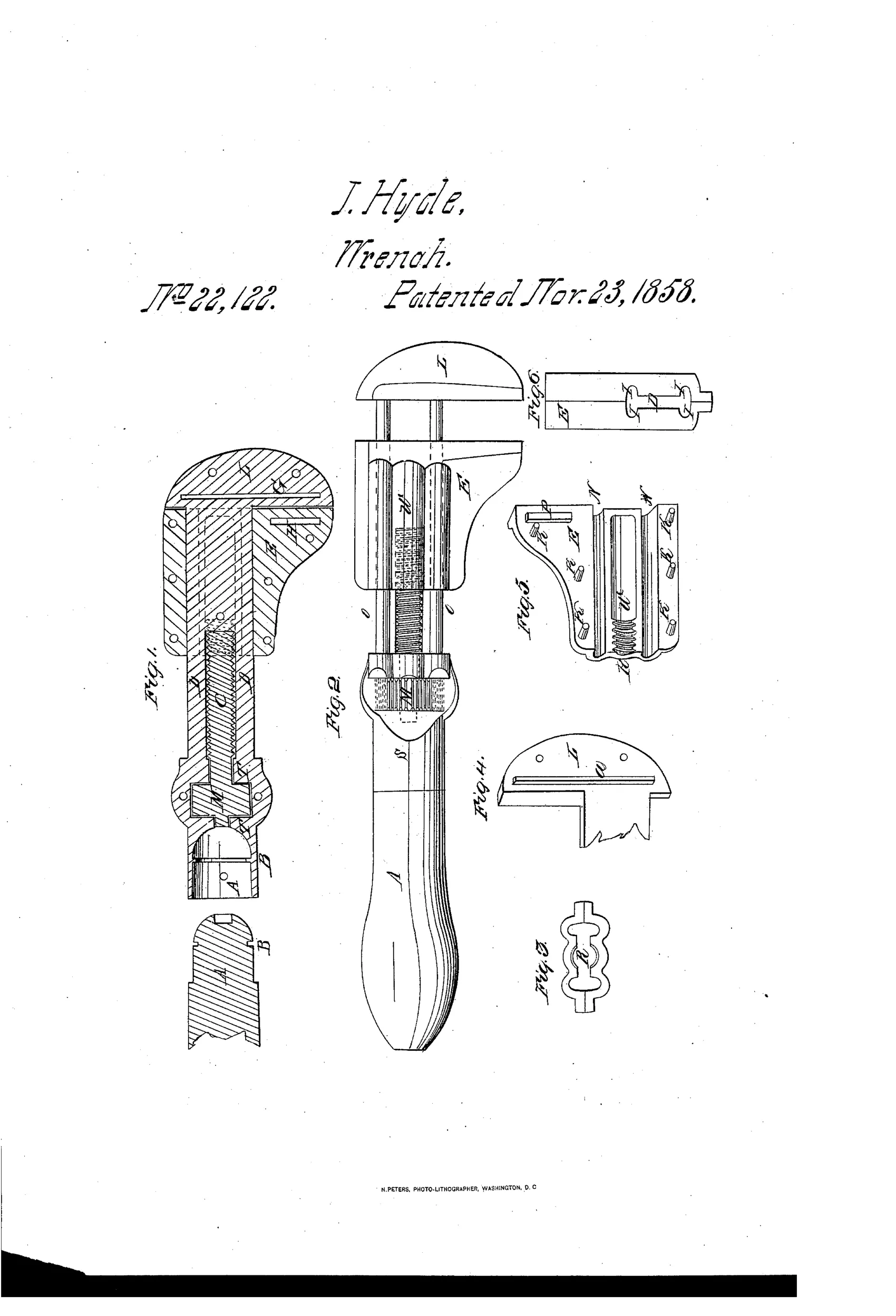
The wrench is cast in two matching halves, including the bar, jaws, and screw nut, which are then riveted together after annealing. A thumb piece turns an internal screw that moves the sliding jaw (E) along the bar (D) toward or away from the fixed end jaw (L). Flanges and pins cast into the halves reinforce the thin metal walls and align the parts during assembly. Because the wrench is built from thin cast sections riveted together rather than solid forged iron, it can be made of malleable iron cheaply without requiring machining or finishing.
⚙ What was claimed
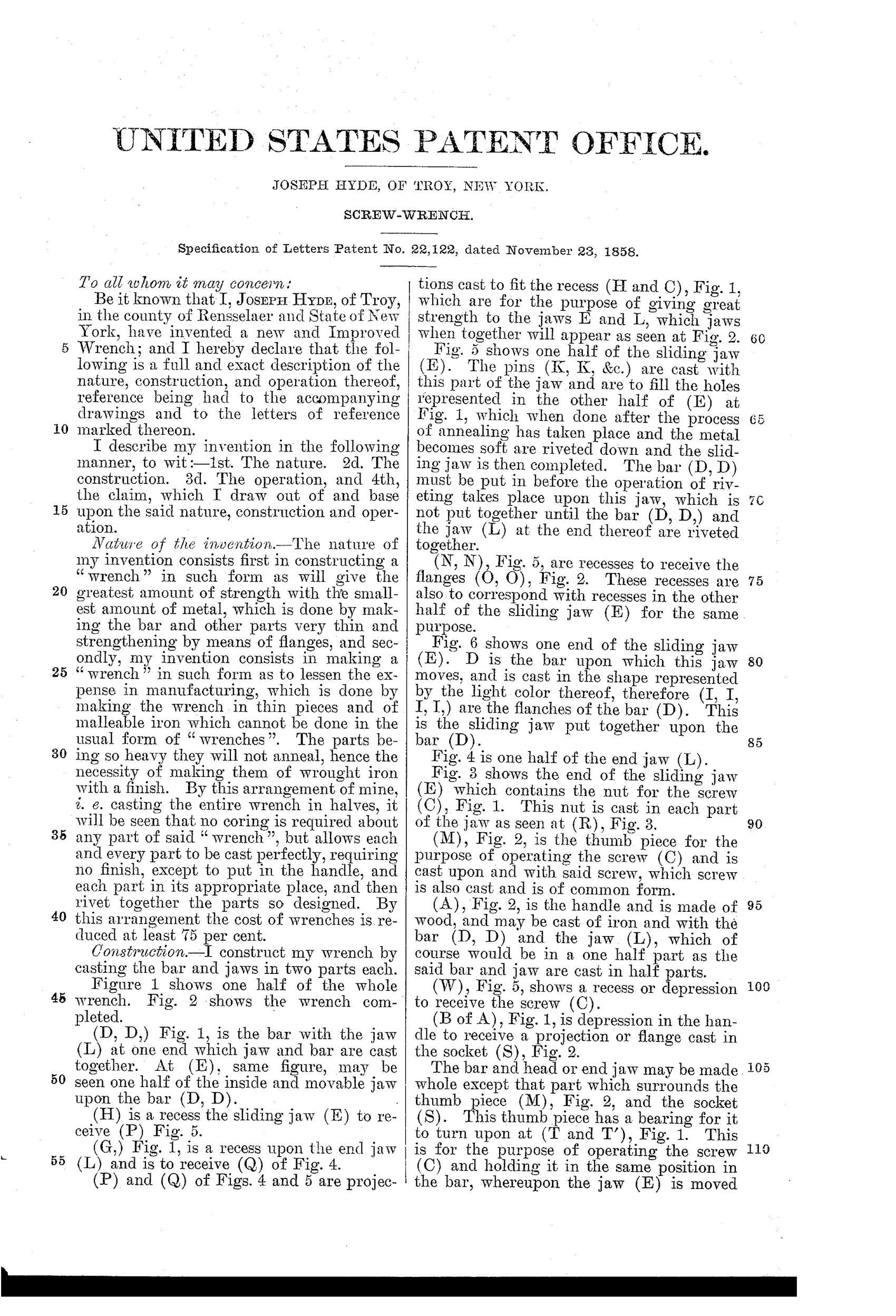
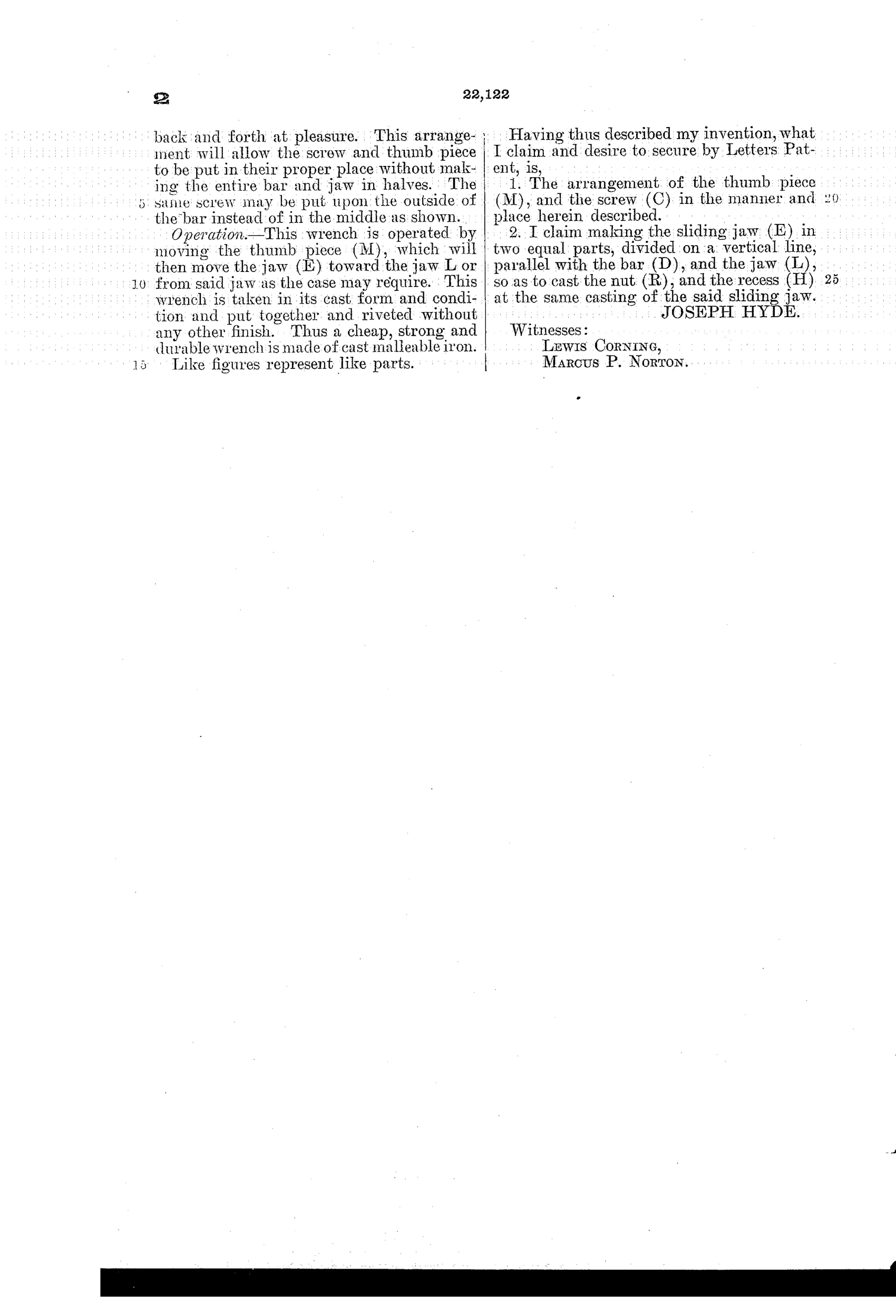
“I claim making the sliding jaw (E) in two equal parts, divided on a vertical line, parallel with the bar (D), and the jaw (L), so as to cast the nut (R), and the recess (H) at the same casting of the said sliding jaw.”
In plain English: The invention claims forming the movable jaw in two matching cast halves, split lengthwise along the bar, so that the screw nut and its recess are cast right into the jaw at the same time.
⚙ In the inventor’s words
“By this arrangement the cost of wrenches is reduced at least 75 per cent.”— Joseph Hyde, from the specification
Fate unknown
No marked example or DATAMP-documented production is known to me; a surviving riveted two-half wrench would settle it.
⚙ More by Joseph Hyde
- SCREW-WRENCH (1855)
⚙ Commentary
Most 1850s screw wrenches were forged solid and then machined — the thread cut into the nut, the bar dressed, the jaws finished. Hyde's idea attacks all of that at once. Cast the wrench in two mirror-image halves, split lengthwise, with the nut, its recess, and the alignment pins formed right in the mold. Anneal to malleable iron, rivet the halves together, and you have a hollow wrench that never touched a lathe. His claim of a 75 percent cost reduction is salesman's arithmetic, but the direction is honest: this is manufacturing-process invention wearing a wrench's clothes.
Look at Fig. 1 and Fig. 5 closely. The cross-hatching shows how thin those cast walls are, and the internal flanges and pins are doing double duty — stiffening the shell and registering the two halves before riveting. Casting the nut thread in halves is the clever bit and also the weak one: a parted-line thread engaging a screw under load is asking a lot of 1858 foundry precision, and any rivet loosening lets the halves breathe and the nut strip.
As a mechanism it's the ordinary Coes-style sliding jaw. As a construction it's a genuine road not taken — the trade went the other way, toward heavier drop-forged wrenches, because a wrench's whole job is to be beaten on. Hyde traded strength for cheapness in a tool where strength is the product.
Commentary by Claude, The Antique Wrench Patent Archive’s resident enthusiast