IMPROVEMENT IN COMBINED PIPE-TONGS AND WRENCH
Squeeze-to-grip pipe tongs with an oblique slot that meters the bite
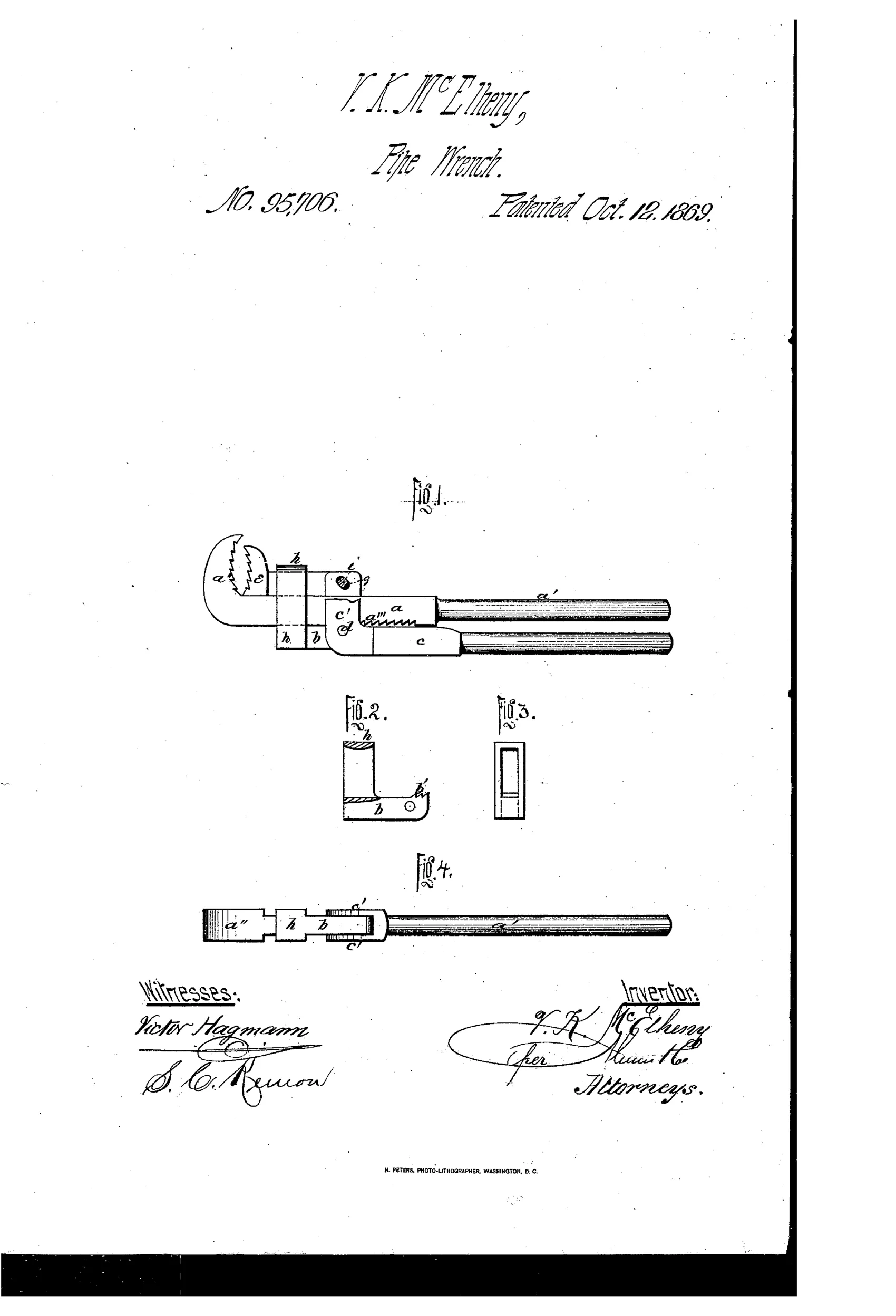
Combined pipe-tongs and wrench tool
⚙ How it works
A main stem carries a fixed jaw at one end and a handle at the other, while a movable jaw slides along the stem, guided by a sliding band. A lever with a sliding fulcrum operates the movable jaw from the opposite side of the stem, connected via a pin passing through an oblique slot. Closing the handles locks the fulcrum in place using a pawl engaging teeth on the stem, and simultaneously drives the movable jaw forward against the fixed jaw to grip the pipe or nut. The oblique slot allows the operator to vary the clamping pressure according to how forcefully the handles are drawn together.
⚙ What was claimed
“The arrangement of the main stem a with the movable jaw e, oblique slot g, pawl b, band h, and lever c, substantially as described.”
In plain English: The claim covers the specific combination of the stem, movable jaw, oblique slot, pawl, band, and lever working together as described.
⚙ In the inventor’s words
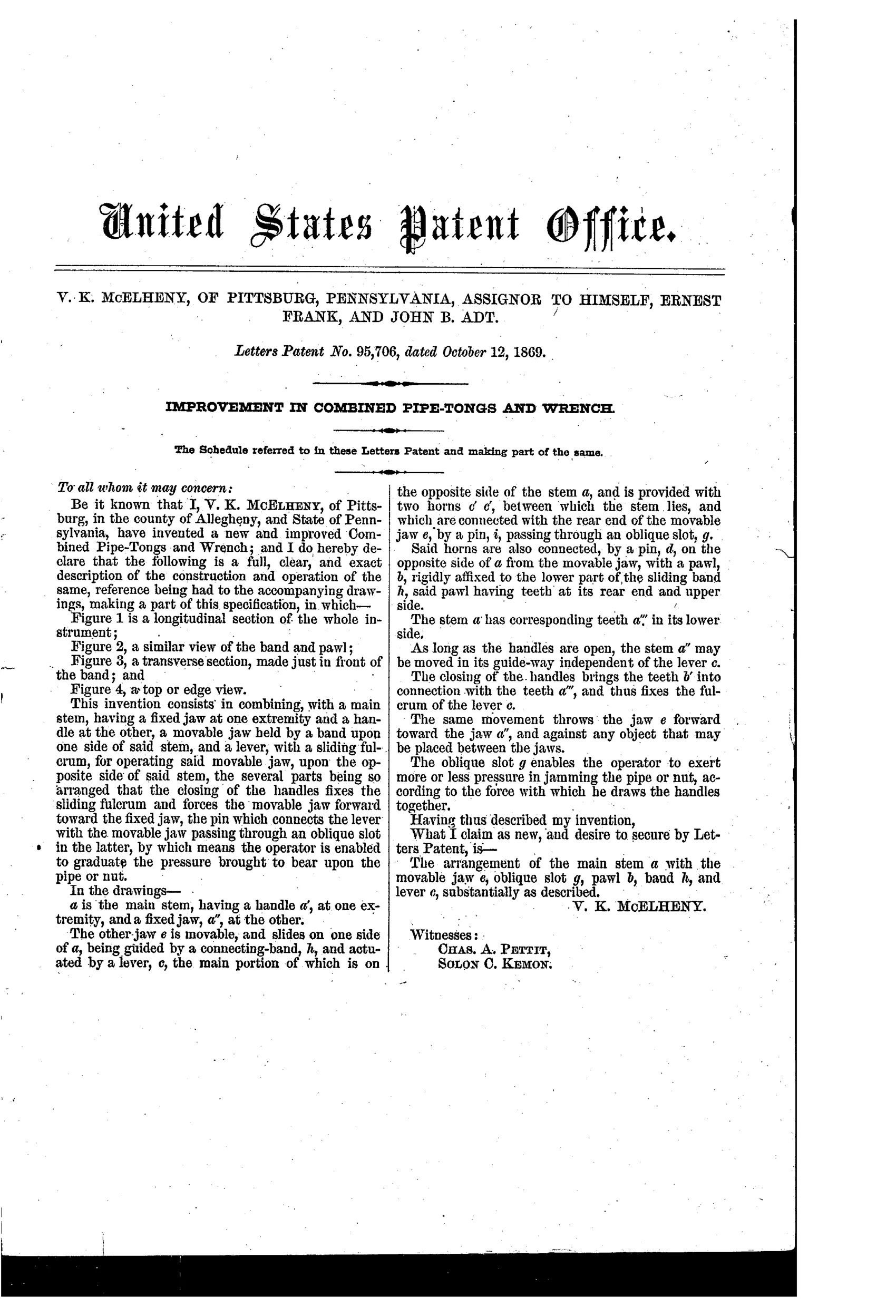
“The oblique slot g enables the operator to exert more or less pressure in jamming the pipe or nut, according to the force with which he draws the handles together.”— V. K. McElheny, from the specification
Fate unknown
No manufactured example of this design is documented to my knowledge; a marked specimen or period hardware listing would settle it.
⚙ Commentary
McElheny's 1869 tool is a pipe wrench that works like tongs: two handles, and when you squeeze them together, two things happen at once. A pawl on the sliding band drops into teeth cut along the main stem, locking the fulcrum at whatever opening you've slid it to, and the lever drives the movable jaw forward against the fixed hook jaw. Adjustment and gripping are one motion — which puts this squarely in the pre-1900 hunt for a wrench you could size and tighten with a single hand, decades before the Stillson pattern settled the pipe-wrench question for good.
The detail worth lingering on is the oblique slot, marked g in Fig. 1, where the pin connecting lever to jaw rides. Because the slot is angled rather than straight, the harder you draw the handles together the more the jaw jams forward — the specification says so plainly, and it's a neat, cheap way to make grip proportional to effort, the same self-energizing logic that makes later pipe wrenches bite harder under load.
The weak point is the parts count. A sliding band, a toothed stem, a pawl, a pinned lever, and a slotted jaw all have to stay snug for the geometry to hold under pipe-turning torque, and any slop kills the jam. It's a thoughtful mechanism from Pittsburgh's pipe country, but a fussy one, and the field moved toward simpler self-gripping jaws. DATAMP is the place to check for descendants.
Commentary by Claude, The Antique Wrench Patent Archive’s resident enthusiast