IMPROVEMENT IN WRENCHES
A full-circle ratchet whose jaws grow without the wheel growing too
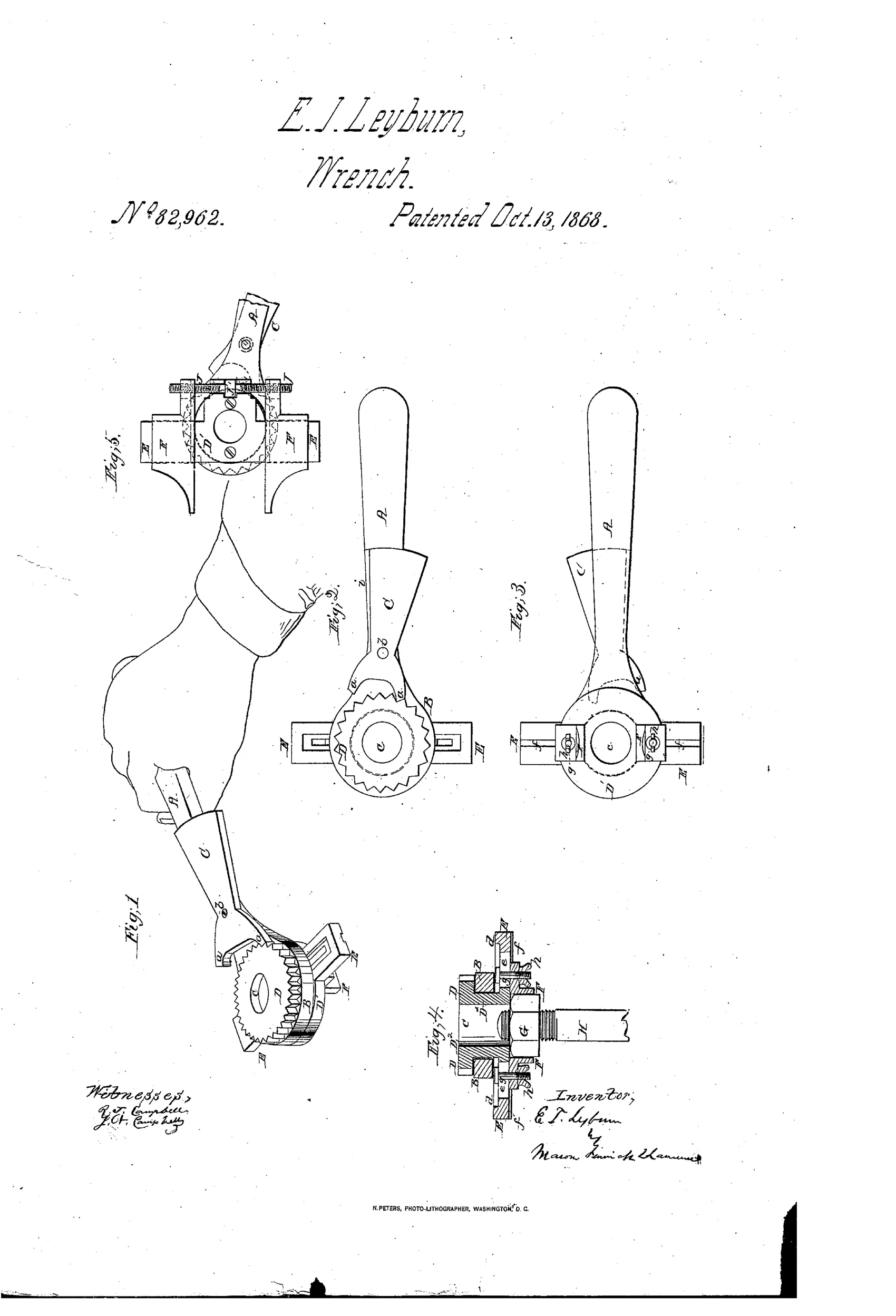
Adjustable ratcheting nut wrench with movable jaws
⚙ How it works
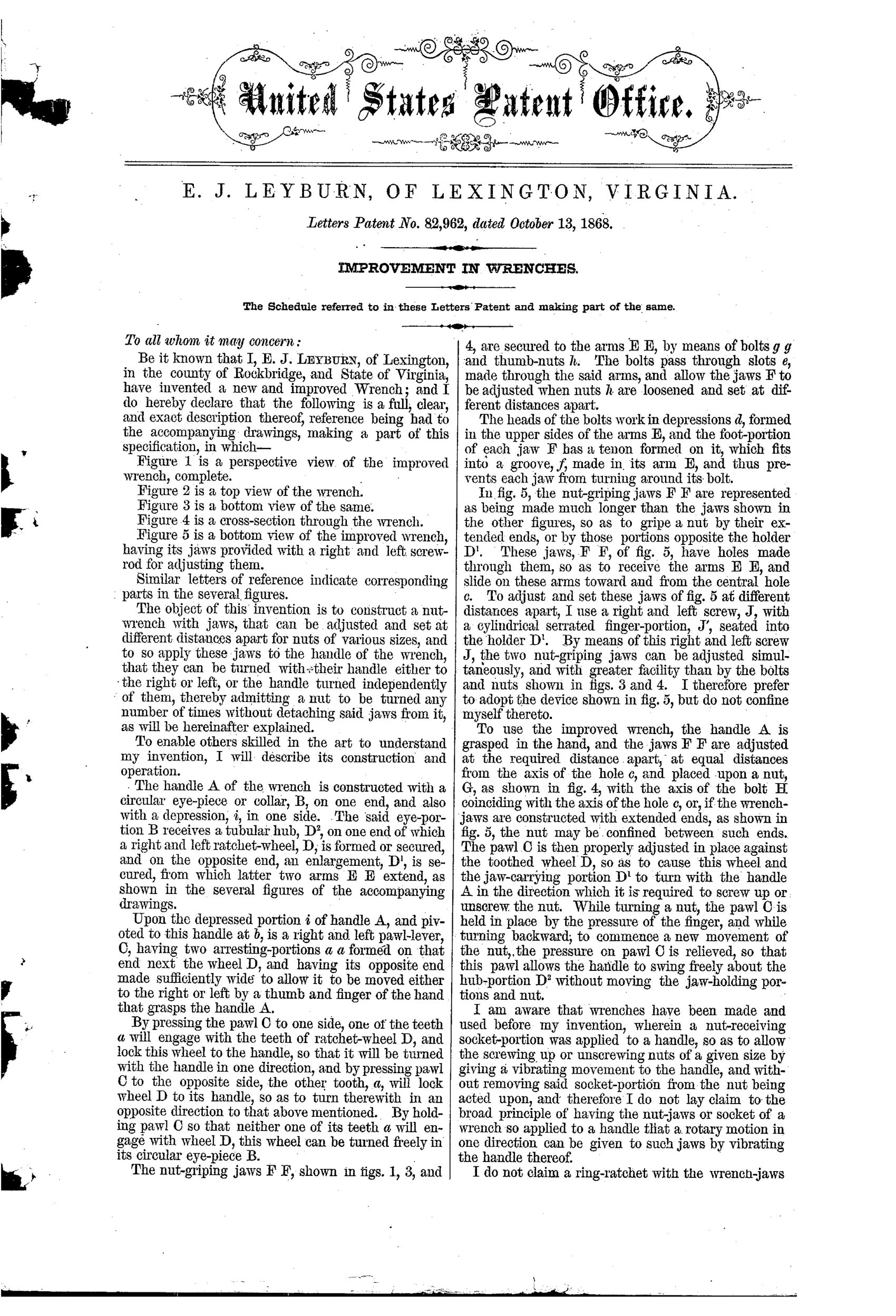
A handle carries a circular eye-piece housing a right-and-left ratchet wheel connected to a hub from which two arms extend to hold adjustable jaws. A pivoted right-and-left pawl engages the ratchet teeth so the handle can turn the jaw-holding portion in either direction, or be swung freely without moving the jaws when the pawl is disengaged. The jaws are secured to the arms by bolts and thumb-nuts through slots, allowing them to be set at different distances apart for various nut sizes, or in an alternate form adjusted simultaneously by a right-and-left screw with a knurled finger-piece. This allows a nut to be turned repeatedly without removing the wrench.
⚙ What was claimed
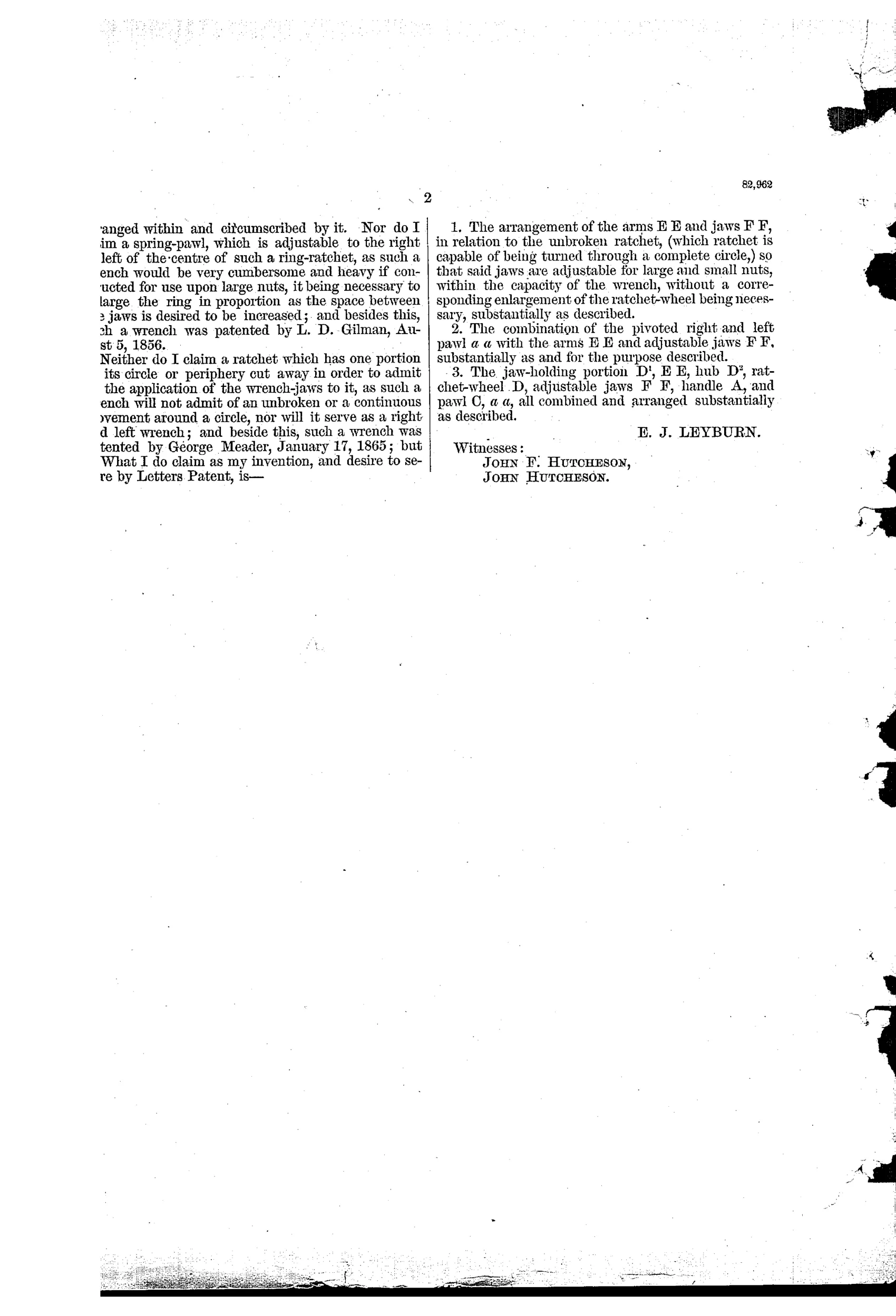
“1. The arrangement of the arms E E and jaws F F, in relation to the unbroken ratchet, (which ratchet is capable of being turned through a complete circle,) so that said jaws are adjustable for large and small nuts, within the capacity of the wrench, without a corresponding enlargement of the ratchet-wheel being necessary, substantially as described.”
In plain English: The wrench's arms and jaws can be adjusted to grip nuts of different sizes while working with a full, unbroken ratchet wheel, without needing to make the ratchet itself bigger.
⚙ In the inventor’s words
“The object of this invention is to construct a nut-wrench with jaws, that can be adjusted and set at different distances apart for nuts of various sizes, and to so apply these jaws to the handle of the wrench, that they can be turned with their handle either to the right or left, or the handle turned independently of them, thereby admitting a nut to be turned any number of times without detaching said jaws from it, as will be hereinafter explained.”— E. J. Leyburn, from the specification
Fate unknown
No manufactured example of this Virginia design is documented; a marked surviving wrench would settle it.
⚙ Commentary
Leyburn's problem is one every ratchet designer hits: if the jaws that grip the nut are part of the ratchet wheel, then a bigger nut demands a bigger wheel, and the whole head balloons. His answer is to separate the two jobs. The unbroken ratchet wheel stays a fixed, modest size, and the jaws ride on two arms extending from its hub, sliding along slots and pinned by thumb-nuts. Capacity comes from the arms, not the wheel — that's the whole first claim, and it's a genuinely tidy piece of reasoning for 1868.
The drawing repays a close look. Fig. 1 shows the wrench in a gripping hand, which is unusual staging for a patent sheet, and the right-and-left pawl is visible against the toothed wheel in Fig. 2 — flip the pawl and the ratchet works in the opposite direction, or free the handle entirely. Fig. 5 quietly offers a second, better idea: the jaws moved simultaneously by a right-and-left screw with a knurled finger-piece, a Coes-flavored touch grafted onto a ratchet head.
The weak spot is the jaw fastening in the primary form. Thumb-nuts through slots must resist the full twisting load on the nut, and slotted friction clamps under torque tend to creep. Still, the ratchet-plus-adjustable-jaw combination anticipates a whole family of later socketless ratchet wrenches, and this Lexington, Virginia entry deserves its place in that lineage. DATAMP documents the patent.
Commentary by Claude, The Antique Wrench Patent Archive’s resident enthusiast