IMPROVEMENT IN WRENCHES
Pull harder and both jaws squeeze tighter — no screw, no lever, just geometry
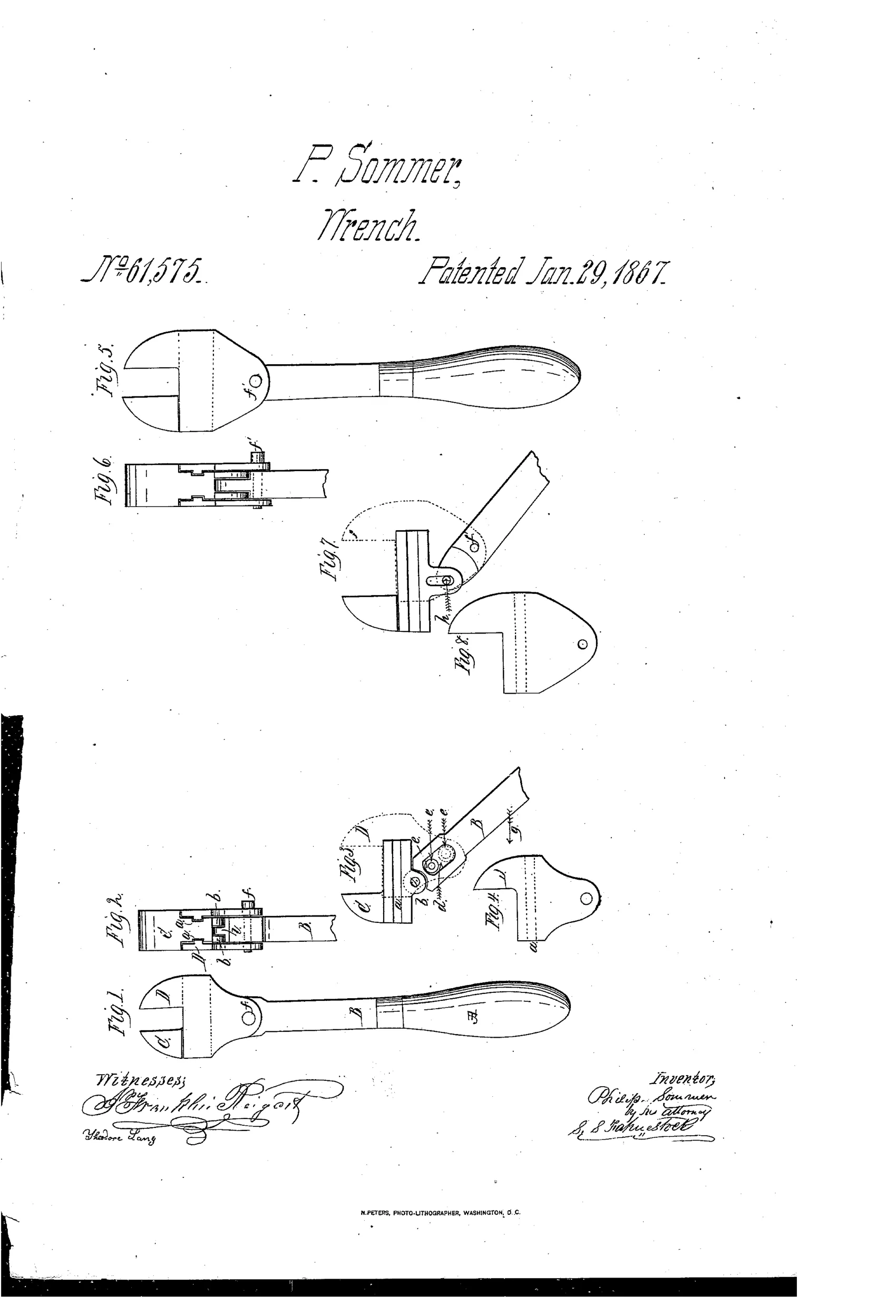
Self-adjusting screw wrench with grip-tightening jaws
⚙ How it works
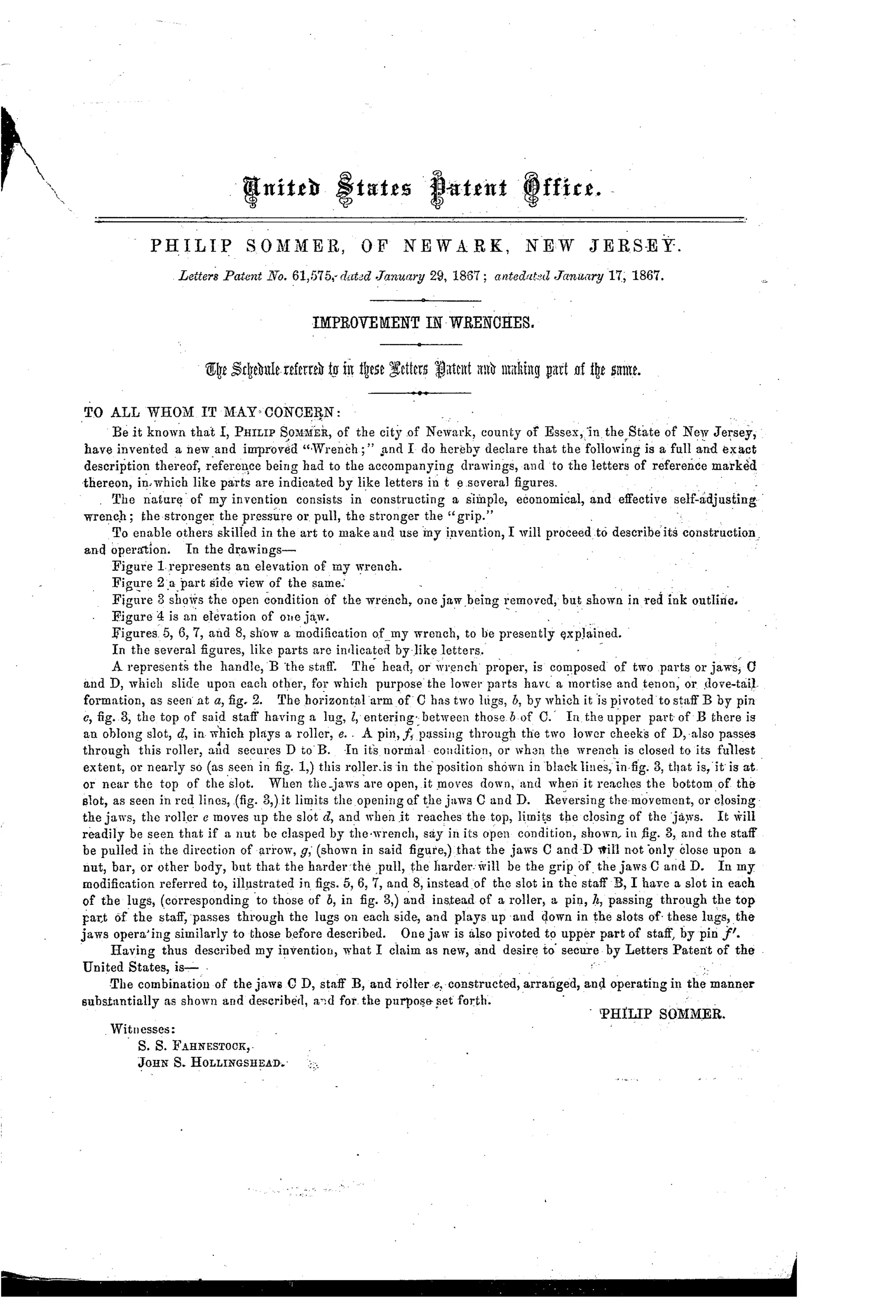
The wrench has a handle A and a staff B with a head formed of two sliding jaws C and D joined by a mortise-and-tenon or dovetail connection. A pin, roller, and slotted arrangement between the jaws and staff allow the jaws to open when pushed and close tightly onto a nut or bar as the staff is pulled. The harder the pull on the staff, the tighter the jaws grip the object, making the wrench self-adjusting. A modification replaces the staff slot and roller with slots in the jaw lugs and a pin, achieving the same self-tightening action.
⚙ What was claimed
“The combination of the jaws C D, staff B, and roller e, constructed, arranged, and operating in the manner substantially as shown and described, and for the purpose set forth.”
In plain English: The claim covers the specific combination of the two sliding jaws, the staff, and the roller working together to create a self-tightening grip, as described.
⚙ In the inventor’s words
“The nature of my invention consists in constructing a simple, economical, and effective self-adjusting wrench; the stronger the pressure or pull, the stronger the "grip."”— Philip Sommer, from the specification
Fate unknown
No manufactured Sommer self-adjusting wrench appears in the standard catalogued record; a marked surviving specimen would settle it.
⚙ Commentary
Sommer's 1867 idea is one of the earliest clean statements of a theme that would obsess wrench inventors for the next forty years: eliminate the adjusting screw entirely and let the workman's own pull do the clamping. Both jaws slide on the staff, linked to it by a pin, roller, and angled slots. Push the head onto the nut and the jaws spread; haul back on the handle and the slot geometry drags them together. His own line says it best — the stronger the pull, the stronger the grip.
Look closely at Figs. 3 and 7 and you can see the whole trick: the roller riding in the slotted staff between the jaw lugs is what converts axial pull into transverse squeeze. It's essentially the wedge-grip principle later made famous in pipe wrenches, but here applied symmetrically to both jaws, dovetailed together so they move as a matched pair. The second embodiment (Figs. 5-8) simplifies to slots in the lugs and a plain pin — Sommer clearly knew the roller version was fussier to make.
The weakness is the one that dogged every self-adjusting smooth-jaw wrench: it grips only while you pull, and on a worn or slightly rounded nut the jaws can skate before they bite. On pipe, with teeth, this principle conquered the world; on hex nuts it remained a clever near-miss. Sommer was early to the party, which counts for something. Reference: DATAMP.
Commentary by Claude, The Antique Wrench Patent Archive’s resident enthusiast