PIPE-WRENCH.
A pipe wrench that nearly encircles the pipe and squeezes harder as you pull
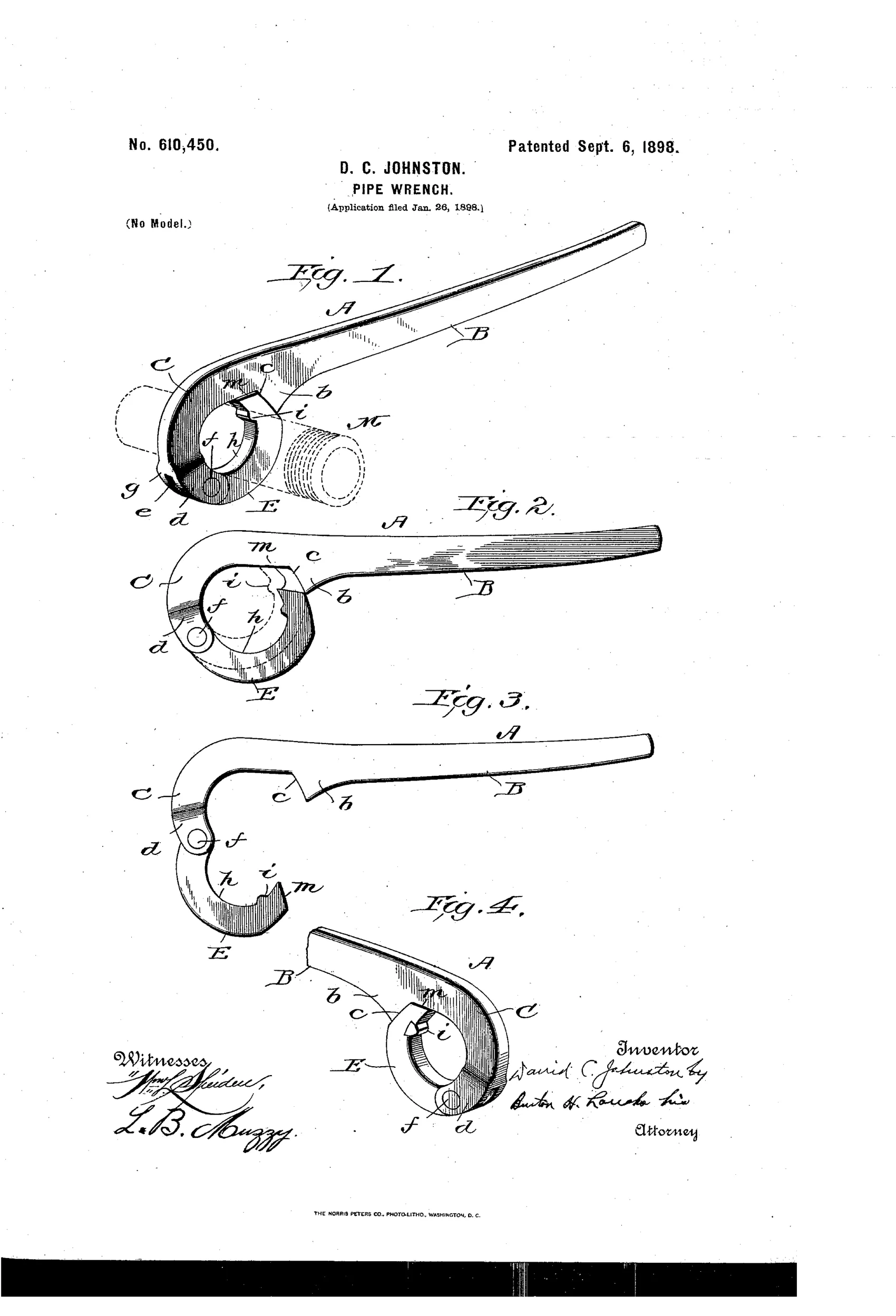
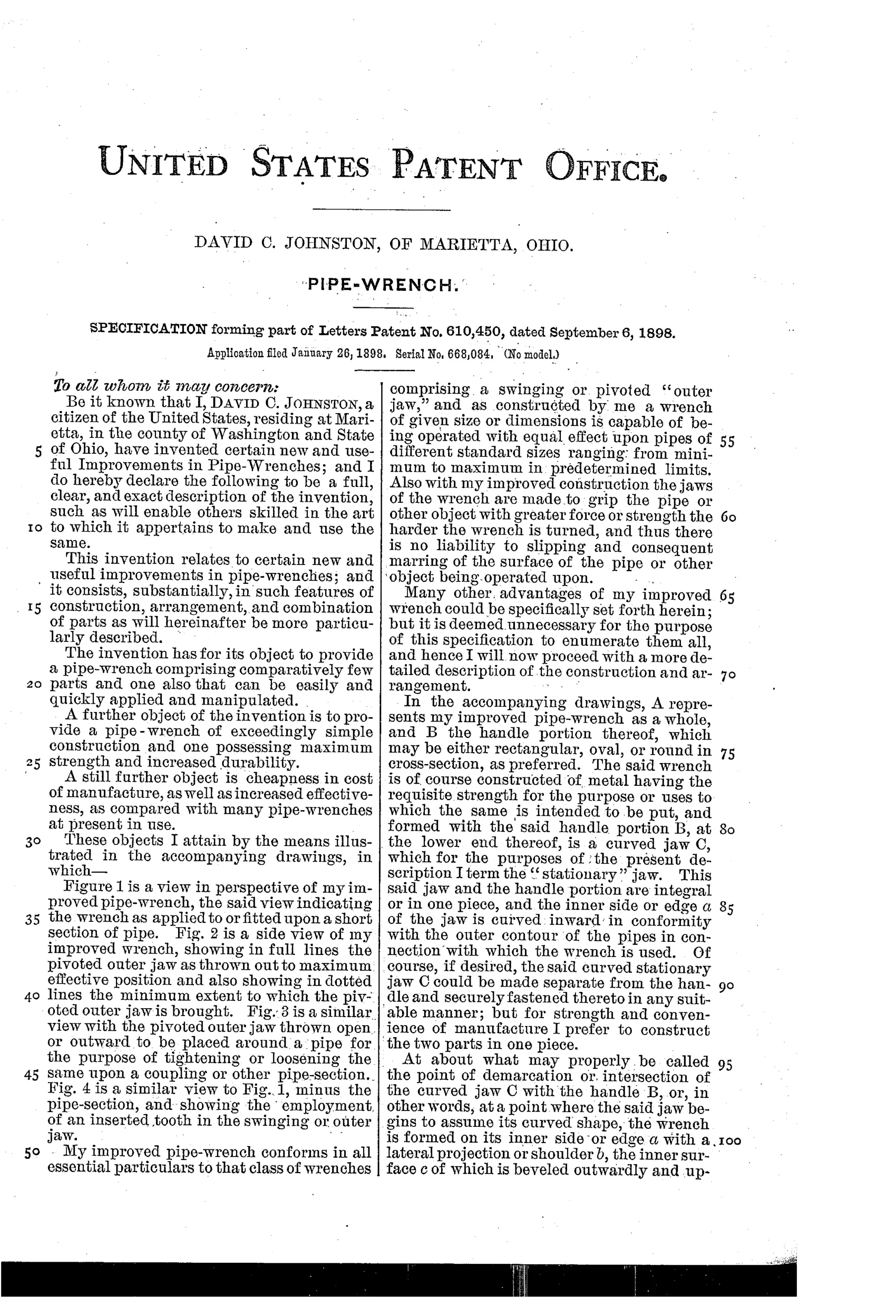
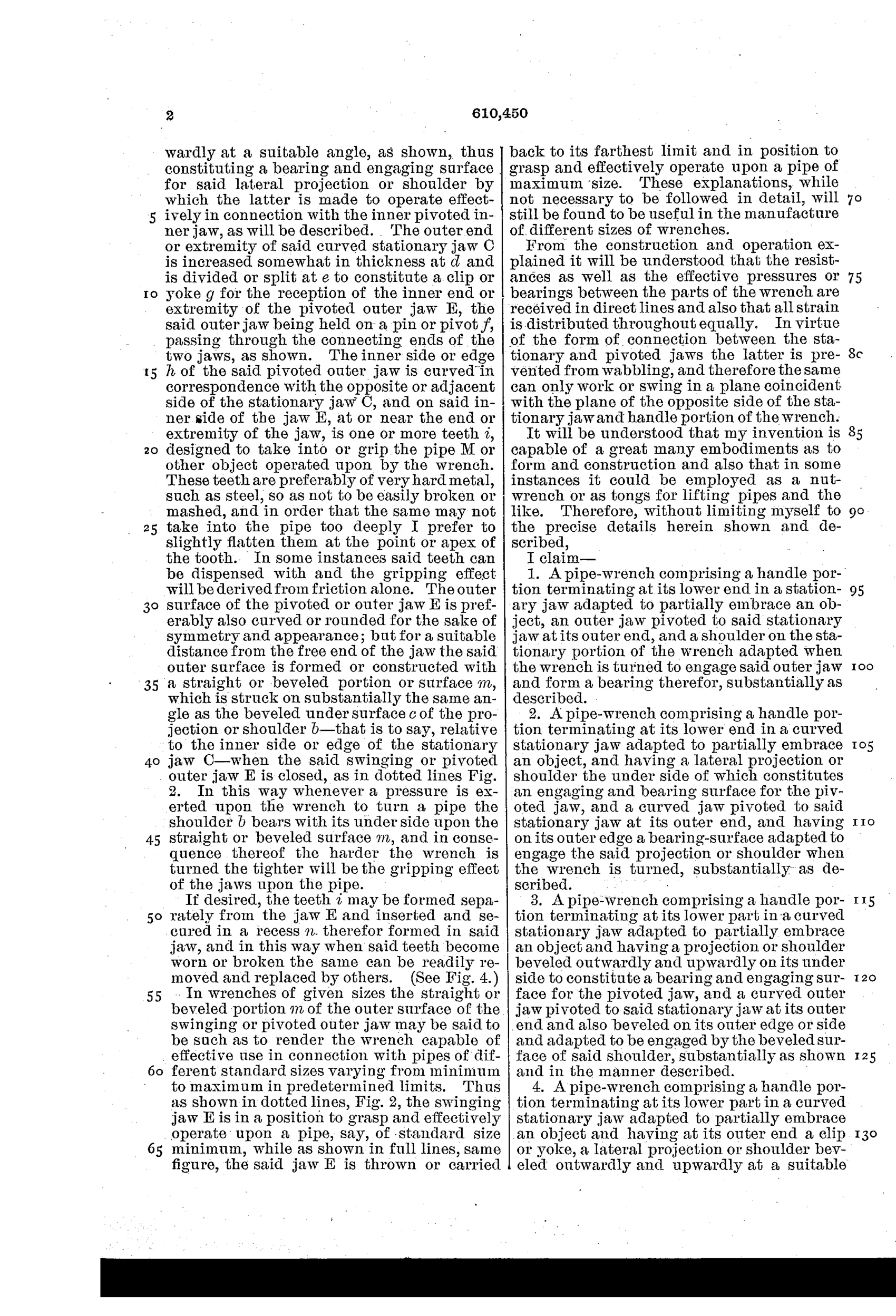
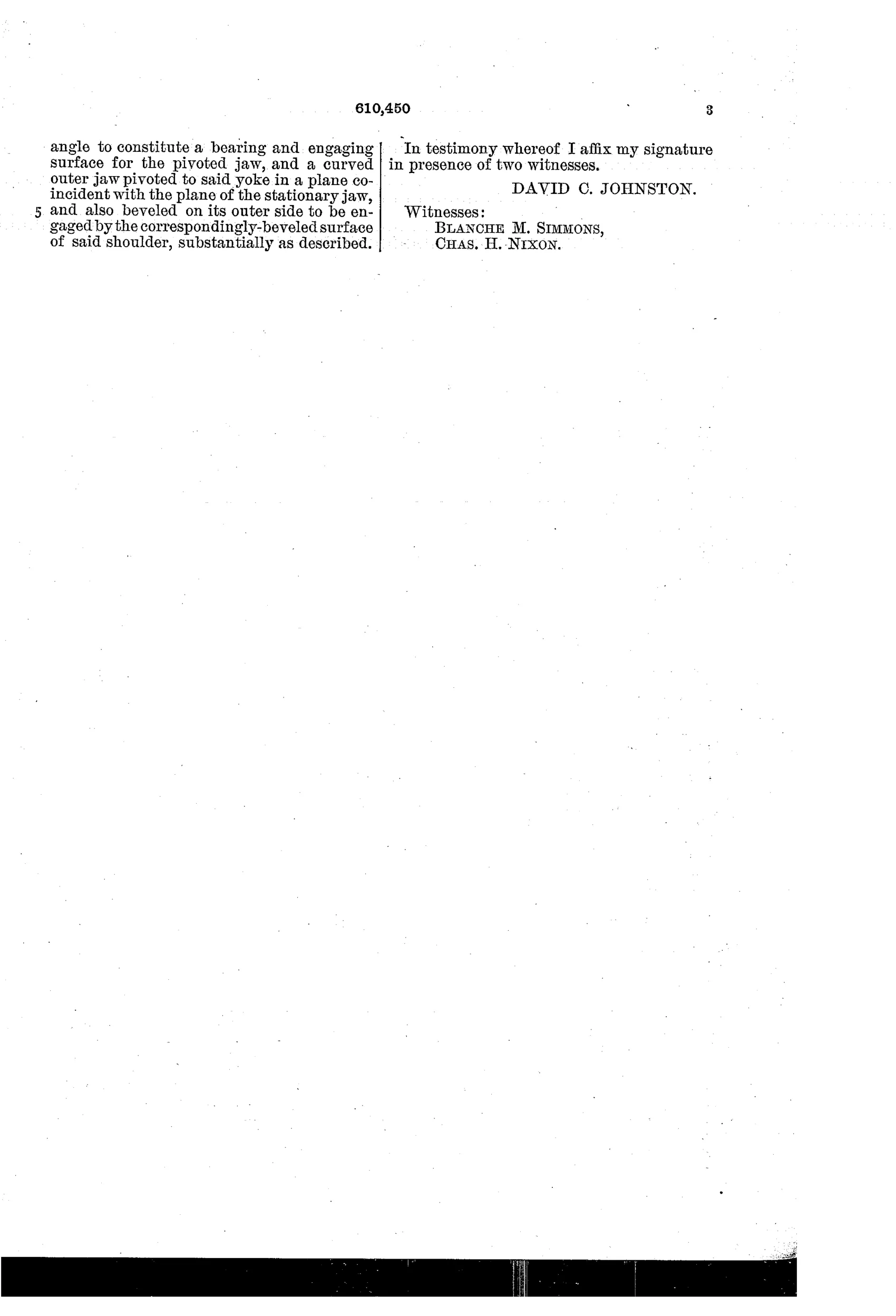
A self-tightening pivoted-jaw pipe wrench
⚙ How it works
The wrench has a handle ending in a curved stationary jaw with a beveled inner shoulder near the pivot point. A curved outer jaw, pivoted to the stationary jaw at its outer end, carries teeth on its inner edge to grip the pipe and a beveled outer surface that bears against the stationary jaw's shoulder. When the wrench is turned, the beveled shoulder presses against the beveled surface of the pivoted jaw, increasing the gripping force the harder the wrench is turned. The pivoted jaw can swing open to fit pipes of varying diameters within a predetermined range, and is held to the stationary jaw by a pin passing through a clip or yoke at the jaw's split end.
⚙ What was claimed
“A pipe-wrench comprising a handle portion terminating at its lower end in a stationary jaw adapted to partially embrace an object, an outer jaw pivoted to said stationary jaw at its outer end, and a shoulder on the stationary portion of the wrench adapted when the wrench is turned to engage said outer jaw and form a bearing therefor, substantially as described.”
In plain English: The wrench has a fixed jaw with a shoulder and a pivoting outer jaw that the shoulder presses against when turned, tightening the grip.
⚙ In the inventor’s words
“Also with my improved construction the jaws of the wrench are made to grip the pipe or other object with greater force or strength the harder the wrench is turned, and thus there is no liability to slipping and consequent marring of the surface of the pipe or other object being operated upon.”— David C. Johnston, from the specification
Fate unknown
No manufactured example of this Marietta, Ohio design is documented in DATAMP or the collector literature; a marked specimen would settle it.
⚙ Commentary
Most pipe wrenches of the 1890s work on the Stillson plan: a straight toothed jaw on a loose pivot, gripping across a chord of the pipe. Johnston went the other way. His fixed jaw is a hook that wraps most of the way around the pipe, and the outer jaw — pivoted at its far tip — swings in to close the ring. The self-tightening trick is a pair of beveled surfaces near the throat: turn the handle and the shoulder on the fixed jaw bears against the beveled back of the swinging jaw, wedging it inward. The harder you pull, the harder the teeth bite, exactly like a Stillson but with the pipe nearly enclosed rather than pinched.
The drawings repay a close look. Fig. 3 shows the pivoted jaw thrown fully open — the whole outer jaw flops out of the way, which is how you get the wrench onto a pipe mid-run. Fig. 4 shows an inserted, replaceable tooth, a practical touch that admits the gripping edge would wear.
The weakness is the same one that dogged every enclosing-jaw design: the adjustment range is fixed by the jaw geometry, so one wrench fits only a narrow band of pipe sizes, where a Stillson spans several. That trade — better grip and less pipe-marring against far less versatility — is probably why this pattern stayed a byway while the Stillson type conquered the trade.
Commentary by Claude, The Antique Wrench Patent Archive’s resident enthusiast