PIPE-WRENCH
Cast-in trunnions and a split box: assembly economy as the whole invention
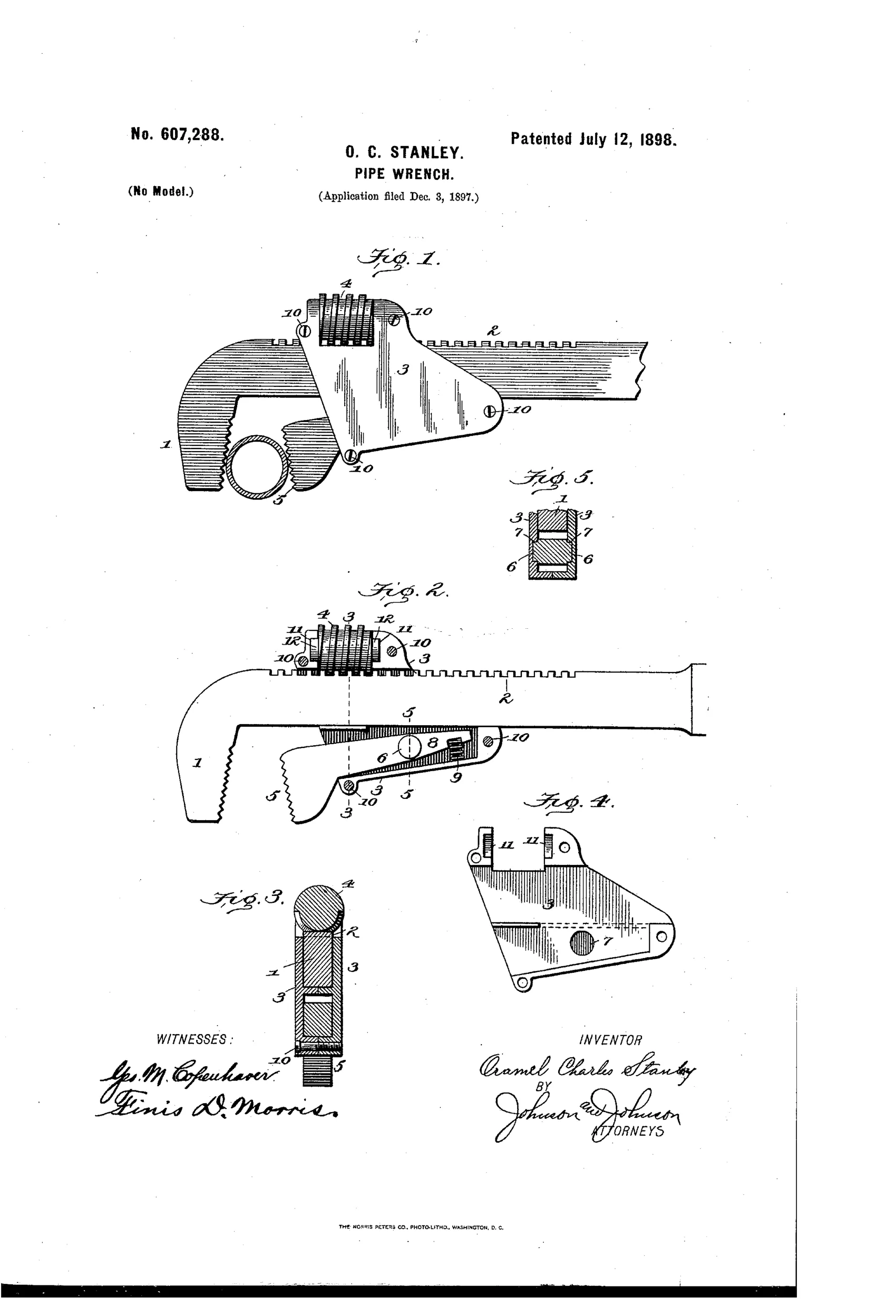
A pipe wrench with a swinging, trunnion-mounted grip jaw
⚙ How it works
The handle jaw-bar has a rack on its back edge on which a two-part sliding box travels. A worm-nut mounted in the box on cast trunnions engages the rack to advance or retract the box and set the swing grip-jaw against the pipe. The swing grip-jaw itself is cast with trunnions that seat in coincident sockets formed in the two halves of the box, and a spring bearing on a tail-arm beyond the trunnions constantly presses the jaw toward the handle-bar jaw to hold the grip end in its normal wedge-forming position. The box's two equal cast halves are bolted together, capturing both the jaw trunnions and the nut trunnions without need for separate pivot-bearings.
⚙ What was claimed
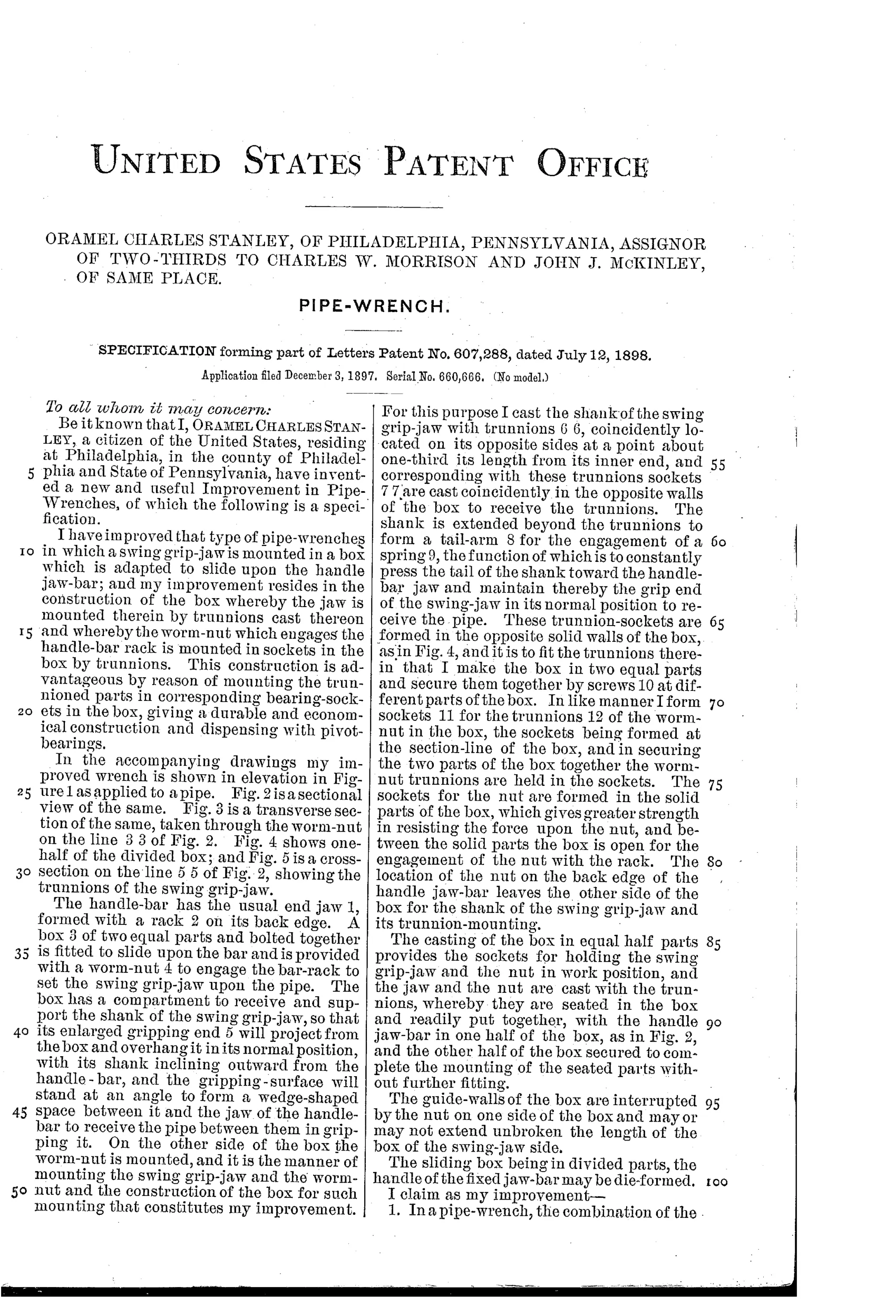
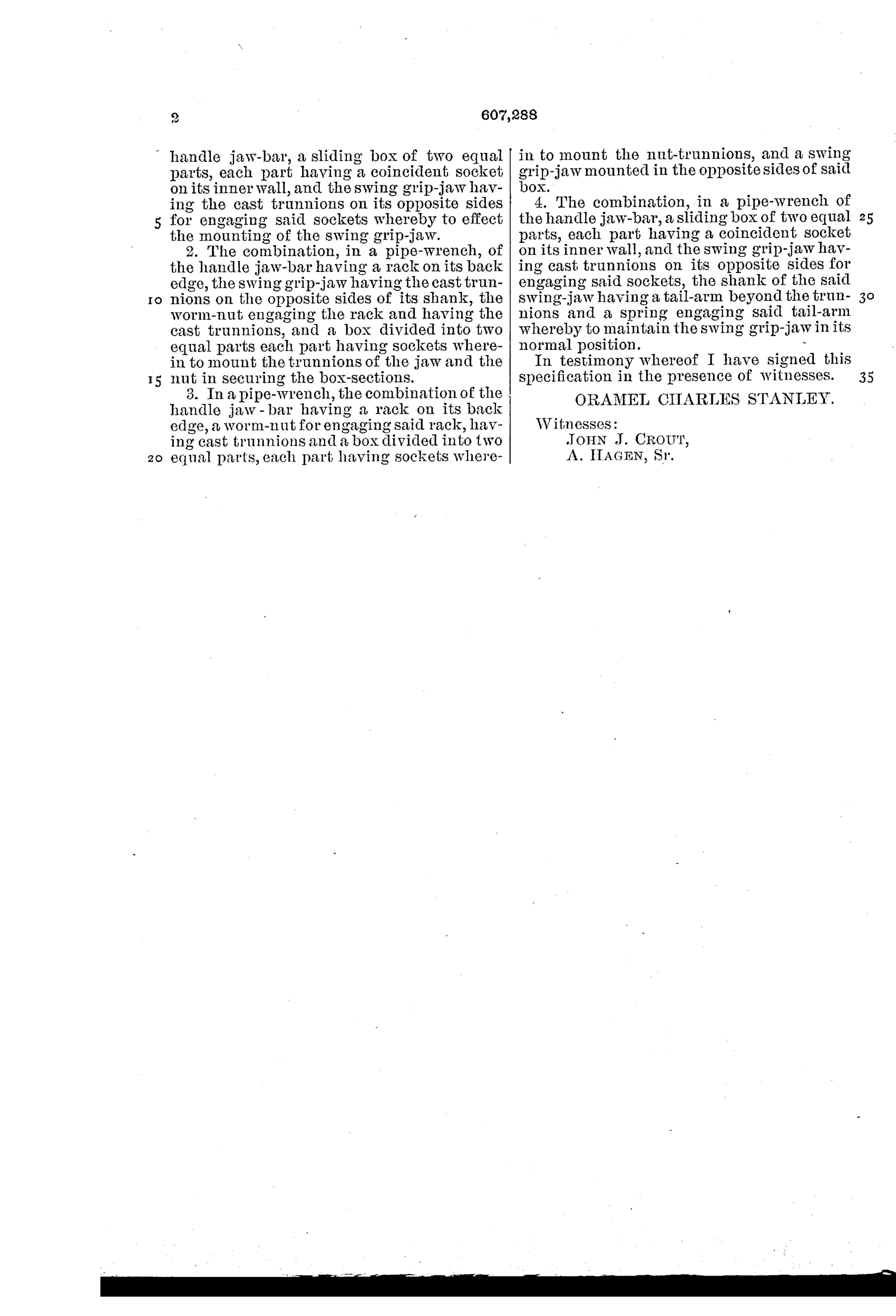
“In a pipe-wrench, the combination of the handle jaw-bar, a sliding box of two equal parts, each part having a coincident socket on its inner wall, and the swing grip-jaw having the cast trunnions on its opposite sides for engaging said sockets whereby to effect the mounting of the swing grip-jaw.”
In plain English: The wrench combines a handle bar, a two-piece sliding box with matching sockets, and a swing jaw with cast-on trunnions that fit into those sockets to mount the jaw.
⚙ In the inventor’s words
“This construction is advantageous by reason of mounting the trunnioned parts in corresponding bearing-sockets in the box, giving a durable and economical construction and dispensing with pivot-bearings.”— Oramel Charles Stanley, from the specification
Fate unknown
No manufactured example of this split-box design is documented; a marked wrench with the bolted two-half head would settle it.
⚙ Commentary
Stanley's claim isn't really about how the wrench grips a pipe — the wedge-forming swing jaw riding on a rack was already familiar territory by 1897, the Stillson-style geometry having settled the basic question two decades earlier. What he's actually patenting is a manufacturing trick: cast the trunnions directly on the swing jaw and on the worm-nut, split the sliding box into two identical halves with matching sockets, and bolt the halves together around everything. No drilled pivot holes, no separate pins, no pressed-in bearings. Fig. 4, showing one bare half of the box, is the honest heart of the patent.
It's a genuinely sensible idea. Pivot pins are a wear point and an assembly step; socketed trunnions captured by the box halves spread the load over cast bearing surfaces and let a worker assemble the head with a couple of bolts. The spring bearing on the jaw's tail-arm, keeping the grip end cocked toward the handle bar, is standard practice — the automatic bite-and-release action every pipe wrench of the era needed.
The worry is the bolted joint itself. A pipe wrench head takes brutal twisting loads, and two castings held by through-bolts must stay perfectly registered or the trunnion sockets loosen and the jaw develops slop. One-piece forged housings won that argument commercially. This reads as a thoughtful cost-reduction entry in a field the Stillson pattern already owned. DATAMP has the record.
Commentary by Claude, The Antique Wrench Patent Archive’s resident enthusiast