IMPROVEMENT IN RATCHET-WRENCHES
An 1866 socket set in embryo: quick-release ratchet sockets, thumb-button detent and all
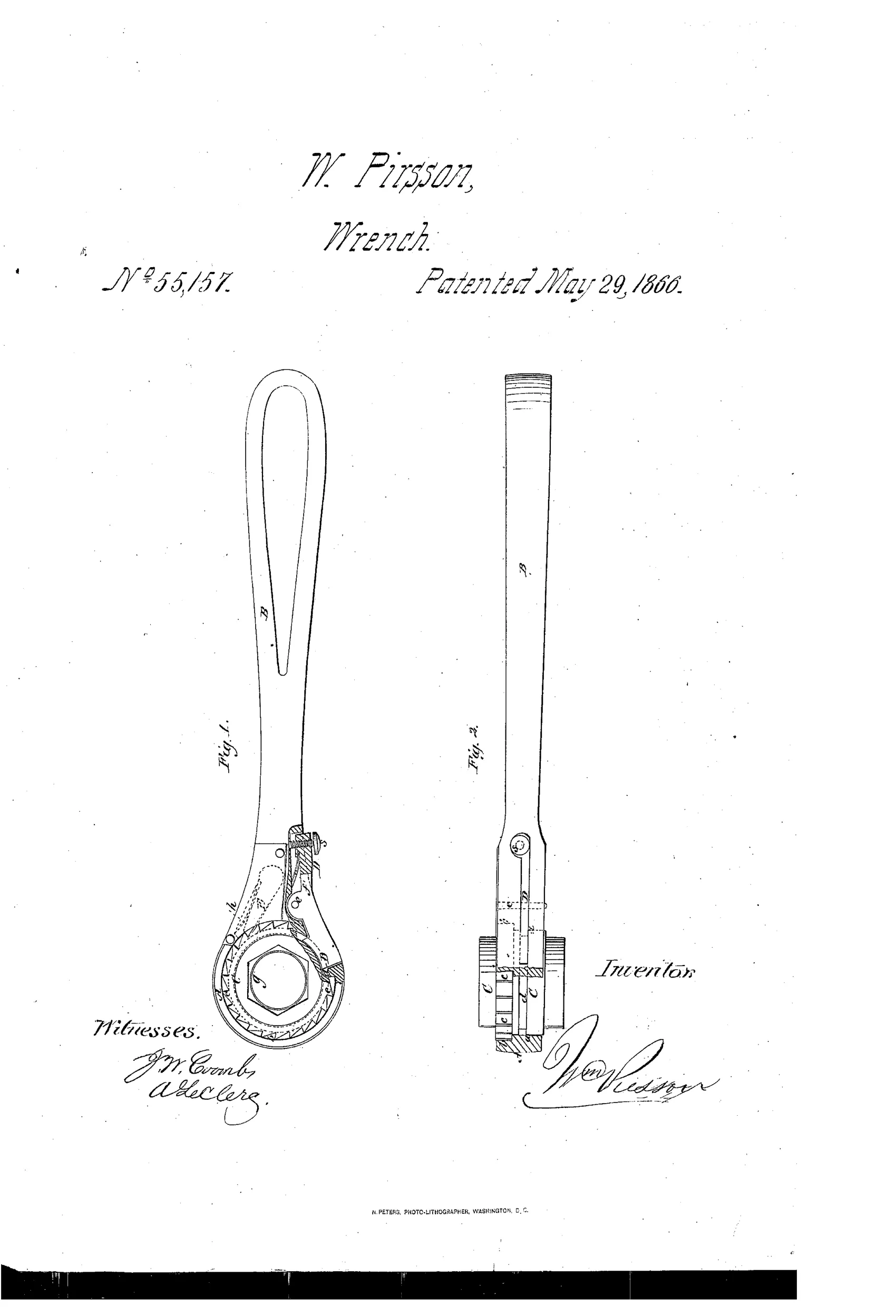
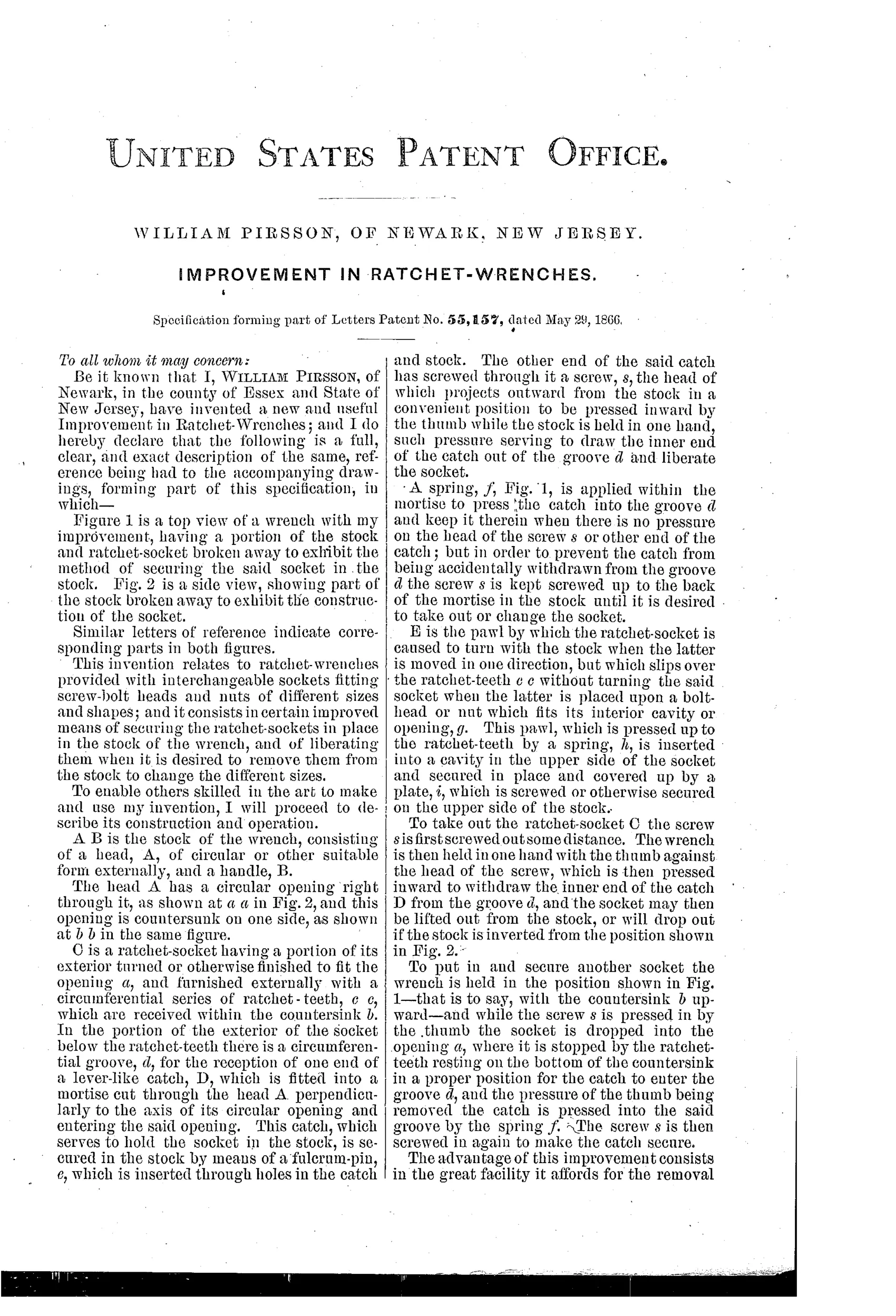
A ratchet wrench with interchangeable sockets
⚙ How it works
The wrench stock has a circular head with a countersunk opening that receives interchangeable ratchet-sockets fitted to different bolt heads and nuts. A lever-like spring catch engages a circumferential groove on the socket to hold it in place, and is released by pressing an exposed screw with the thumb. A spring-loaded pawl inside the socket engages ratchet teeth so the socket turns with the stock in one direction only, slipping without turning it in the other, allowing the tool to work a nut or bolt-head without lifting it off between strokes.
⚙ What was claimed
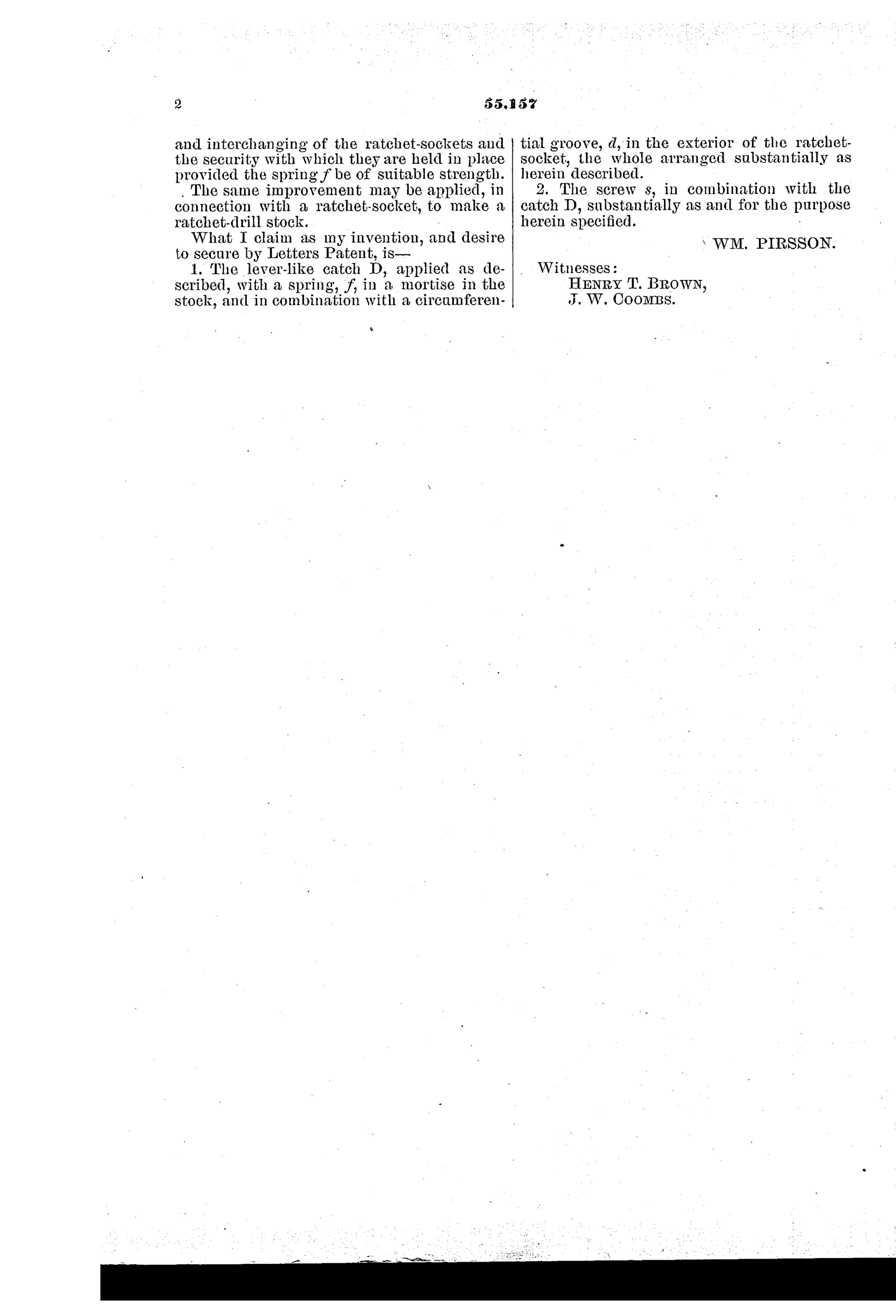
“1. The lever-like catch D, applied as described, with a spring, f, in a mortise in the stock, and in combination with a circumferential groove, d, in the exterior of the ratchet-socket, the whole arranged substantially as herein described.”
In plain English: A spring-loaded lever catch that fits into a groove on the ratchet socket to hold it securely in the wrench stock.
⚙ In the inventor’s words
“The advantage of this improvement consists in the great facility it affords for the removal and interchanging of the ratchet-sockets and the security with which they are held in place provided the spring f be of suitable strength.”— William Pirsson, from the specification
Paper patent — likely never produced
No manufactured Pirsson wrench is documented in DATAMP or collector literature, and the per-socket ratchet mechanism would have been costly to produce; a marked specimen would overturn this.
⚙ Commentary
Strip away the Civil War-era draftsmanship and Pirsson has drawn something startlingly familiar: a ratchet handle that accepts interchangeable sockets, held by a spring detent riding in a groove, released by pressing a button with your thumb. That's the working grammar of every modern socket set, sketched in Newark forty years before the ratchet-and-socket became a hardware-store staple.
The details are worth a slow look. Fig. 1 shows the head broken away so you can see the pawl inside the socket engaging ratchet teeth cut into the socket's own body — the ratcheting lives in the socket, not the handle, which means every socket carries its own teeth and pawl. That's the mechanically dubious part: it multiplies the fiddly bits and the cost per socket, and it's exactly the arrangement later designs abandoned by putting the ratchet in the head and making sockets dumb steel cups. Pirsson's own claim hedges charmingly, noting the sockets hold securely 'provided the spring f be of suitable strength.'
As a piece of the category's story, this sits at the beginning of a long branch. The 1860s produced a scatter of ratchet-wrench patents, mostly for machinists and drill stocks, and most went nowhere commercially — precision-fitted sockets were expensive to make before standardized bolt heads made them worth stocking. But as a statement of the idea, this one is unusually complete for its date.
Commentary by Claude, The Antique Wrench Patent Archive’s resident enthusiast