COMBINED WRENCH AND SCREW-DRIVER.
The thumb-nut that adjusts the jaws also locks the hidden screwdriver in place
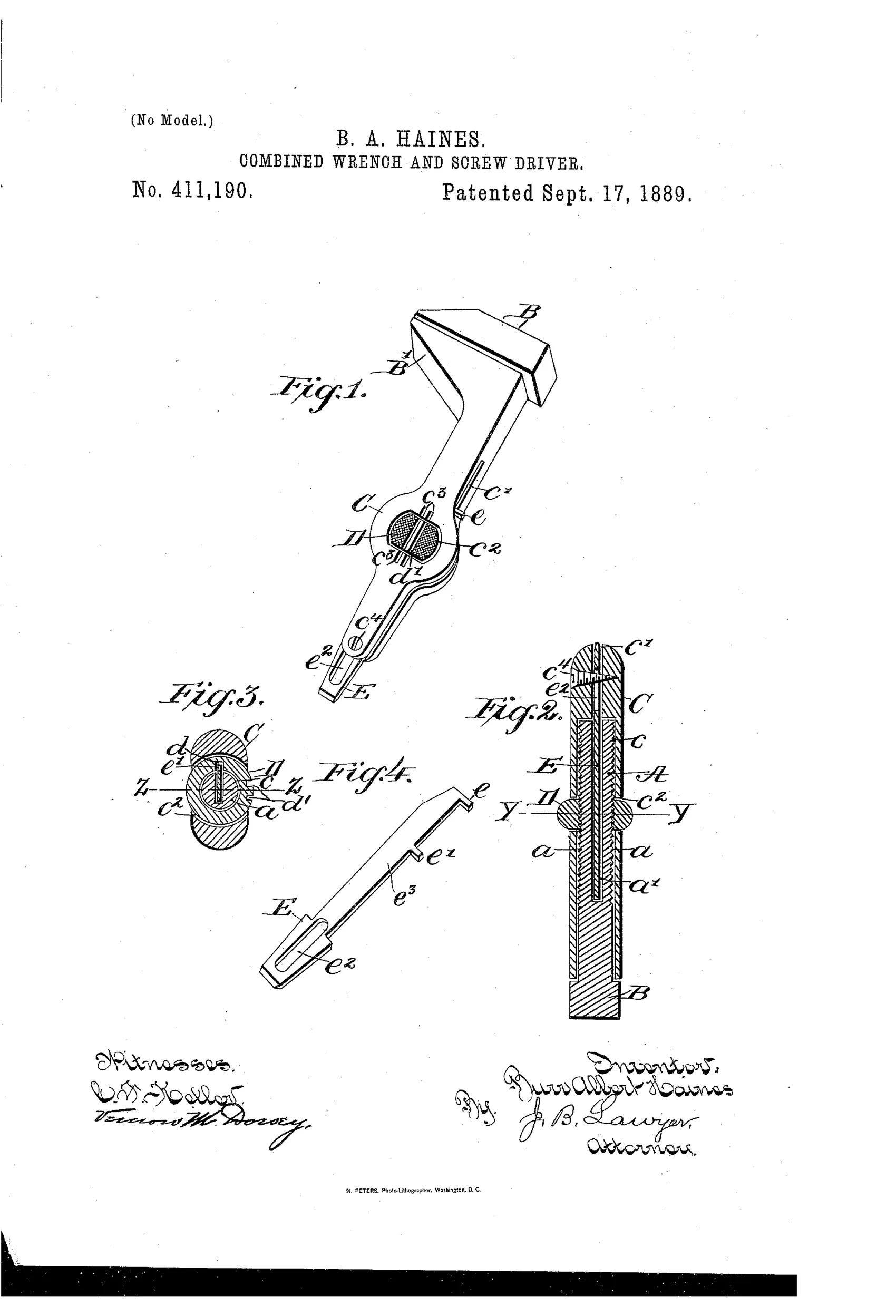
A wrench with a retractable screwdriver in its handle.
⚙ How it works
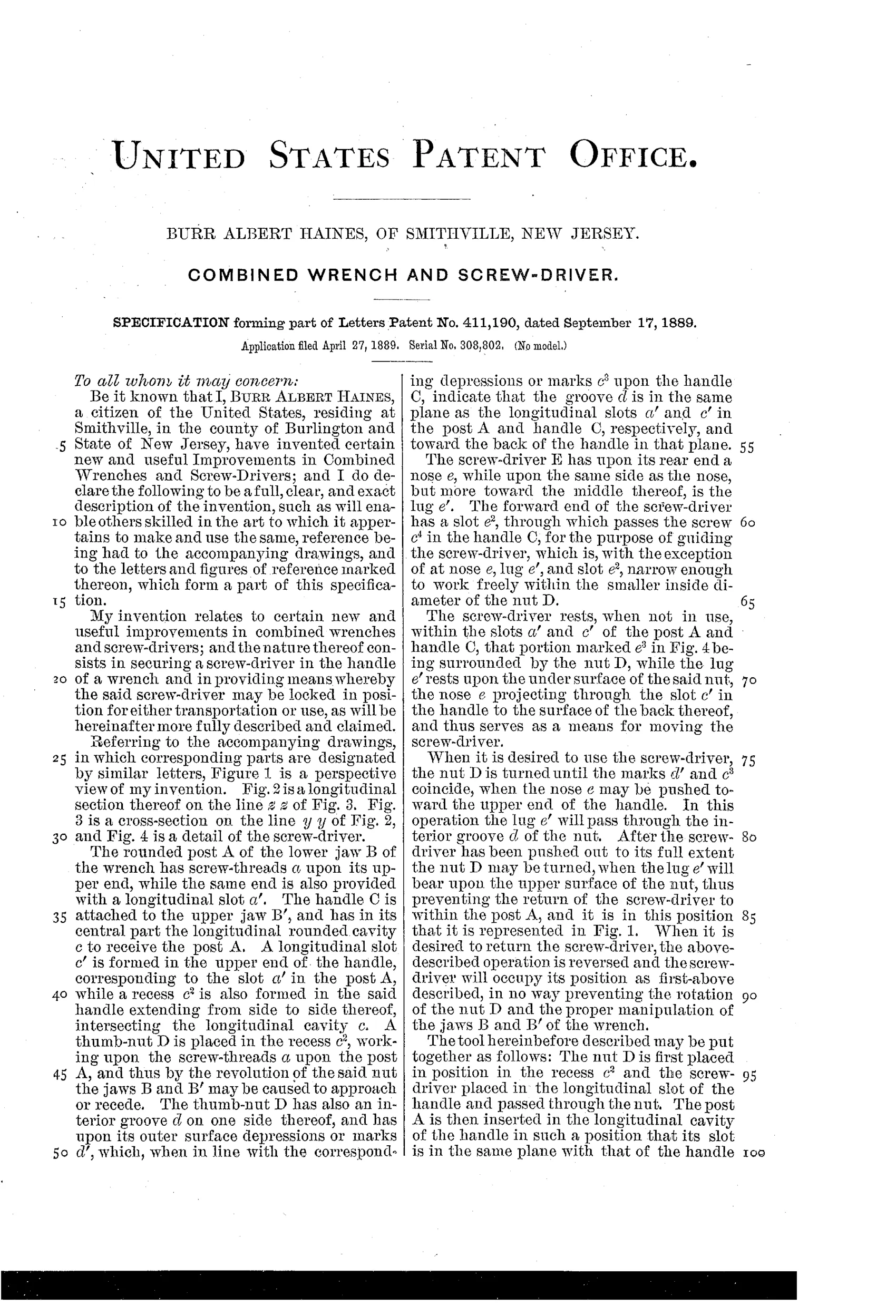
A rounded post carrying the lower jaw slides within a longitudinal cavity in the handle, which carries the upper jaw, and a thumb-nut with screw-threads on the post moves the jaws together or apart. The same handle houses a screw-driver that rests within longitudinal slots in the post and handle when not in use. A nose and lug on the screw-driver, together with an interior groove in the thumb-nut and alignment marks, allow the screw-driver to be pushed out through the nut and locked in the extended working position. Turning the nut back out of alignment prevents the screw-driver from retracting until desired.
⚙ What was claimed
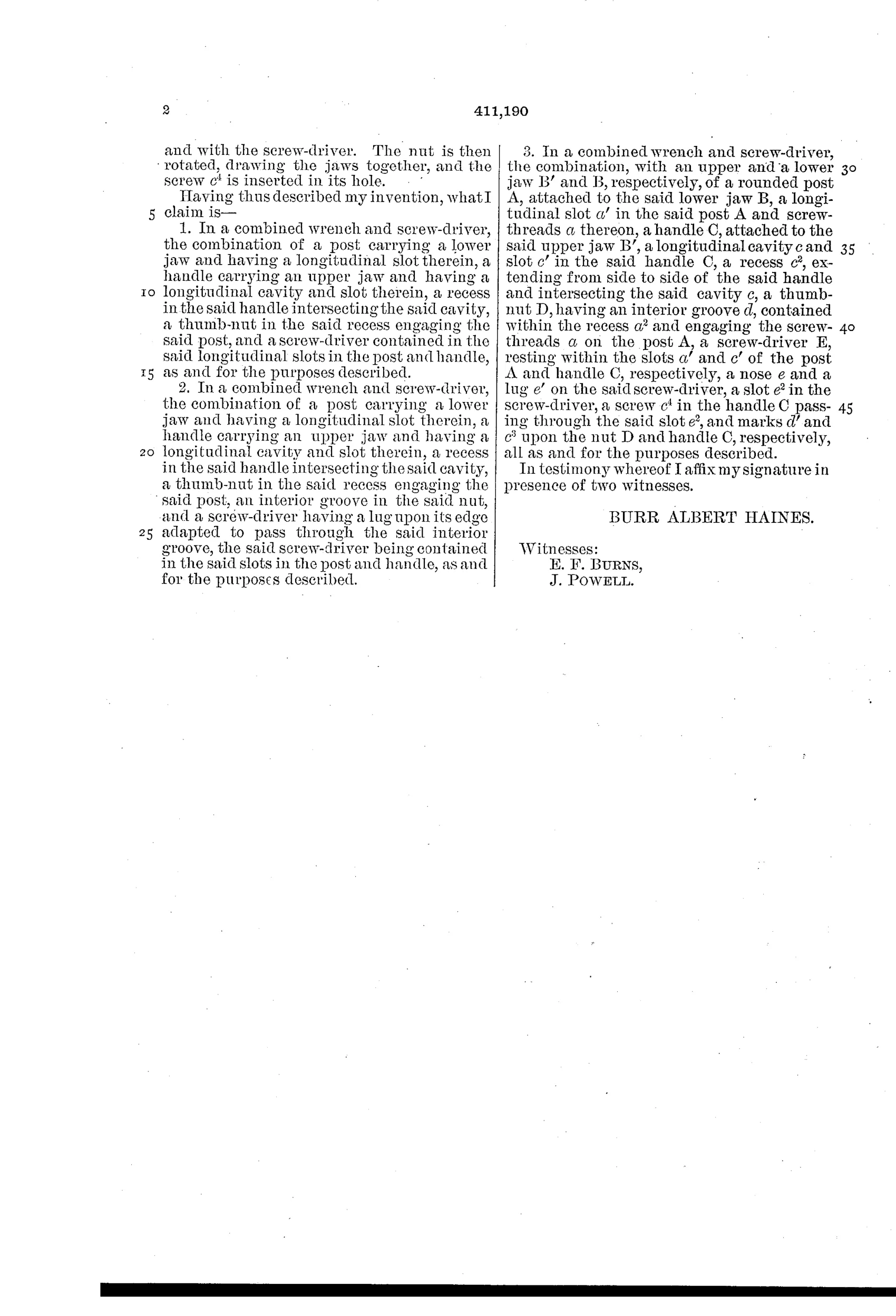
“1. In a combined wrench and screw-driver, the combination of a post carrying a lower jaw and having a longitudinal slot therein, a handle carrying an upper jaw and having a longitudinal cavity and slot therein, a recess in the said handle intersecting the said cavity, a thumb-nut in the said recess engaging the said post, and a screw-driver contained in the said longitudinal slots in the post and handle, as and for the purposes described.”
In plain English: The invention combines a wrench, whose jaws are adjusted by a threaded thumb-nut on a sliding post, with a screw-driver housed inside slots in the post and handle.
⚙ In the inventor’s words
“The screw-driver rests, when not in use, within the slots a' and c' of the post A and handle C, that portion marked e3 in Fig. 4 being surrounded by the nut D, while the lug e' rests upon the under surface of the said nut, the nose e projecting through the slot c' in the handle to the surface of the back thereof, and thus serves as a means for moving the screw-driver.”— Burr Albert Haines, from the specification
Fate unknown
No manufactured example of this Haines combination tool is documented; a surviving marked specimen would settle it.
⚙ Commentary
Combination tools were a dime a dozen by 1889, and stuffing a screwdriver into a wrench handle was the most obvious pairing of all. What earns Haines a second look is that he refuses to add a second mechanism to do it. The same thumb-nut that runs the sliding jaw post up and down doubles as the lock for the screwdriver: the blade lives in matching longitudinal slots cut through both the post and the handle, and a nose and lug on the blade engage an interior groove in the nut. Line up the marks, push the blade out through the nut, turn the nut a fraction, and the blade is trapped in the working position. One part, two jobs.
Fig. 4 is the piece a casual reader skips — that odd stepped blade with its little nose projecting through the back of the handle is the whole trick, since the nose is how you fish the retracted blade out without disassembling anything. Fig. 2's section shows how tightly everything nests; there is no wasted volume in that handle.
The worry is the one that haunts every wrench-plus-blade combination: a screwdriver housed in a slotted post is a screwdriver that weakens the post, and torque on the jaws is exactly where you don't want a hollow. Clever packaging, yes. A wrench you'd trust on a stubborn nut, less certain. DATAMP records the patent; a marked example would tell us whether anyone gambled on tooling it up.
Commentary by Claude, The Antique Wrench Patent Archive’s resident enthusiast