WRENCH
A spring-loaded jaw that bites harder the more you pull on the handle
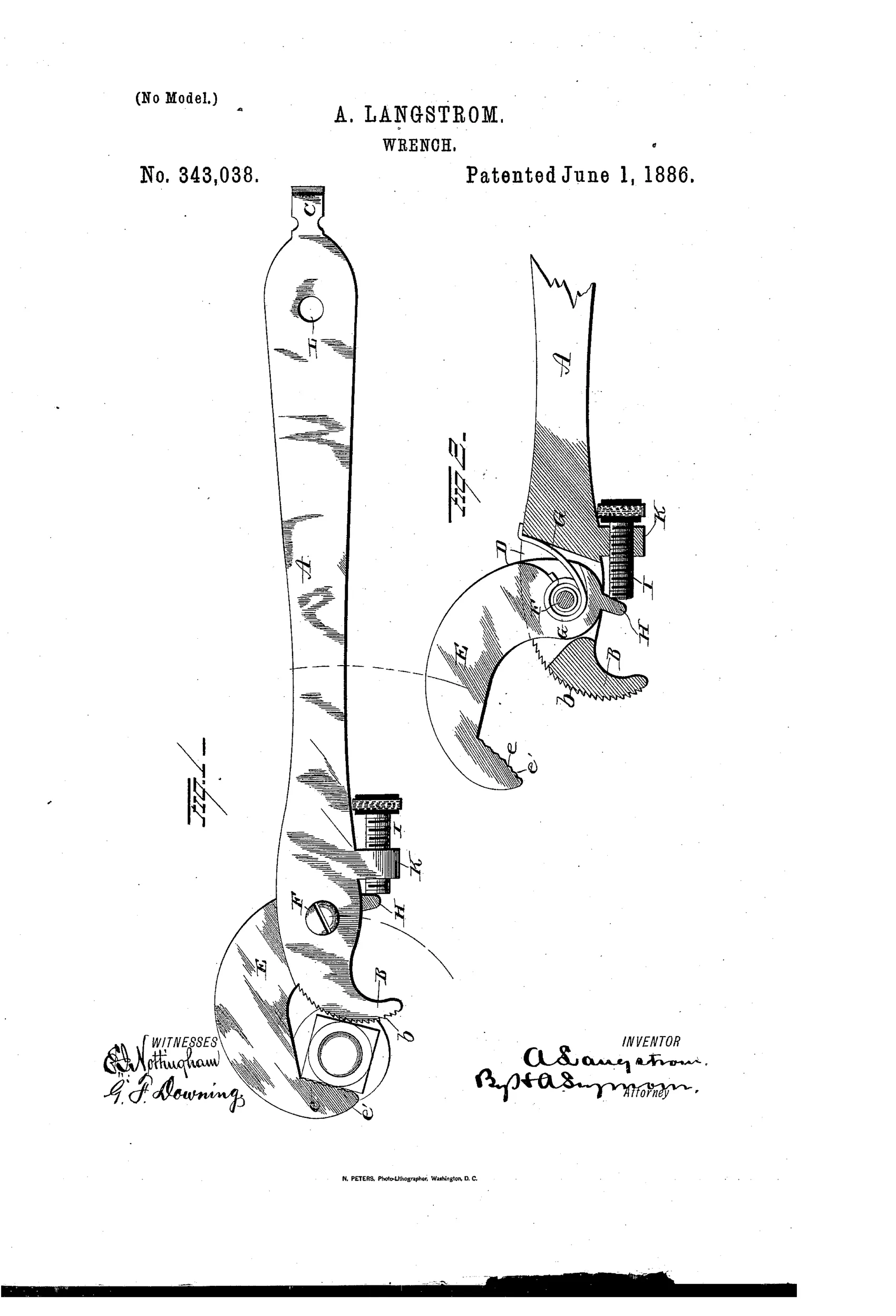
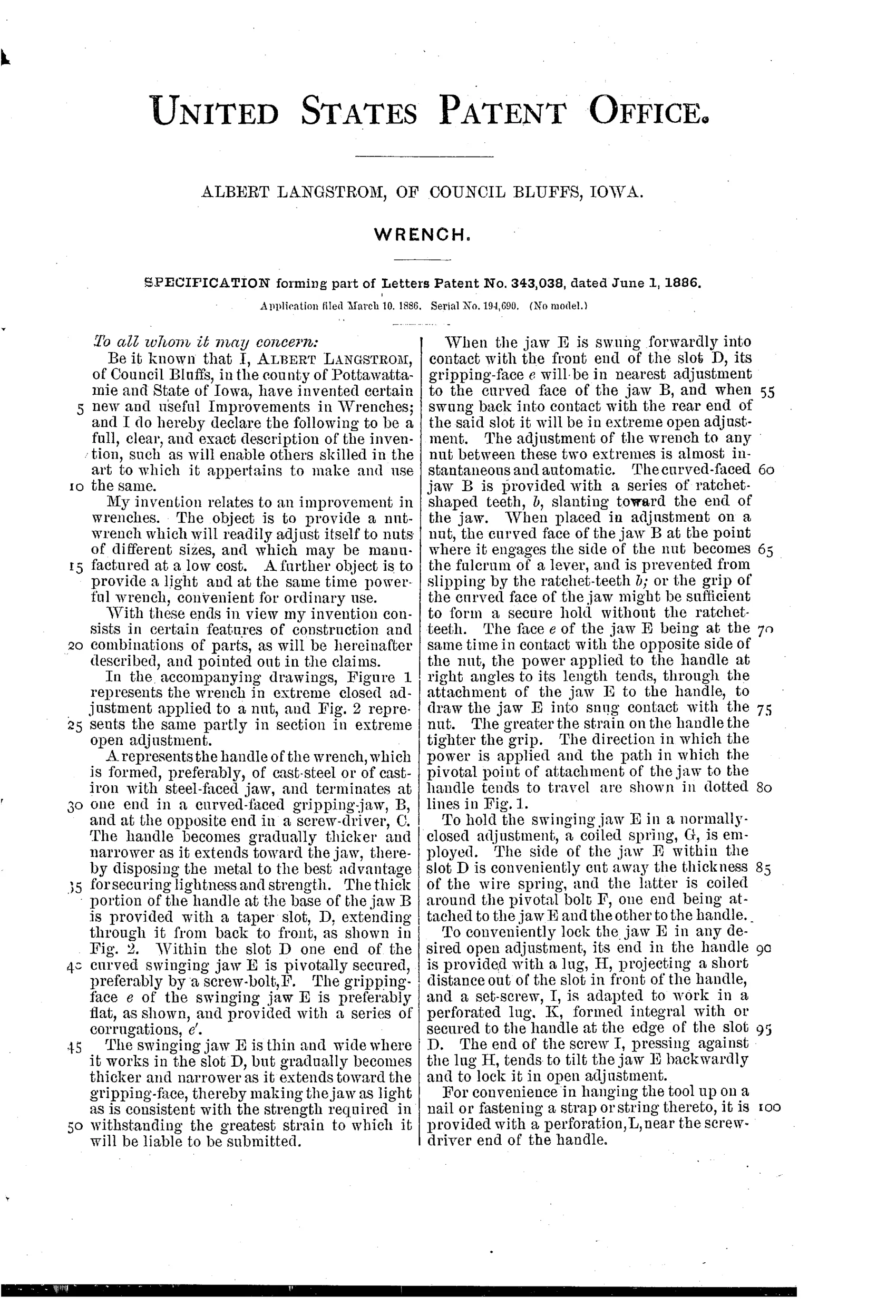
Self-adjusting nut wrench with spring-actuated swinging jaw
⚙ How it works
The handle terminates in a fixed curved-face jaw with ratchet-shaped teeth and a screwdriver at the opposite end. A swinging jaw is pivotally secured in a tapered slot at the base of the fixed jaw, allowing it to automatically adjust to nuts of different sizes. A coiled spring keeps the swinging jaw normally closed, while applied handle pressure draws the jaw tighter against the nut for a self-tightening grip. A set-screw working in a perforated lug can lock the swinging jaw in any desired open position by engaging a lug on the jaw.
⚙ What was claimed
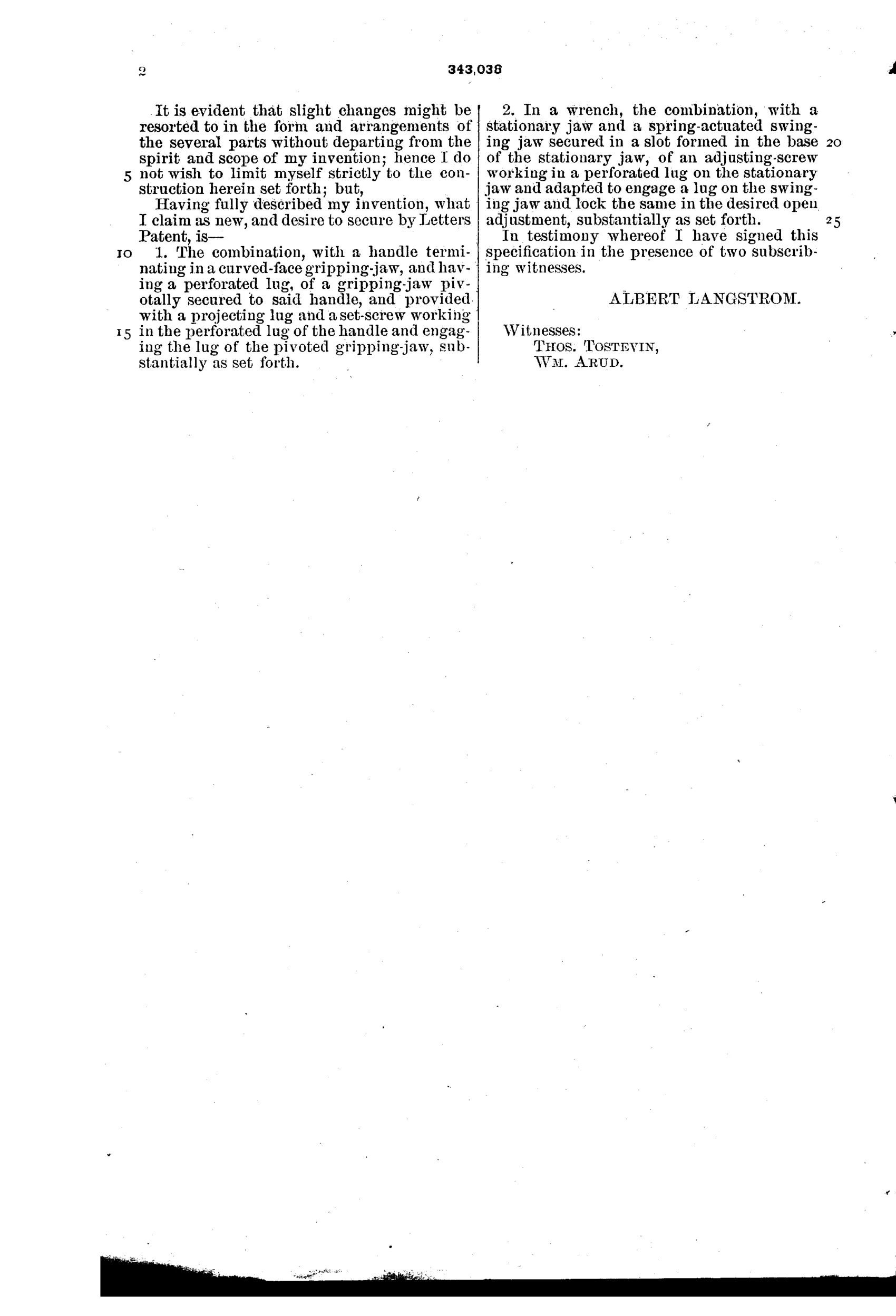
“The combination, with a handle terminating in a curved-face gripping-jaw, and having a perforated lug, of a gripping-jaw pivotally secured to said handle, and provided with a projecting lug and a set-screw working in the perforated lug of the handle and engaging the lug of the pivoted gripping-jaw, substantially as set forth.”
In plain English: A wrench combining a handle with a fixed curved jaw and perforated lug, plus a pivoting jaw with its own lug, locked in place by a set-screw threaded through the fixed lug.
⚙ In the inventor’s words
“The adjustment of the wrench to any nut between these two extremes is almost instantaneous and automatic.”— Albert Langstrom, from the specification
Fate unknown
No manufactured example of this Council Bluffs design appears in the standard references; a marked specimen or DATAMP-linked catalog entry would settle it.
⚙ Commentary
Langstrom's wrench belongs to the self-adjusting family — the pre-1900 dream of a wrench that grabs any nut without a screw to fiddle. His swinging jaw pivots in a tapered slot at the root of the fixed curved jaw, a coiled spring holding it closed. The geometry is the good part: the pivot sits so that torque on the handle draws the movable jaw tighter against the nut. It is essentially an alligator wrench crossed with a cam-grip pipe wrench, and the ratchet teeth on the curved face confirm the pipe-wrench thinking. His claim that adjustment is 'almost instantaneous and automatic' is fair — this is a genuine one-hand quick-adjust, the mechanical peak the whole category was chasing.
Look closely at Fig. 2 and you'll see the second-thought feature that makes the patent claim: a set-screw threading through a perforated lug on the handle to catch a lug on the swinging jaw. That lets you lock the jaw at a chosen opening — a tacit admission that self-adjusting jaws tend to chew corners off nuts, and sometimes you just want a fixed span. The screwdriver tip on the butt is the era's obligatory combination-tool garnish.
The weakness is the same one that killed most self-adjusters: line contact and toothed faces are fine on pipe, brutal on finished hex nuts. Clever, workable on rough farm hardware, and a dead end for precision work.
Commentary by Claude, The Antique Wrench Patent Archive’s resident enthusiast