IMPROVEMENT IN WRENCHES FOR INSERTING BUNG-BUSHES
An expanding cone wrench that grips bung-bushes from inside, cooper's-shop specialty from Chicago
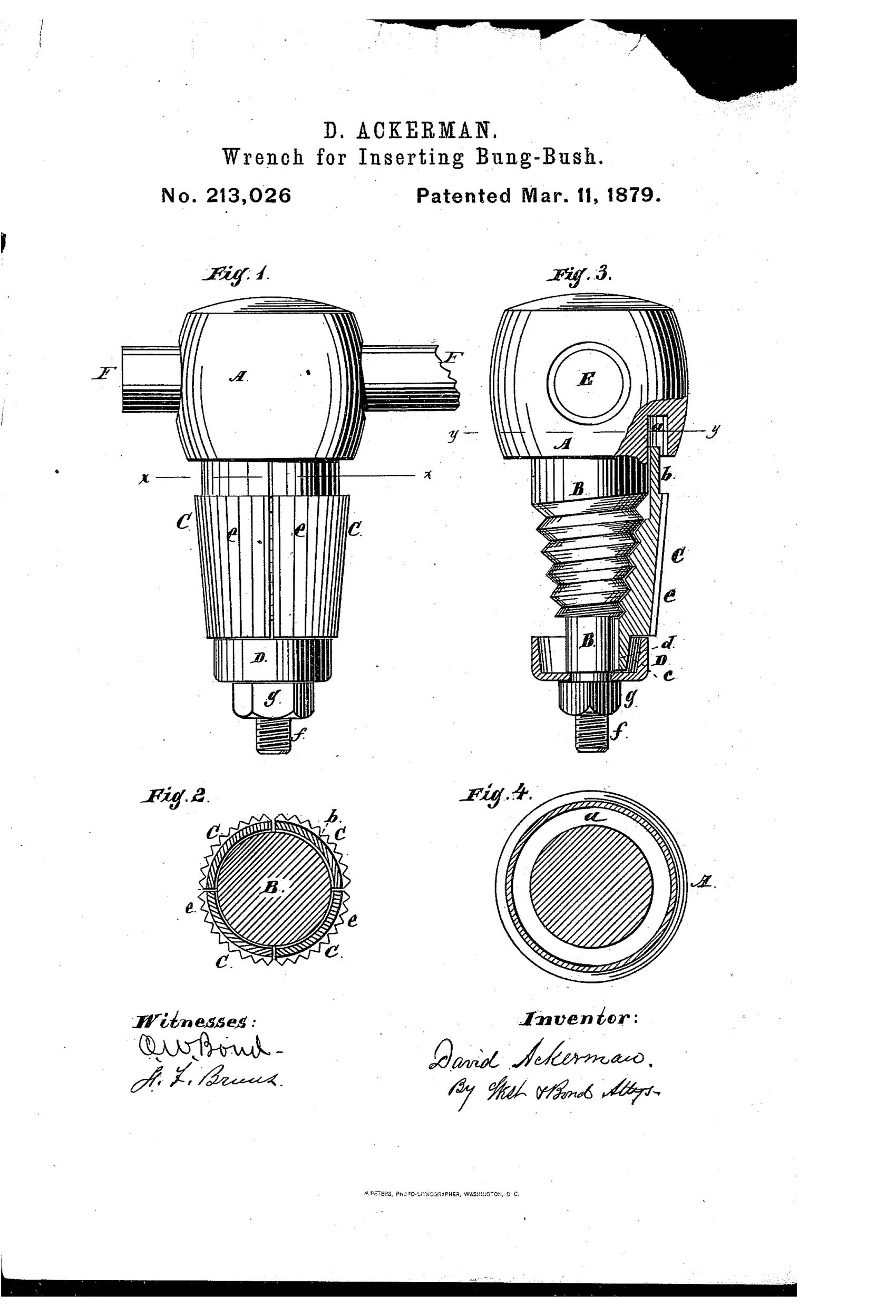
Expanding wrench tool for inserting bung-bushes
⚙ How it works
A head with a conical screw-threaded stem carries a set of expanding plates or leaves arranged around the stem. Turning the head via a rod inserted through it forces the stem down, causing the plates to spread outward uniformly against the interior of a bung-bush. A retaining cap secured by a nut at the base holds the lower ends of the plates in position while allowing them to slide as they expand, gripping the bush evenly on all sides so it can be inserted without breaking, then released by reverse rotation.
⚙ What was claimed
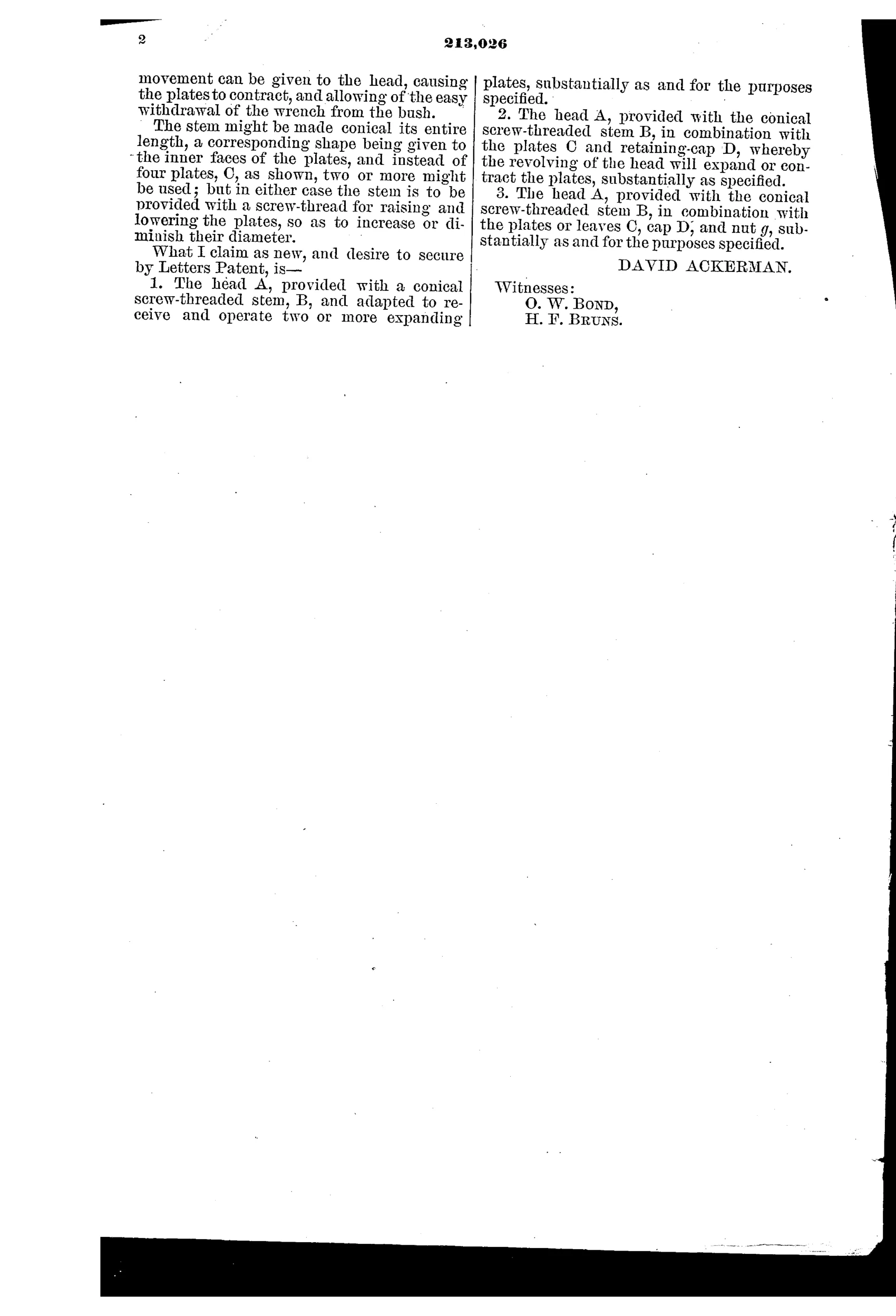
“The head A, provided with a conical screw-threaded stem, B, and adapted to receive and operate two or more expanding plates, substantially as and for the purposes specified.”
In plain English: A wrench head with a cone-shaped, screw-threaded stem that operates two or more expanding plates to grip and insert a bung-bush.
⚙ In the inventor’s words
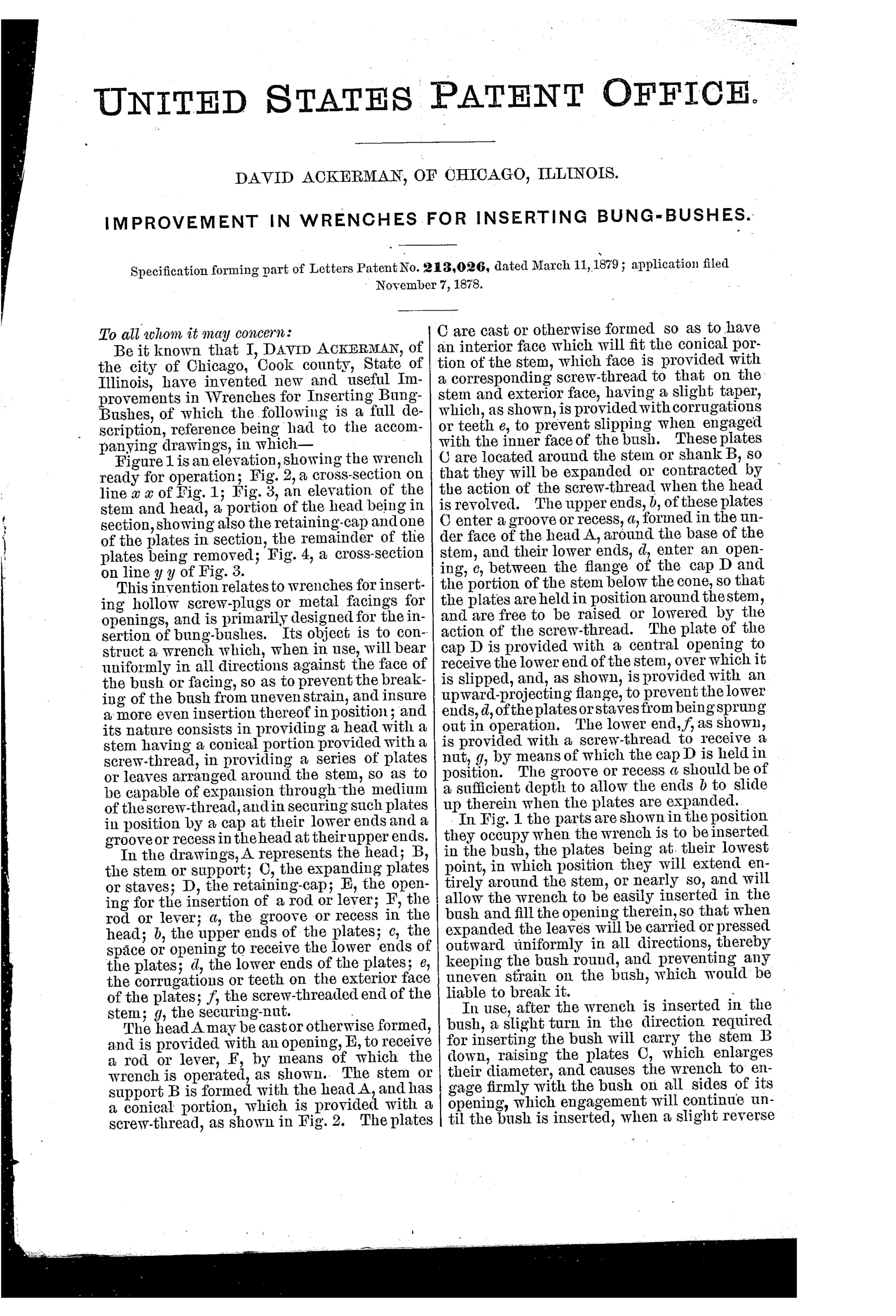
“Its object is to construct a wrench which, when in use, will bear uniformly in all directions against the face of the bush or facing, so as to prevent the breaking of the bush from uneven strain, and insure a more even insertion thereof in position.”— David Ackerman, from the specification
Fate unknown
No catalogued or DATAMP-documented example of this specific tool is known to me; a marked specimen or a cooperage supply catalog listing would settle it.
⚙ Commentary
This one stretches the word "wrench" in an interesting direction. Ackerman isn't turning a nut — he's driving a threaded bung-bush (the metal or wooden collar in a barrel head) into its hole, and the problem is that any tool gripping such a thin ring unevenly will crack it. His answer is essentially an internal expanding mandrel: a conical screw-threaded stem inside the head, surrounded by a set of leaves. Twist the crossbar and the cone forces the plates outward uniformly, so the bush is gripped from within on all sides before you wind it into the barrel. Reverse to collapse and release.
Look at Fig. 2 and you'll see the plates carry serrated outer faces — that's the bite that lets torque transfer to the bush without slipping. Fig. 3 shows the retaining cap at the base, which keeps the plates from simply falling off while still letting them slide as the cone spreads them. That detail is the difference between a workshop sketch and a tool that stays together in a cooper's hands.
The expanding-cone idea is sound — it's the same principle later ubiquitous in lathe mandrels and pipe plugs. Where this sits in the wrench story is off the main line: not an adjustable-jaw evolution but a single-purpose cooperage tool from the era when barrels moved everything. Whether the trade bought it in numbers is another question; specialty tools like this rarely left a paper trail.
Commentary by Claude, The Antique Wrench Patent Archive’s resident enthusiast