IMPROVEMENT IN PIPE-WRENCHES WITH CUTTERS.
Cut the pipe, grip it, and deburr the edge — one Brooklyn tool
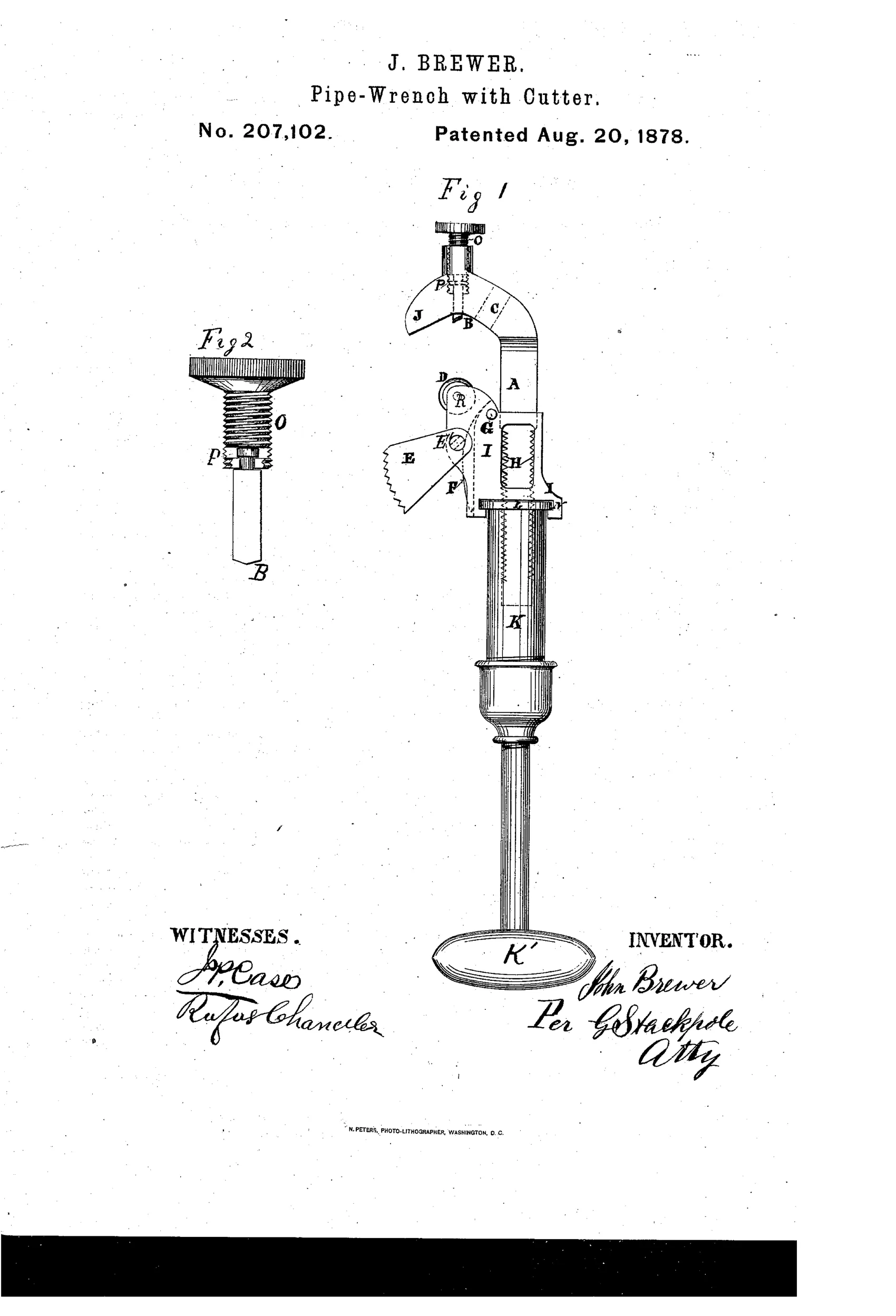
Combined pipe-wrench and pipe-cutter tool.
⚙ How it works
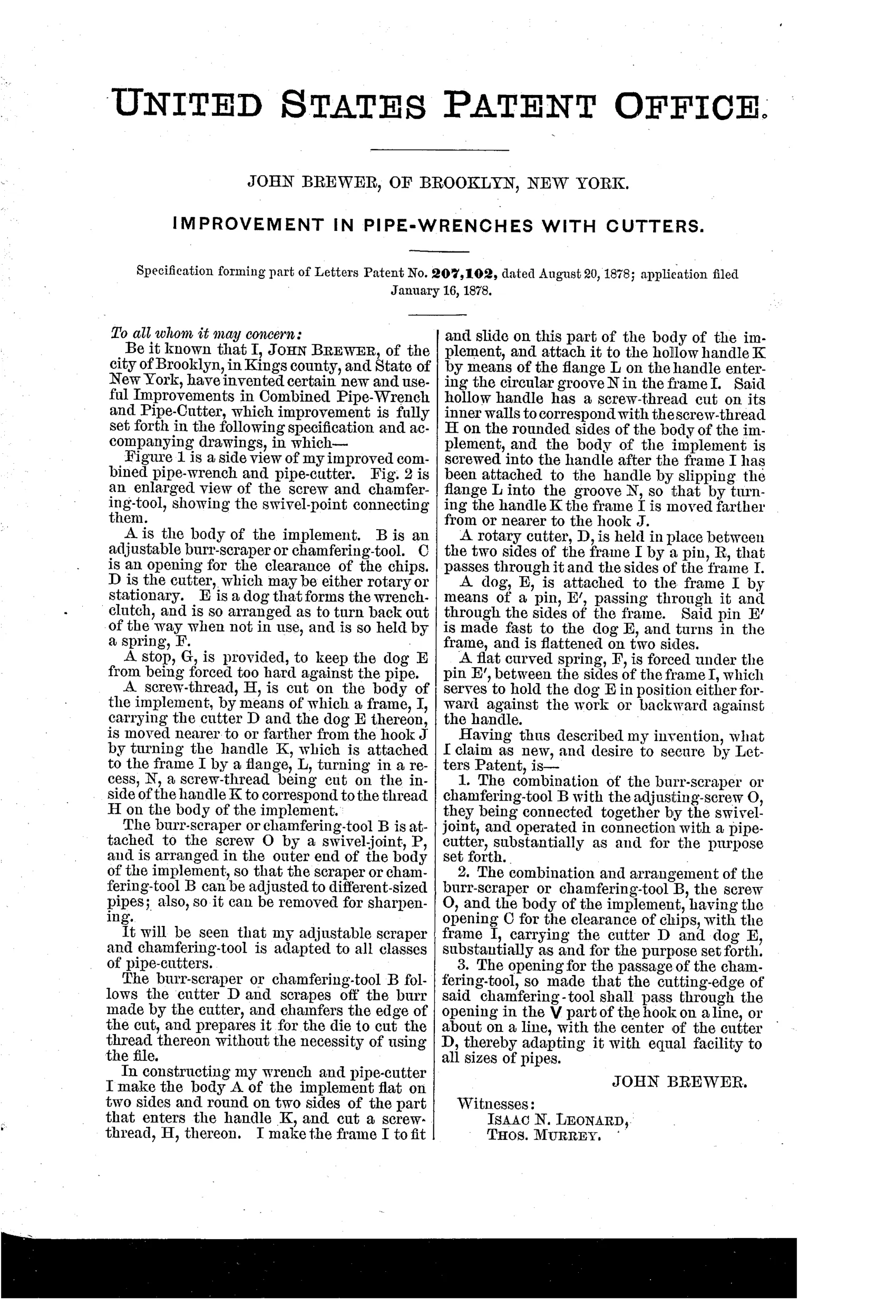
The body of the implement has a screw-thread on its rounded sides that engages a corresponding thread inside a hollow handle, so turning the handle advances or retracts a frame carrying a rotary cutter and a spring-loaded dog. The dog forms a wrench-clutch that grips the pipe and can pivot back out of the way when not needed, held in position by a curved flat spring. An adjustable burr-scraper or chamfering tool is attached via a swivel joint to an adjusting screw, allowing it to follow the cutter and clean the burr left by the cut, preparing the pipe edge for threading without filing.
⚙ What was claimed
“The combination of the burr-scraper or chamfering-tool B with the adjusting-screw O, they being connected together by the swivel-joint, and operated in connection with a pipe-cutter, substantially as and for the purpose set forth.”
In plain English: A chamfering tool connected to an adjusting screw by a swivel joint, used together with a pipe-cutter to clean and prepare the cut edge of a pipe.
⚙ In the inventor’s words
“It will be seen that my adjustable scraper and chamfering-tool is adapted to all classes of pipe-cutters.”— John Brewer, from the specification
Fate unknown
No manufactured example or catalog listing is documented at DATAMP; a marked specimen would settle it.
⚙ Commentary
Brewer's real invention here isn't the wrench or even the cutter — it's the little screw at the top, shown enlarged in Fig. 2. That's a chamfering tool on a swivel joint, fed by the adjusting screw O, and the sole claim covers it. Every pipe fitter of the era knew the routine: a rotary cutter leaves a raised burr on the pipe end, which has to be filed off before you can cut a clean thread. Brewer builds the deburring step into the tool itself, so the scraper follows the cutter around the pipe and the edge comes off ready for the die.
The rest of the drawing rewards a closer look. The threaded body inside the hollow handle means the whole cutter frame advances by twisting the grip — the same instinct as the Coes-style handle adjustment, applied to feed pressure instead of jaw width. The spring-backed dog is the wrench half of the combination: it bites the pipe when you need turning force, then pivots back out of the way for cutting. That folding dog is a tidy solution to a genuinely awkward packaging problem.
As a wrench, this is peripheral — the gripping dog is almost an afterthought. As a plumber's tool, though, the swivel-jointed chamfer screw is a sensible refinement, and Brewer says himself it would fit any pipe-cutter. Whether anyone took him up on that is another matter.
Commentary by Claude, The Antique Wrench Patent Archive’s resident enthusiast