IMPROVEMENT IN MONKEY-WRENCHES
A friction spring stops the quick-adjust screw from unlocking itself in your hand
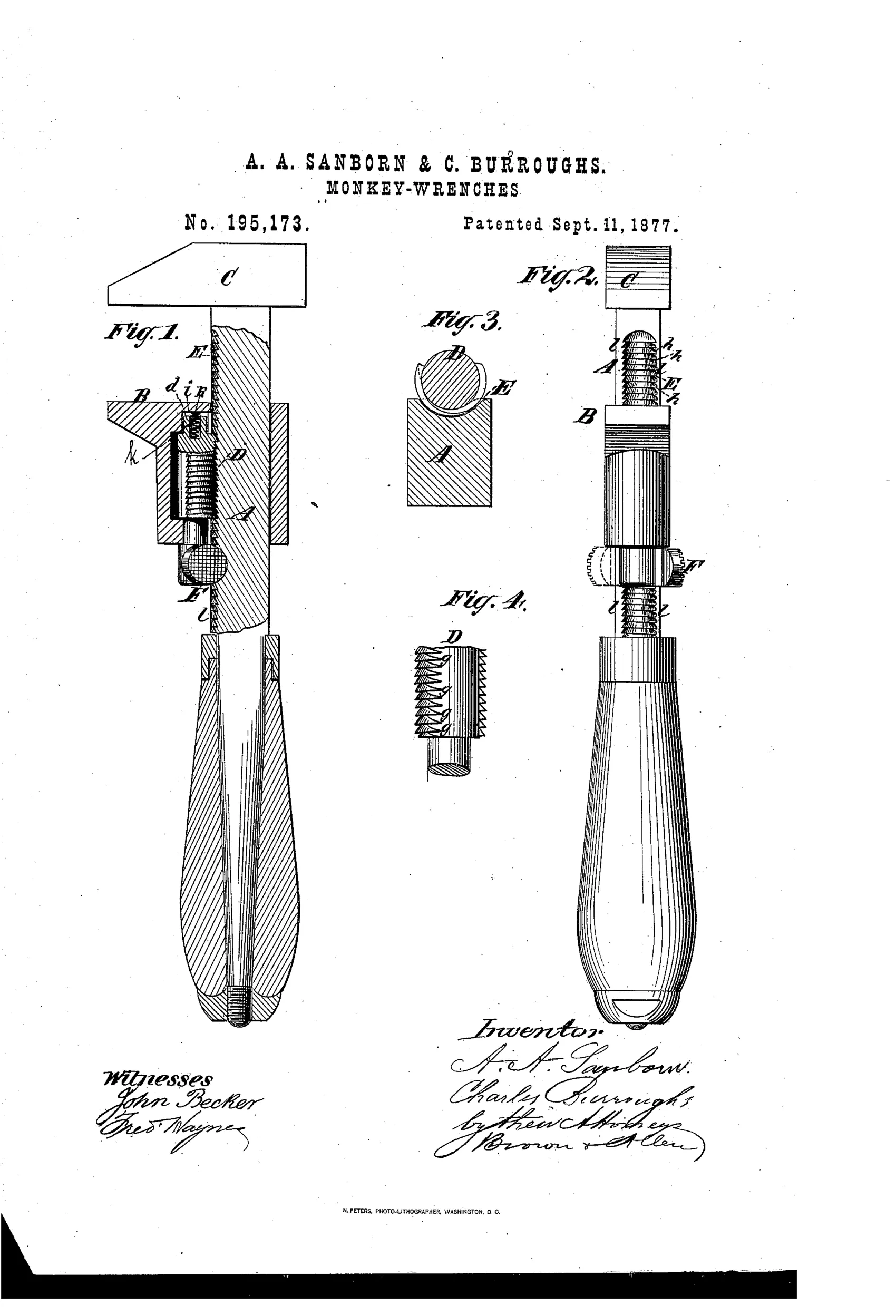
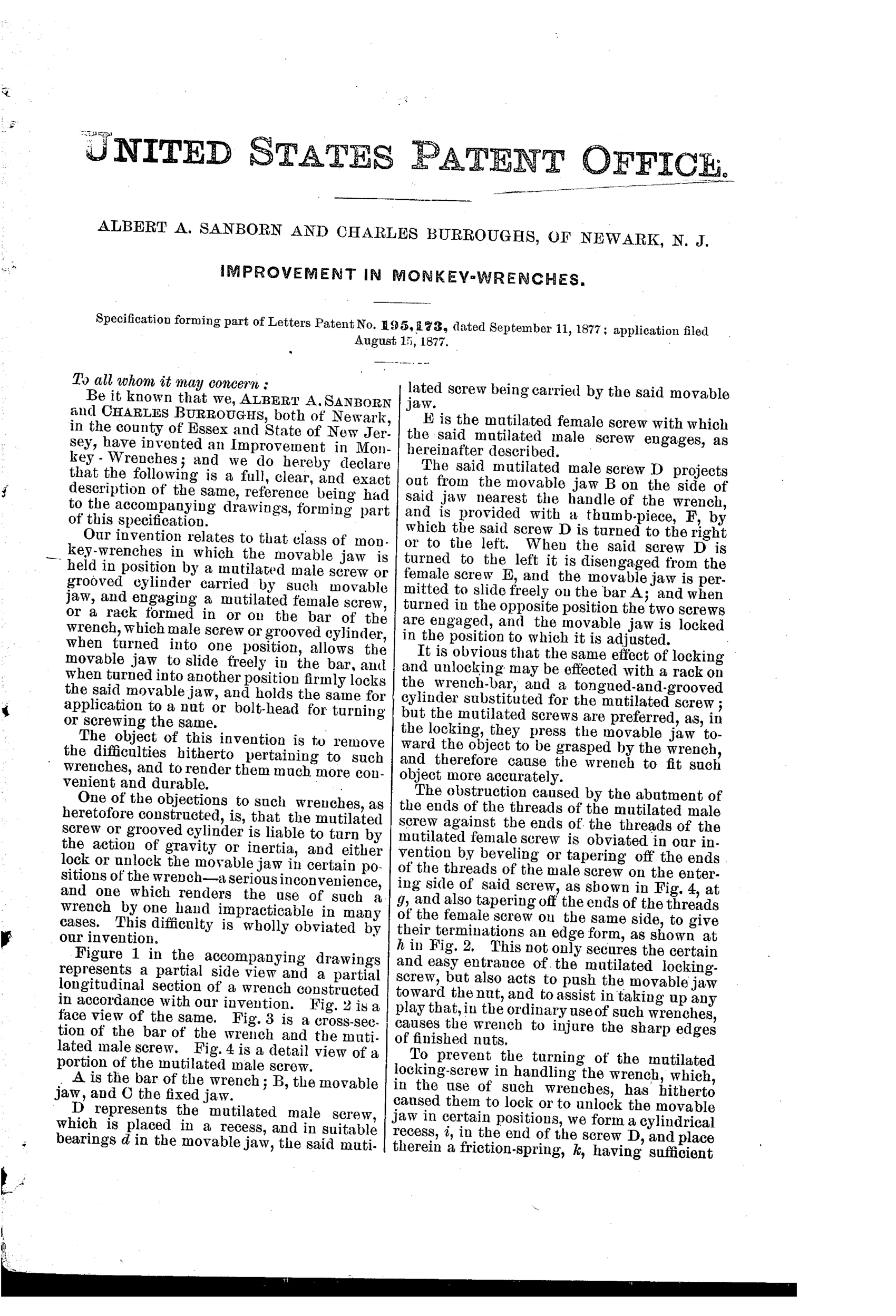
Self-locking monkey wrench with anti-turn spring
⚙ How it works
The movable jaw B carries a mutilated (partial-thread) male screw D that engages a mutilated female screw E formed in the wrench bar A. Turning the thumb-piece F to one side disengages the threads so the jaw slides freely, and turning it the other way re-engages the threads to lock the jaw firmly at the desired opening. To prevent accidental turning of screw D from gravity or inertia while handling the wrench, a cylindrical recess i in the end of the screw holds a friction-spring k that resists unwanted rotation but yields to deliberate thumb pressure. The thread ends of both male and female screws are beveled or tapered (at g and h) so the locking screw enters easily and also draws the jaw snugly toward the nut being gripped.
⚙ What was claimed
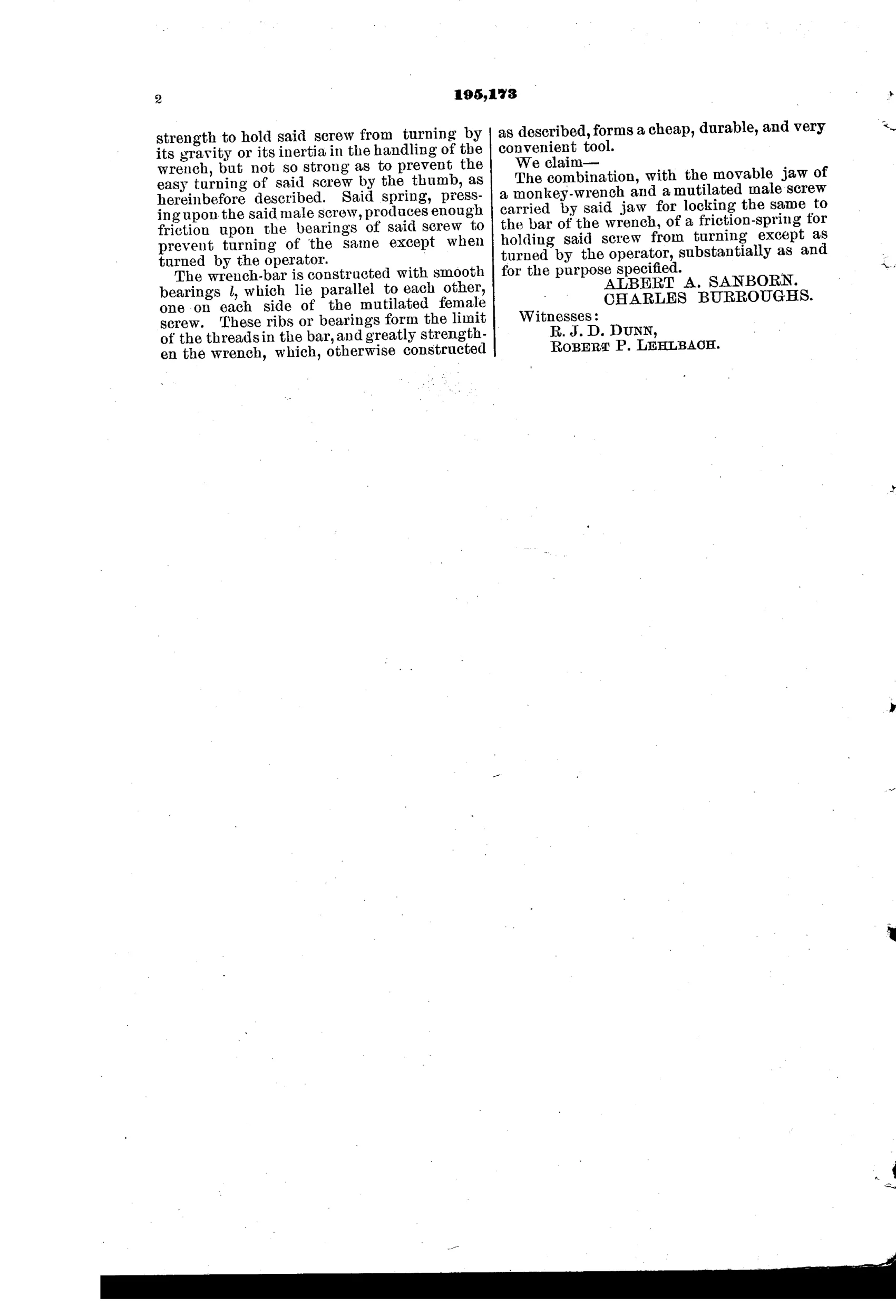
“The combination, with the movable jaw of a monkey-wrench and a mutilated male screw carried by said jaw for locking the same to the bar of the wrench, of a friction-spring for holding said screw from turning except as turned by the operator, substantially as and for the purpose specified.”
In plain English: The invention claims a monkey wrench whose movable jaw is locked by a partial-thread screw, combined with a friction spring that keeps that screw from turning on its own and only lets the user turn it by hand.
⚙ In the inventor’s words
“One of the objections to such wrenches, as heretofore constructed, is, that the mutilated screw or grooved cylinder is liable to turn by the action of gravity or inertia, and either lock or unlock the movable jaw in certain positions of the wrench—a serious inconvenience, and one which renders the use of such a wrench by one hand impracticable in many cases.”— Albert A. Sanborn and Charles Burroughs, from the specification
Fate unknown
No catalogued Sanborn & Burroughs wrench is known to me; a marked specimen or a DATAMP manufacturing link would settle it.
⚙ Commentary
Sanborn and Burroughs weren't inventing the mutilated-screw quick adjust here — that idea was already circulating in the 1870s. A half-threaded screw rides in a half-threaded channel in the bar: rotate the thumb-piece one way and the threads mesh, locking the jaw; rotate it back and the flats align so the jaw slides freely. It's a genuinely fast one-hand mechanism, and the patent is refreshingly honest about its known flaw: swing the wrench around and gravity or inertia can spin that little screw on its own, locking or unlocking the jaw when you least want it.
Their fix is almost embarrassingly simple — a friction spring (k in Fig. 1) tucked into a recess in the end of the screw, giving just enough drag that only deliberate thumb pressure turns it. That single spring is the whole claim. The other quiet touch is in Fig. 4: the thread ends are beveled at g and h, so engaging the lock doesn't just hold the jaw but actually draws it up snug against the nut, taking out the last bit of slack.
This is the classic pattern of the quick-adjust arms race: someone invents the mechanism, then a string of patents like this one shave off its annoyances. As a piece of engineering it should work fine; whether Newark ever produced one is another matter.
Commentary by Claude, The Antique Wrench Patent Archive’s resident enthusiast