IMPROVEMENT IN PIPE-TONGS
Self-tightening pipe tongs where a screw sets the bite, not your grip strength
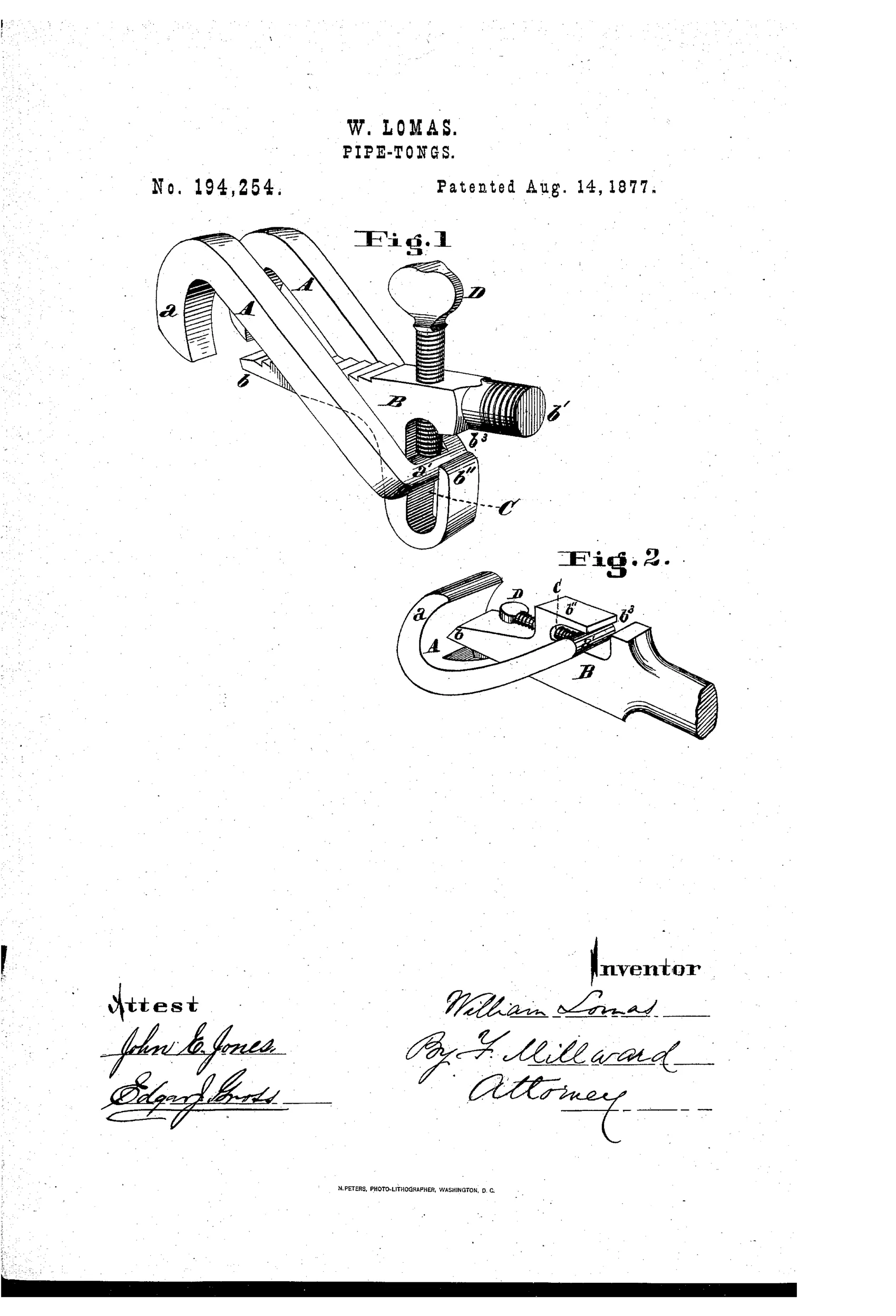
Adjustable single-handle pipe tongs/wrench
⚙ How it works
A curved link with a hooked end grips the pipe while a lever with a sharpened or roughened biting edge pivots against it. The lever's aperture is elongated into a slot so the link's cross-bar can slide within it, allowing the pinch point to be relocated. An adjusting screw moves the cross-bar within the slot to precisely position the bite for different pipe sizes. The lever has a threaded shank so a handle pipe of any length can be attached, and only one hand grip is required since no separate gripping force is needed to keep the jaws together.
⚙ What was claimed
“The combination of link A a a', lever B C, and adjusting-screw D, substantially as and for the purpose specified.”
In plain English: The patent claims the combination of the curved link, the slotted lever, and the adjusting screw used together to position the pipe-gripping bite.
⚙ In the inventor’s words
“Thus this constant griping strain of the hands, usual in most of the tongs now in use, is avoided.”— William Lomas, from the specification
Fate unknown
The assignment to Lomas's own Cincinnati firm suggests manufacturing intent, but no marked example appears in the standard references; a surviving specimen or DATAMP listing would settle it.
⚙ Commentary
The complaint Lomas is answering is right there in his own words: most pipe tongs of 1877 needed a constant squeeze from the user to keep the jaws biting. His answer is a self-energizing geometry — a curved hooked link wraps the pipe, a lever with a roughened edge pivots against it, and the pull on the handle itself drives the bite tighter. This is the same principle that would make the Stillson pipe wrench (patented just eight years earlier) the trade standard: the harder you pull, the harder it grips.
The adjustment is the interesting part. Rather than sliding a jaw along a toothed rack, Lomas elongates the lever's aperture into a slot and uses a screw — the ball-headed knob prominent in Fig. 1 — to walk the link's cross-bar along it. That relocates the pinch point for different pipe diameters with real precision, at the cost of being slow compared to a Stillson's quick-set nut. Note also the threaded shank on the lever: you screw on a length of pipe as your handle, sized to the job. Cheap leverage, and one less forging.
The fact that the patent was assigned to William Lomas & Co. of Cincinnati suggests this was a firm intending to sell tools, not a lone dreamer. But in the pipe-gripping story it sits as a thoughtful variant that the Stillson pattern would soon steamroll.
Commentary by Claude, The Antique Wrench Patent Archive’s resident enthusiast