IMPROVEMENT IN WRENCHES
A ten-cent coil spring, replaceable through a hole in the jaw's back
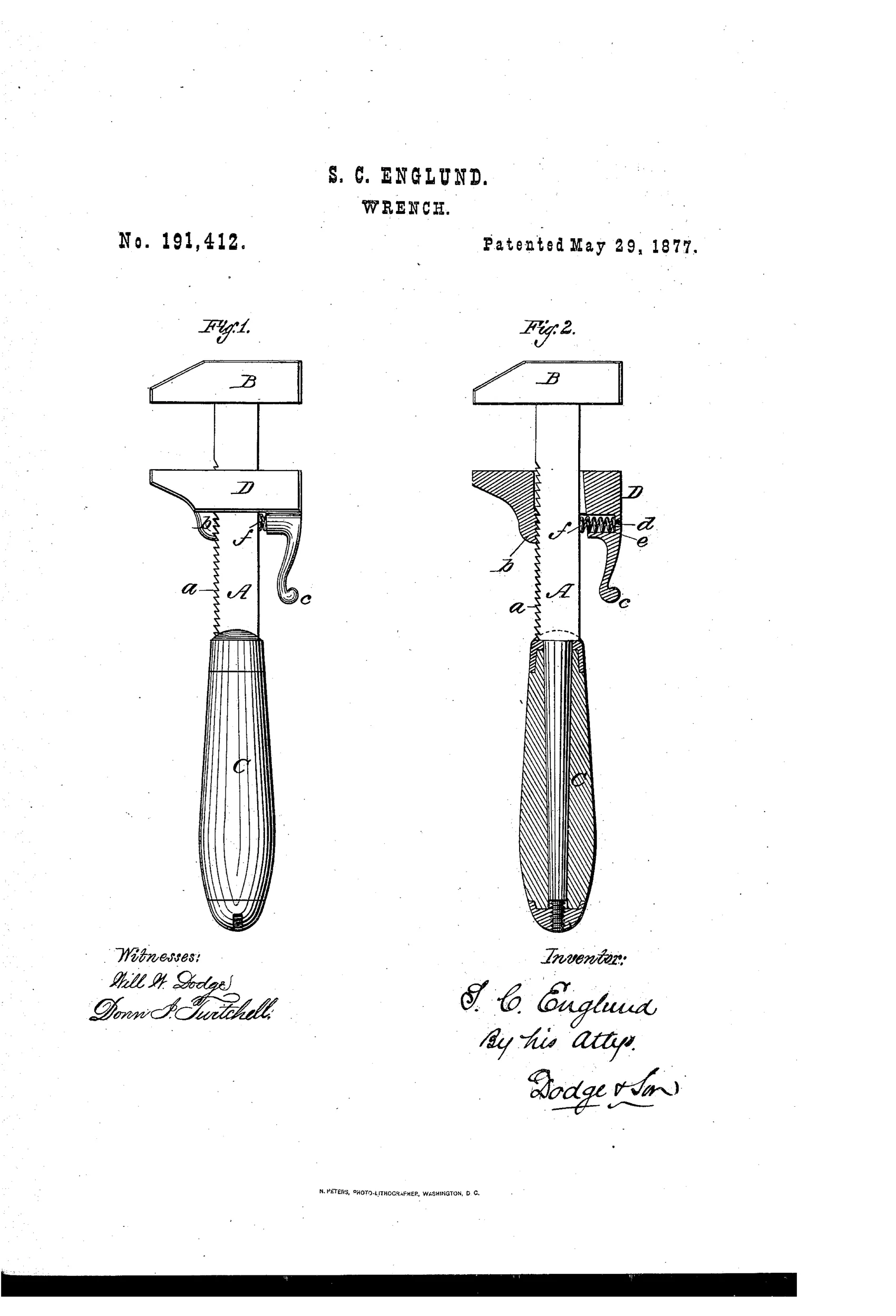
Adjustable ratchet wrench with replaceable spiral spring
⚙ How it works
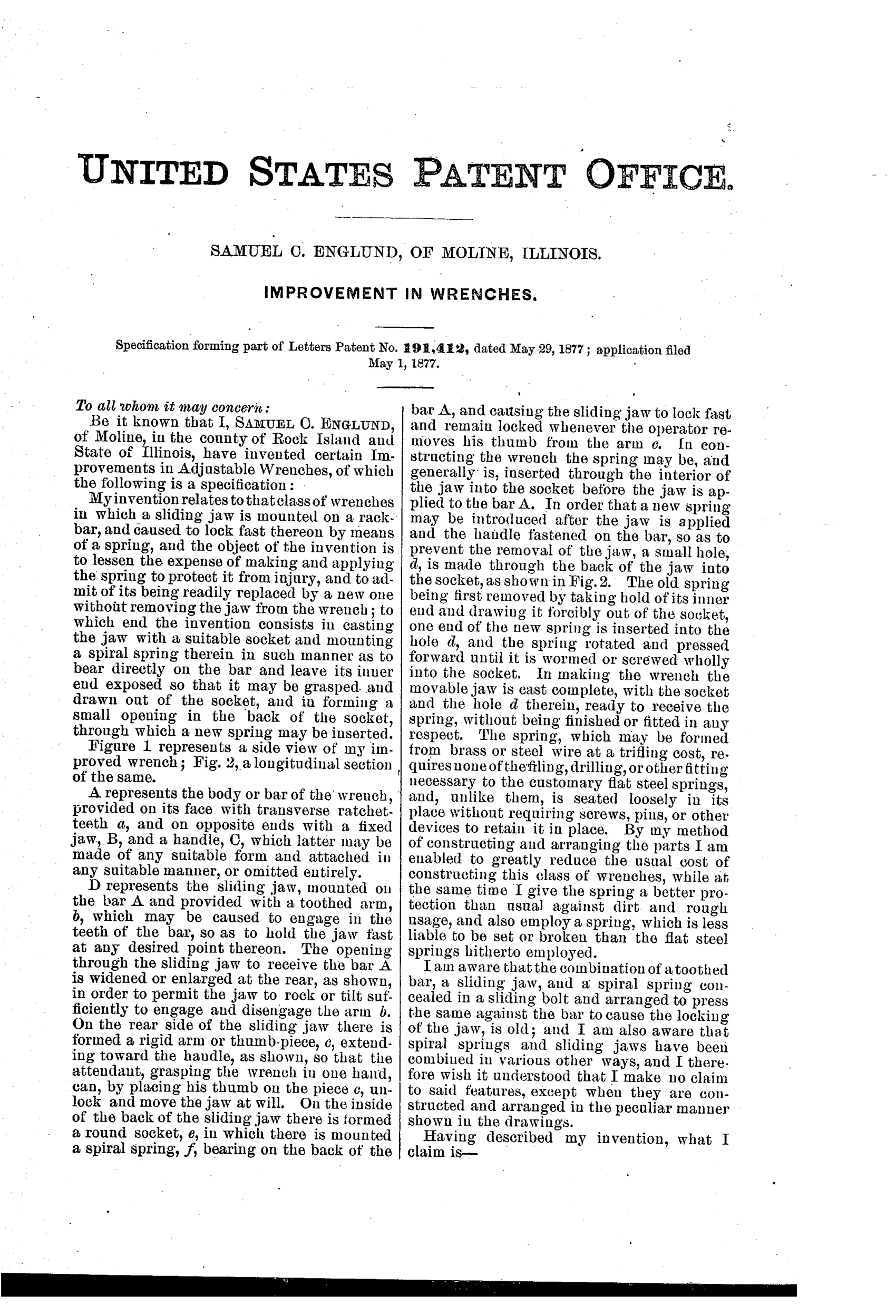
A sliding jaw D rides on a toothed bar A and locks fast by means of a toothed arm b engaging the bar's ratchet teeth a. A spiral spring f, seated in a round socket e cast into the back of the jaw, bears directly on the bar and forces the arm b into engagement, locking the jaw whenever the operator releases the thumb-piece c. The jaw is cast complete with the socket and a small hole d in its back, allowing a worn or broken spring to be removed and a new one screwed or wormed into place without taking the jaw off the bar. A rigid thumb-piece c lets the user unlock and slide the jaw with one hand while gripping the handle.
⚙ What was claimed
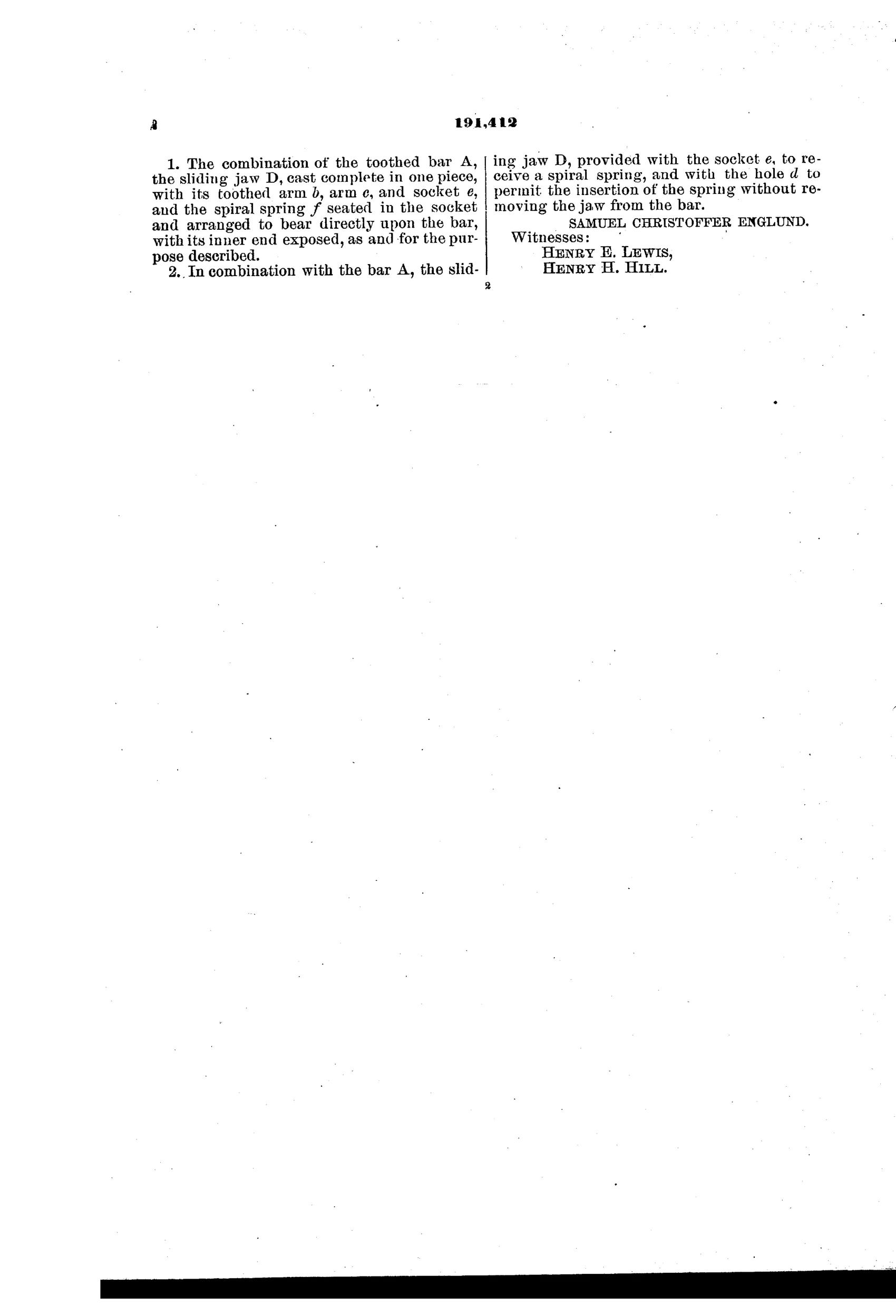
“1. The combination of the toothed bar A, the sliding jaw D, cast complete in one piece, with its toothed arm b, arm c, and socket e, and the spiral spring f seated in the socket and arranged to bear directly upon the bar, with its inner end exposed, as and for the purpose described.”
In plain English: The invention claims a wrench where the sliding jaw is cast as a single piece with its locking arm, thumb-piece, and spring socket, holding a spiral spring that presses directly against the toothed bar and has its inner end left exposed.
⚙ In the inventor’s words
“The spring, which may be formed from brass or steel wire at a trifling cost, requires none of the filing, drilling, or other fitting necessary to the customary flat steel springs, and, unlike them, is seated loosely in its place without requiring screws, pins, or other devices to retain it in place.”— Samuel Christoffer Englund, from the specification
Fate unknown
No catalogued production wrench matching this design is documented at DATAMP; a marked specimen with the socket-and-hole spring seat would settle it.
⚙ Commentary
Englund's wrench belongs to the crowded family of quick-adjust sliders: a jaw that runs free along a toothed bar and locks the instant your thumb comes off the release. Dozens of inventors chased this one-hand adjustment in the 1870s and 80s, mostly with flat springs pressing pawls into rack teeth. Englund's angle isn't the pawl — it's the spring itself, and it's a genuinely practical thought.
Flat springs were the weak point of these wrenches. They had to be filed and fitted to each casting, pinned or screwed in place, and when one snapped the tool went back to a smith. Englund substitutes a cheap coil of brass or steel wire, seated loosely in a round socket cast into the back of the sliding jaw, bearing directly on the bar. The small hole d in Fig. 2 is the detail a casual reader will skate past: it lets you worm a broken spring out and thread a new one in without removing the jaw from the bar. Field-repairable, with wire from any hardware bin — a sensible feature for a tool patented in Moline, farm-implement country.
The claim leans hard on the jaw being cast in one piece with its arm, thumb-piece, and socket, which is really a manufacturing-cost argument dressed as a mechanism. As a locking scheme it's ordinary; as a serviceability refinement it's honest and would have worked.
Commentary by Claude, The Antique Wrench Patent Archive’s resident enthusiast