IMPROVEMENT IN PIPE-WRENCHES.
Swappable toothed hooks and a two-way ratchet that hangs the wrench on the pipe
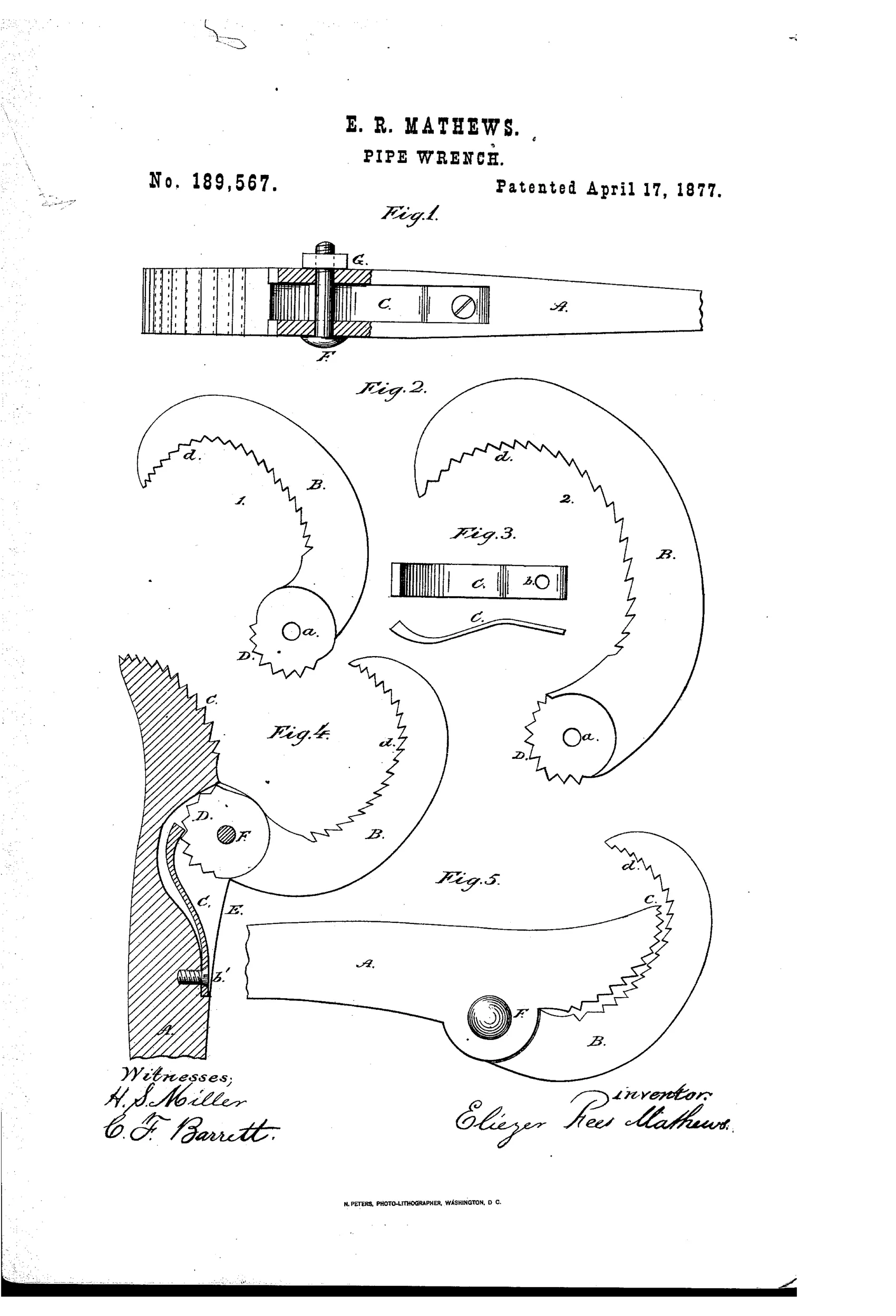
Self-adjusting pipe wrench with interchangeable toothed hooks
⚙ How it works
A single toothed lever A holds a curved, toothed hook B pivotally attached at its end by a bolt and nut F G. A spring-catch C, seated in a recess E of the lever and fastened by screw b', bears against a two-way ratchet D cut into the hook so the hook can move in either direction over the teeth. When force is applied, the spring rides over the ratchet teeth toward the hook's inner end, closing the toothed jaws around the pipe and clamping it; reversing the force lets the spring recede and releases the hook. Multiple hooks of varying curvature and size can be swapped onto the same lever to fit different pipe or rod diameters.
⚙ What was claimed
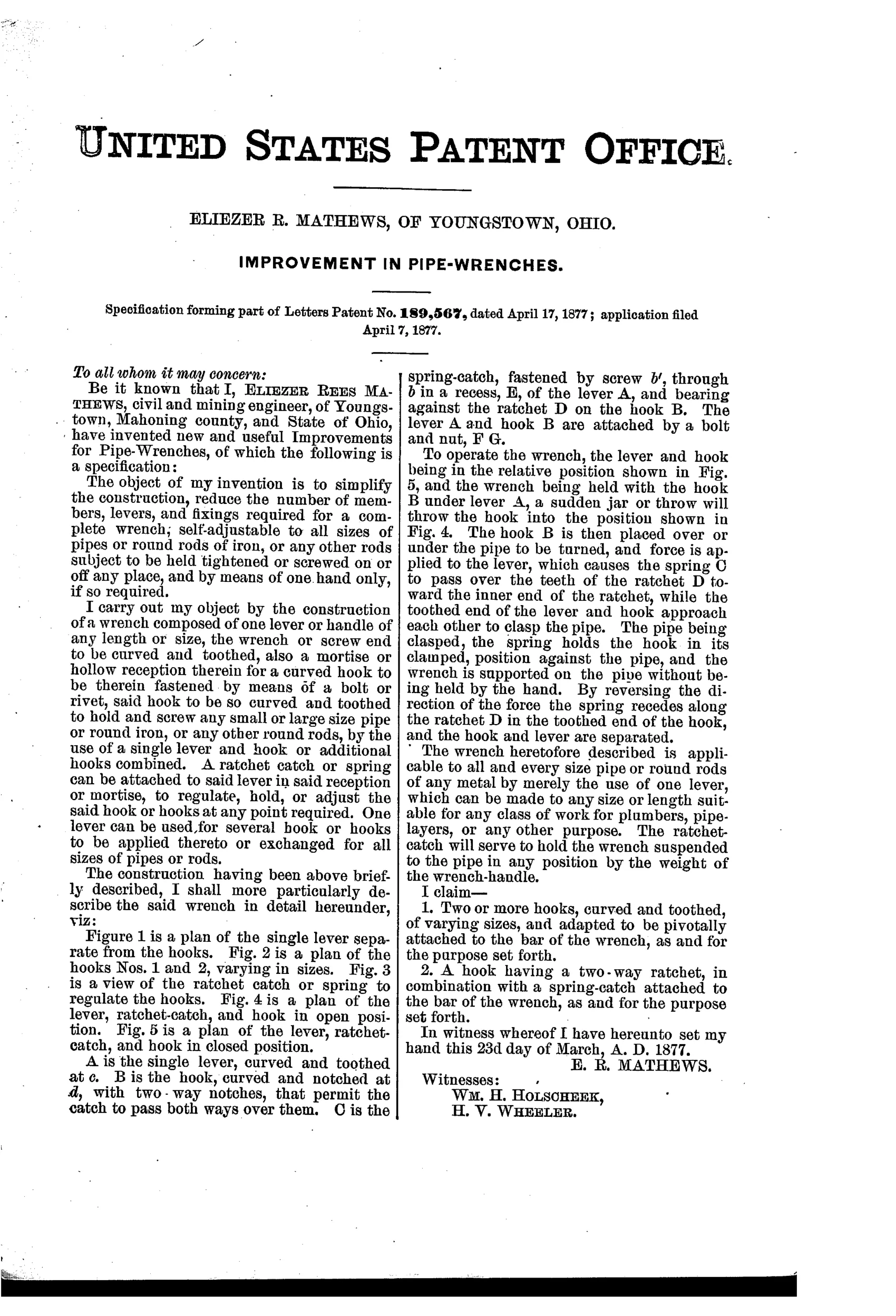
“1. Two or more hooks, curved and toothed, of varying sizes, and adapted to be pivotally attached to the bar of the wrench, as and for the purpose set forth. 2. A hook having a two-way ratchet, in combination with a spring-catch attached to the bar of the wrench, as and for the purpose set forth.”
In plain English: The wrench uses interchangeable curved, toothed hooks of different sizes that pivot onto the handle, and a hook with a two-directional ratchet works with a spring catch on the handle to grip and release pipes.
⚙ In the inventor’s words
“The ratchet-catch will serve to hold the wrench suspended to the pipe in any position by the weight of the wrench-handle.”— Eliezer Rees Mathews, from the specification
Fate unknown
No manufactured example or catalogue listing is known to me; a marked wrench or a set of surviving hooks would settle it.
⚙ Commentary
Mathews's answer to the pipe-size problem isn't a screw or a slide — it's a wardrobe of hooks. The handle carries a fixed toothed jaw, and the curved hook that closes against it is bolted on at a pivot, so you swap the whole hook for a bigger or smaller one to suit the pipe. That inverts the usual logic of adjustment: instead of one clever mechanism covering the range, you carry the range in your pocket. It saves complication in the tool and pays for it in loose parts, which is usually a losing trade on a job site.
The genuinely interesting bit is the spring-catch in Fig. 3 riding on a two-way ratchet cut into the hook's back. Pull the handle and the catch walks the hook tighter around the pipe; reverse and it walks back off. Compare Figs. 4 and 5 and you can see the hook migrating along its ratchet arc between open and closed. Mathews even notes the catch will hold the wrench hanging on the pipe by the handle's own weight — a small, practical touch a plumber working overhead would appreciate.
This sits in the 1870s crowd chasing self-gripping pipe wrenches before Stillson's design (patented 1869, and already spreading) settled the argument. A pivoted hook with fine ratchet teeth taking the whole torque is a fragile place to put your trust, and the interchangeable-hook scheme feels like a workshop idea more than a product. Documented at DATAMP.
Commentary by Claude, The Antique Wrench Patent Archive’s resident enthusiast