IMPROVEMENT IN MONKEY-WRENCHES.
A wrench assembled with a hammer: cast straight, then bent to fit
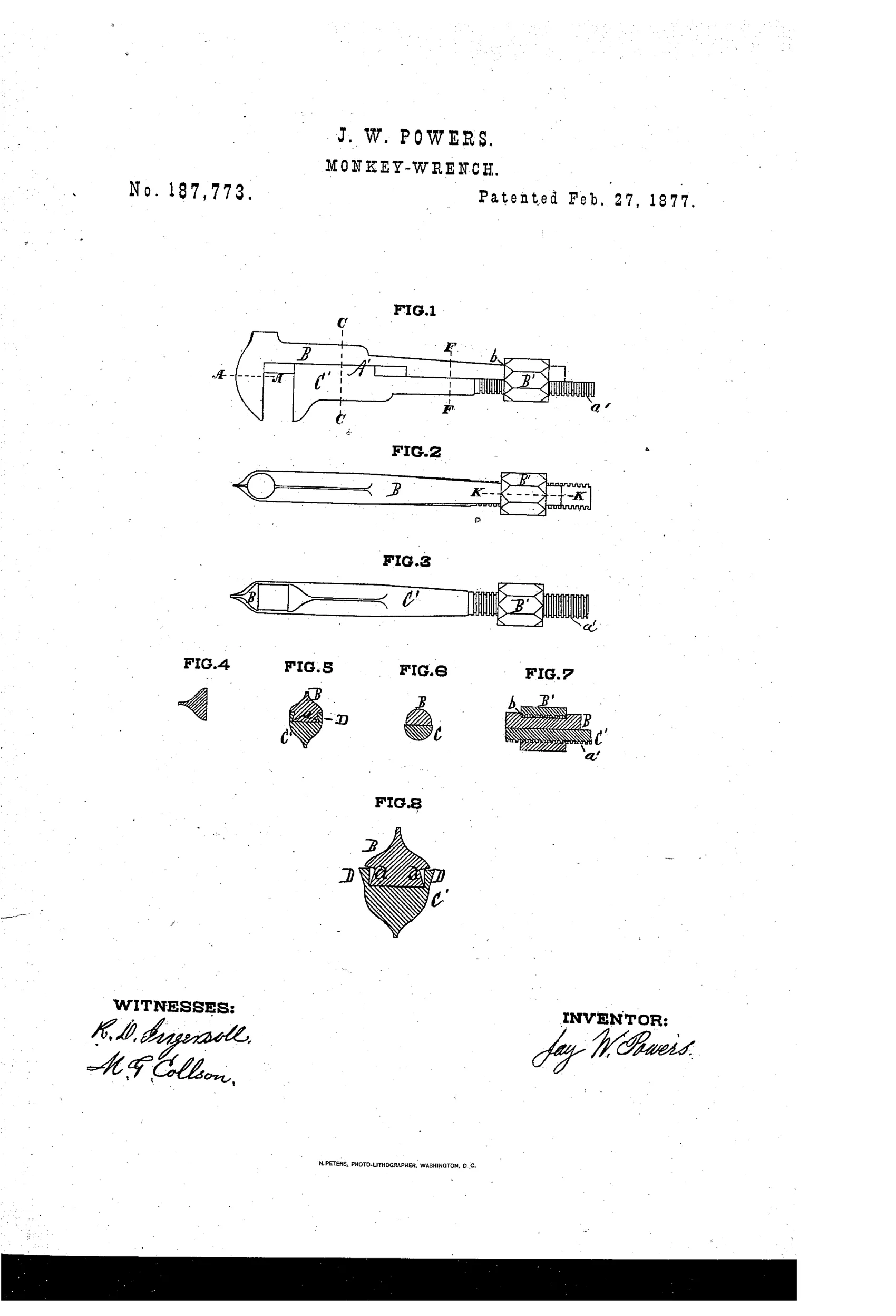
Cast-metal sliding-jaw monkey wrench
⚙ How it works
The stationary jaw has a flat inner face with a beveled groove on each side, and near the outer end a portion is cut away to seat the operating nut. The movable jaw is cast with straight flanges that are afterward bent inward into the beveled grooves of the stationary jaw, allowing it to slide freely along the jaw. Both jaws have threaded stems engaged by the nut, so turning the nut moves the sliding jaw to open or close the wrench. Because the flanges are cast straight and bent into place after casting, no cores are needed and no machine work is required to assemble the wrench.
⚙ What was claimed
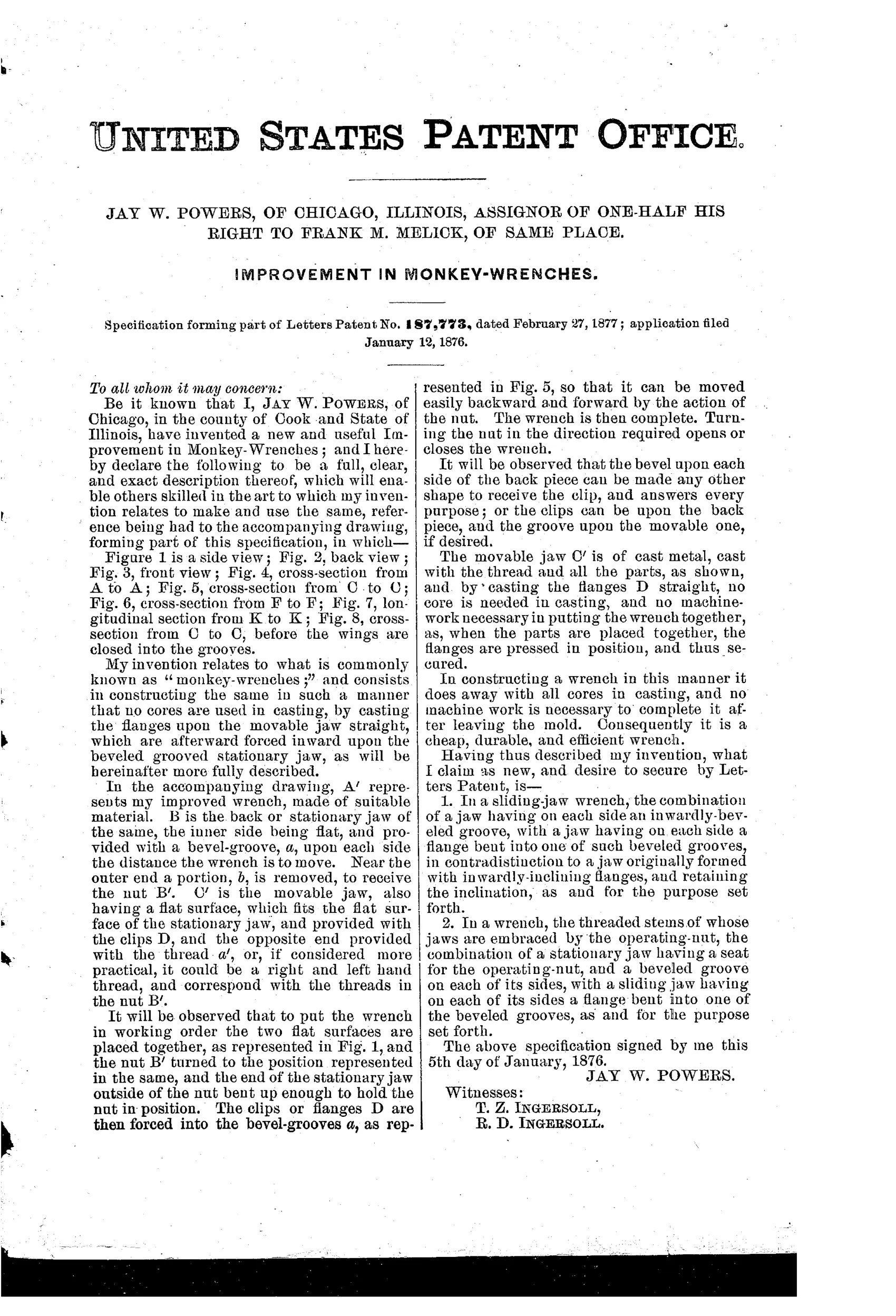
“In a sliding-jaw wrench, the combination of a jaw having on each side an inwardly-beveled groove, with a jaw having on each side a flange bent into one of such beveled grooves, in contradistinction to a jaw originally formed with inwardly-inclining flanges, and retaining the inclination, as and for the purpose set forth.”
In plain English: The wrench's sliding jaw has flanges that are bent inward into beveled grooves on the stationary jaw after casting, rather than being cast already angled.
⚙ In the inventor’s words
“Consequently it is a cheap, durable, and efficient wrench.”— Jay W. Powers, from the specification
Fate unknown
No catalogued example under Powers or Melick is documented in DATAMP's records that I know of; a marked specimen showing the peened flanges would settle it.
⚙ Commentary
Powers's patent isn't about how the wrench adjusts — that part is bog-standard, a threaded stem and nut in the Coes tradition. The claim is entirely about how the thing gets put together. The sliding jaw is cast with its side flanges sticking straight out; after casting, you drop it onto the stationary bar and hammer the flanges inward into beveled grooves. The wrench is permanently assembled by peening, with no cores in the mold and no machining afterward. Figure 8 is the tell: it shows the jaw before the wings are closed, and the claim explicitly distinguishes it from a jaw 'originally formed with inwardly-inclining flanges.' That distinction exists because casting an undercut dovetail requires cores, and machining one costs money. Powers's route eliminates both.
This is a manufacturing-economy patent dressed in wrench clothing, and it's honest about it — 'a cheap, durable, and efficient wrench.' The obvious question is whether cold-bending cast metal flanges works reliably. Cast iron would crack; this really wants malleable iron, which by 1877 was widely available and routinely bent after annealing, so the scheme isn't as reckless as it sounds. The fit would be loose and the jaw would rack under load more than a machined slide, but for a farm or buggy wrench that hardly mattered.
The assignment to Frank M. Melick suggests someone thought it worth backing. Whether it got past the drawing board is another matter.
Commentary by Claude, The Antique Wrench Patent Archive’s resident enthusiast