SHIP'S WINDLASS
A ship's windlass ratchet that reverses direction without repositioning the pawl
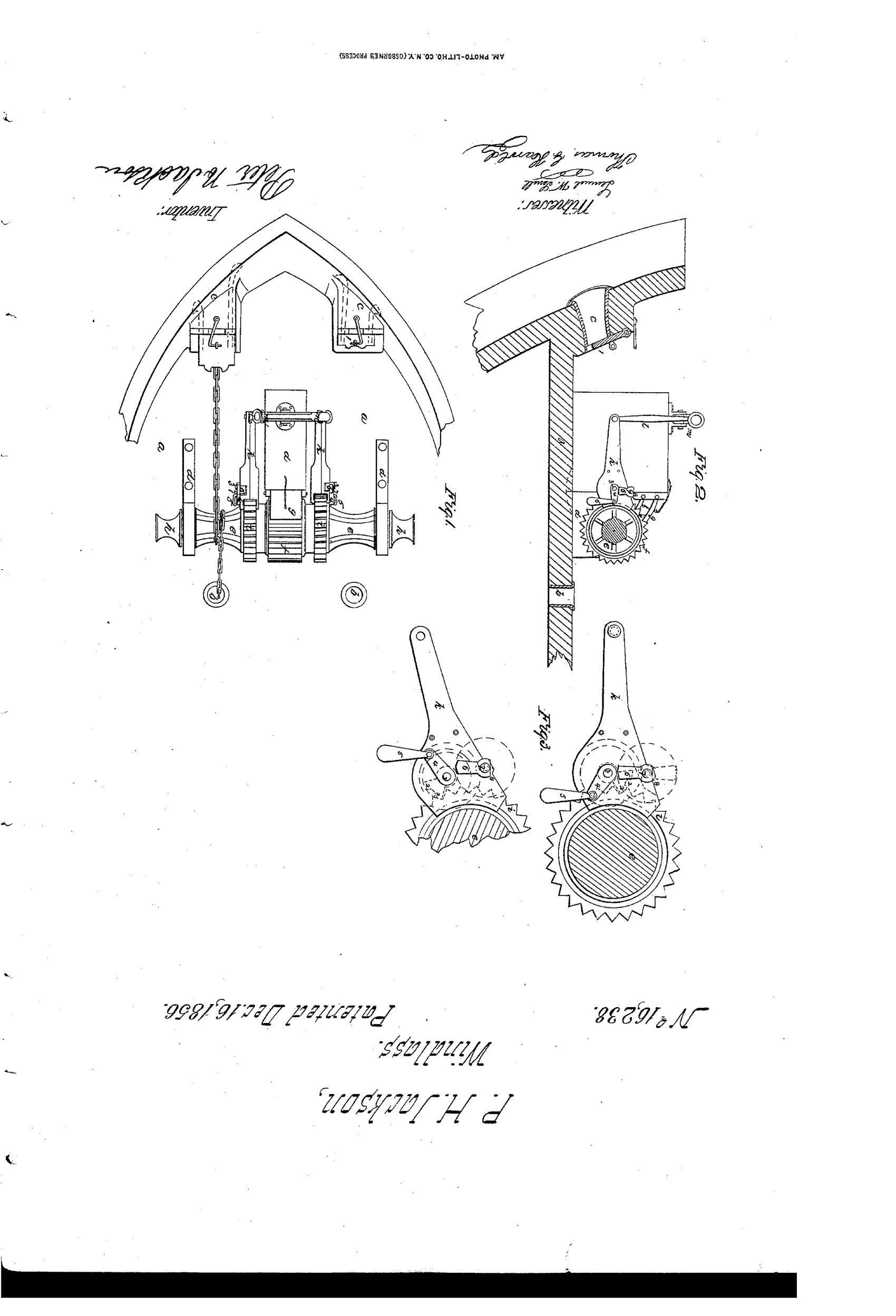
Double-acting reversible pawl mechanism for ship's windlass
⚙ How it works
The windlass barrels are turned by pump-brake heavers acting through connecting rods on ratchet wheels. A double-acting pawl with two projections engages the ratchet teeth, one projection acting above the center axis and the other below it, so the same heaving motion can rotate the windlass in either direction. A crank arm fixed to the same axis as the pawl carries a counterweight that biases the pawl into engagement on whichever side is needed, and a hanging stop or chock swings clear of the crank to prevent it from being thrown to the wrong side during sudden jerks, ensuring reliable reversal without disturbing the heaver's position.
⚙ What was claimed
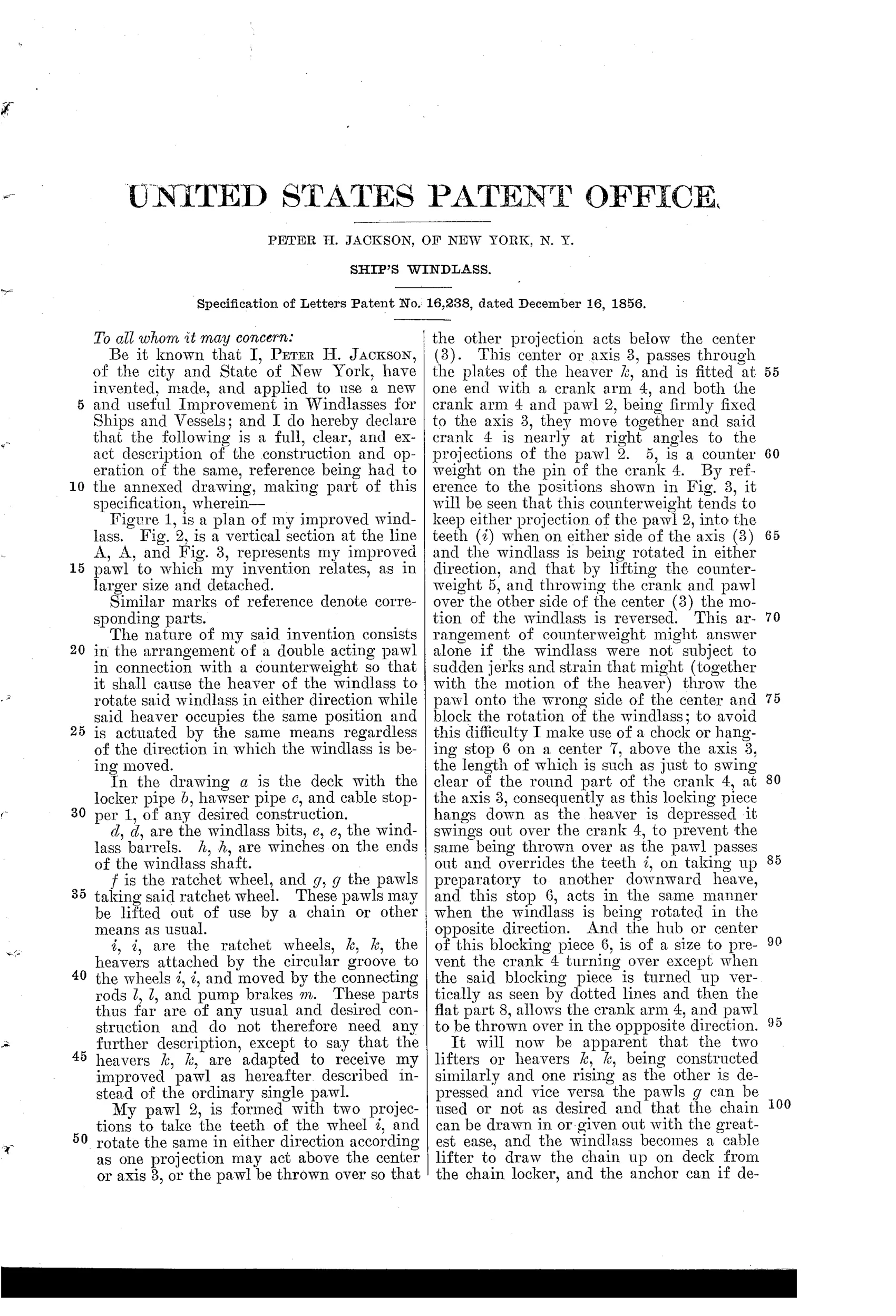
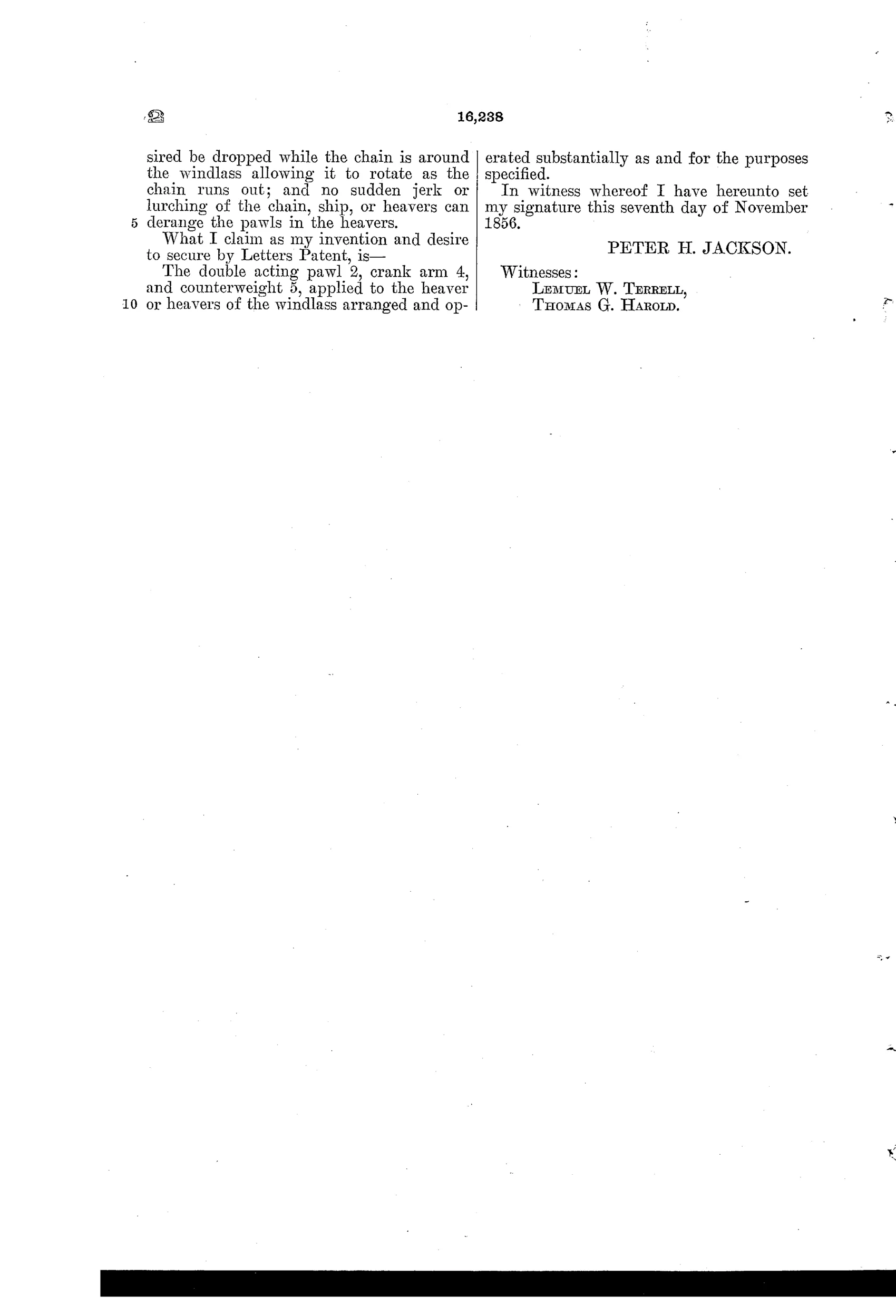
“The double acting pawl 2, crank arm 4, and counterweight 5, applied to the heaver or heavers of the windlass arranged and operated substantially as and for the purposes specified.”
In plain English: The claimed invention is the combination of a double-acting pawl, a crank arm, and a counterweight fitted to the windlass heaver(s), arranged to work as described.
⚙ In the inventor’s words
“and no sudden jerk or lurching of the chain, ship, or heavers can derange the pawls in the heavers.”— Peter H. Jackson, from the specification
Fate unknown
Marine hardware falls outside DATAMP's tool coverage and no manufactured example is documented to us; a surviving windlass or shipbuilder's record naming Jackson's pawl would settle it.
⚙ Commentary
Let's be honest up front: this is not a wrench. Peter H. Jackson's 1856 patent is marine deck hardware, and how it wandered into our archive is a fair question. But the reason it earns a page here is that its heart is pure ratchet-and-pawl thinking — the same family of mechanism that drives every reversible wrench and half the quick-adjust patents we cover.
The clever bit is the double-acting pawl in Fig. 3. Instead of a single tooth that must be flipped or swapped to reverse the windlass, Jackson gives the pawl two projections, one working above the axis and one below, so the same back-and-forth stroke of the pump-brake heavers can turn the barrel either way. A crank arm with a counterweight biases the pawl toward whichever side you want engaged, and a hanging chock swings in to keep a lurching chain from throwing the pawl to the wrong side mid-stroke. That last detail — his line that 'no sudden jerk or lurching of the chain, ship, or heavers can derange the pawls' — is the mark of someone who had watched pawls skip under real load, not just at a drafting table.
As mechanism, it's sound and workmanlike. Windlass pawl improvements were a crowded field at mid-century, and this is a sensible refinement rather than a revolution — but the counterweighted, self-securing reversal is genuinely tidy engineering.
Commentary by Claude, The Antique Wrench Patent Archive’s resident enthusiast