IMPROVEMENT IN WRENCHES
A second lever that clamps the screw so the jaw can't creep
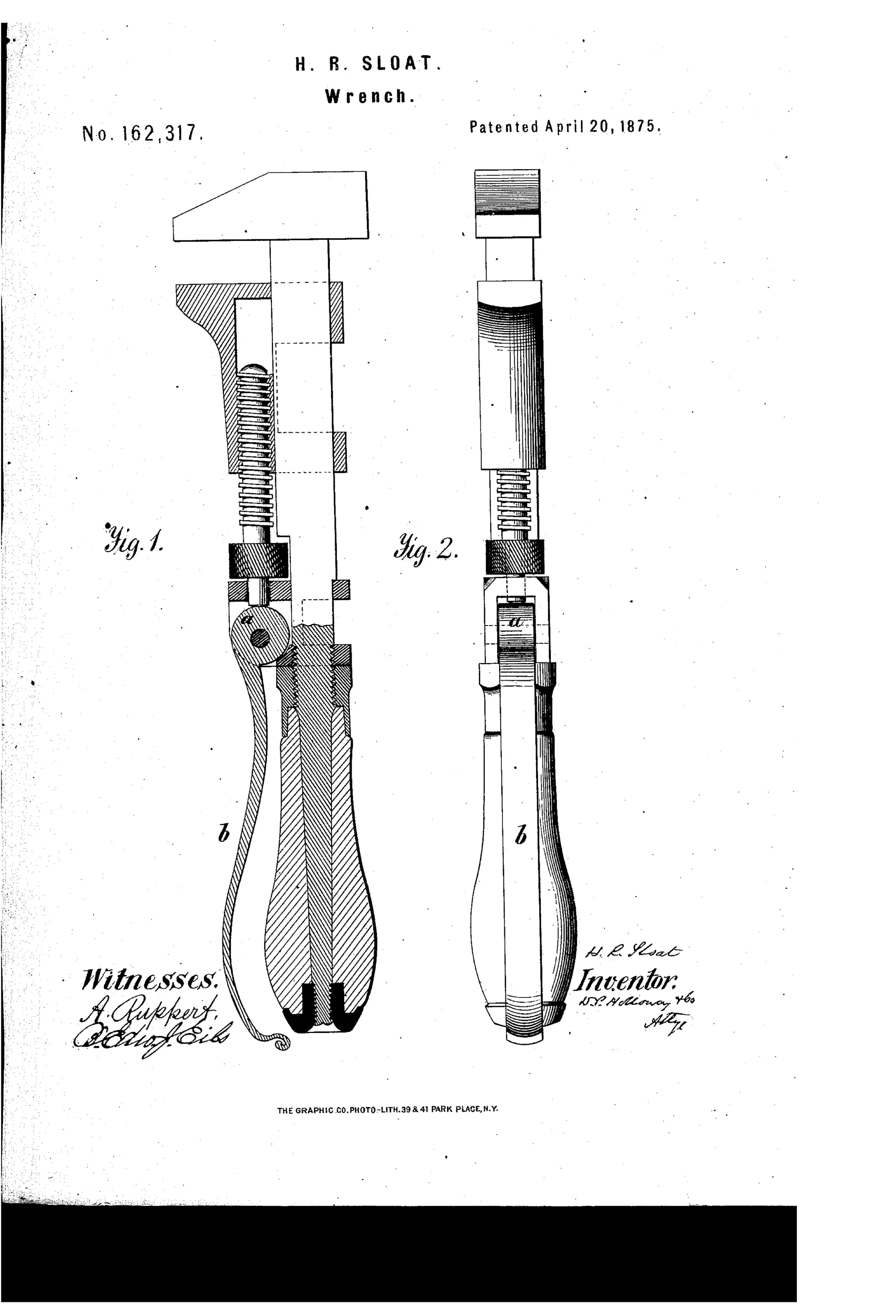
Cam-lever locking attachment for monkey wrench
⚙ How it works
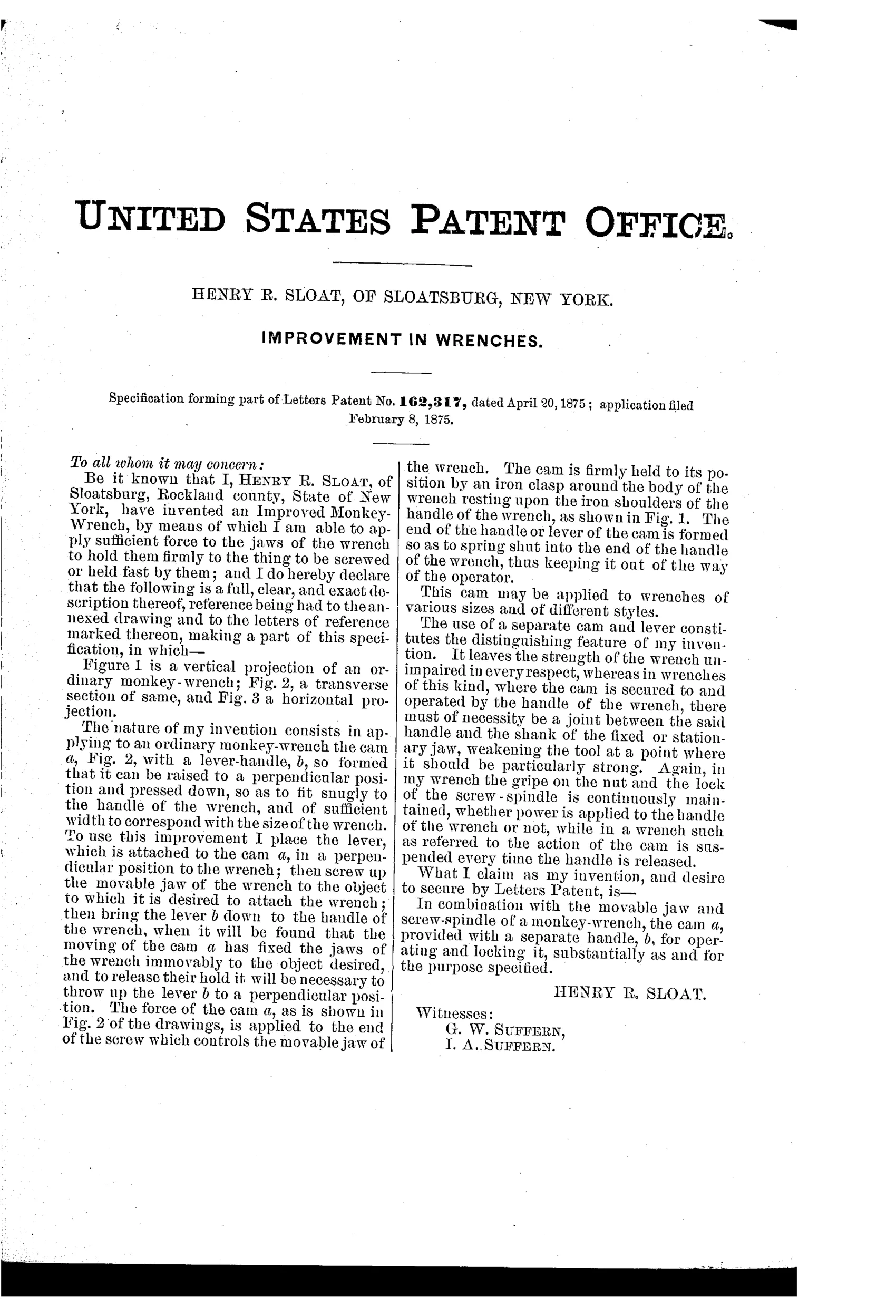
A cam, marked a, is mounted on the wrench body with its own separate lever-handle, b. The lever is raised to a perpendicular position while the movable jaw is screwed onto the object, then pressed down to fit snugly against the wrench handle. This action forces the cam against the end of the screw-spindle, locking the movable jaw immovably against the object, and the grip is maintained continuously until the lever is thrown back up to release it.
⚙ What was claimed
“In combination with the movable jaw and screw-spindle of a monkey-wrench, the cam a, provided with a separate handle, b, for operating and locking it, substantially as and for the purpose specified.”
In plain English: The invention claims a cam with its own separate handle that locks the movable jaw of a monkey wrench in place by pressing against the screw-spindle.
⚙ In the inventor’s words
“The use of a separate cam and lever constitutes the distinguishing feature of my invention.”— Henry R. Sloat, from the specification
Fate unknown
No catalogued Sloat wrench or production record is known to me; a marked specimen or a DATAMP-linked example would settle it.
⚙ Commentary
Sloat isn't chasing the field's holy grail of quick adjustment here — he's attacking the other complaint about the monkey wrench: jaw creep. Under heavy back-and-forth strain, the screw-adjusted jaw of a standard wrench works loose. His answer is a cam mounted in the body with its own lever handle, marked b in the drawing. You adjust the jaw normally with the lever standing perpendicular, then fold it down flat against the wooden handle; the cam bears against the end of the screw-spindle and pins the whole works tight until you throw the lever back up.
Look closely at Fig. 1 and you can see the cleverness of the packaging: the lever nests along the handle where your hand naturally squeezes it, so gripping the wrench actually reinforces the lock. That's good ergonomic thinking for 1875. The drawing also shows the cam acting on the spindle end rather than on the jaw itself — a simple, low-precision place to apply the clamp, which keeps the whole attachment cheap to make.
The honest question is whether the disease justified the cure. A well-fitted Coes-pattern wrench doesn't creep much, and the extra lever adds a snag point and a part to lose. Positive jaw locks kept reappearing through the century — cams, set screws, pawls — which tells you the annoyance was real, but none of them displaced the plain worm screw. Sloat's is a tidy, plausible entry in that quiet sub-genre.
Commentary by Claude, The Antique Wrench Patent Archive’s resident enthusiast