WRENCH FOR GAS-PIPE, &c.
A Worcester pipe wrench that comes off the pipe without unscrewing the nut
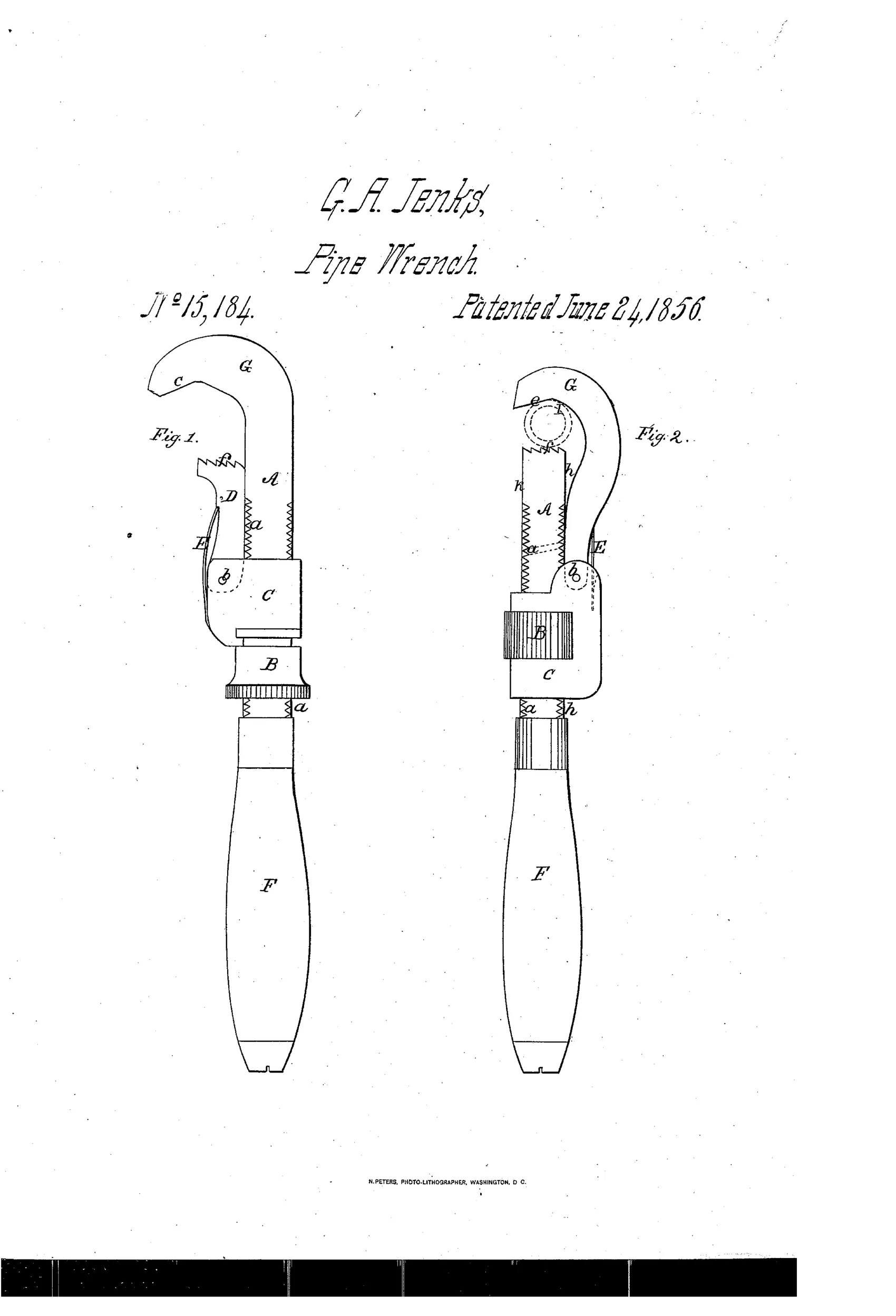
Improved screw-adjustable hand wrench for gripping pipes
⚙ How it works
A slide C rides on a screw-threaded main bar A and is positioned by turning a screw nut B along the male screw cut on the bar. A hooked claw G is hinged directly to the slide C (rather than to the jaw lever as in prior art) and is pressed toward the bar by a spring E. This arrangement allows the wrench to grip larger-diameter articles with greater leverage, and lets the tool be removed from a workpiece without having to back off the screw nut B.
⚙ What was claimed
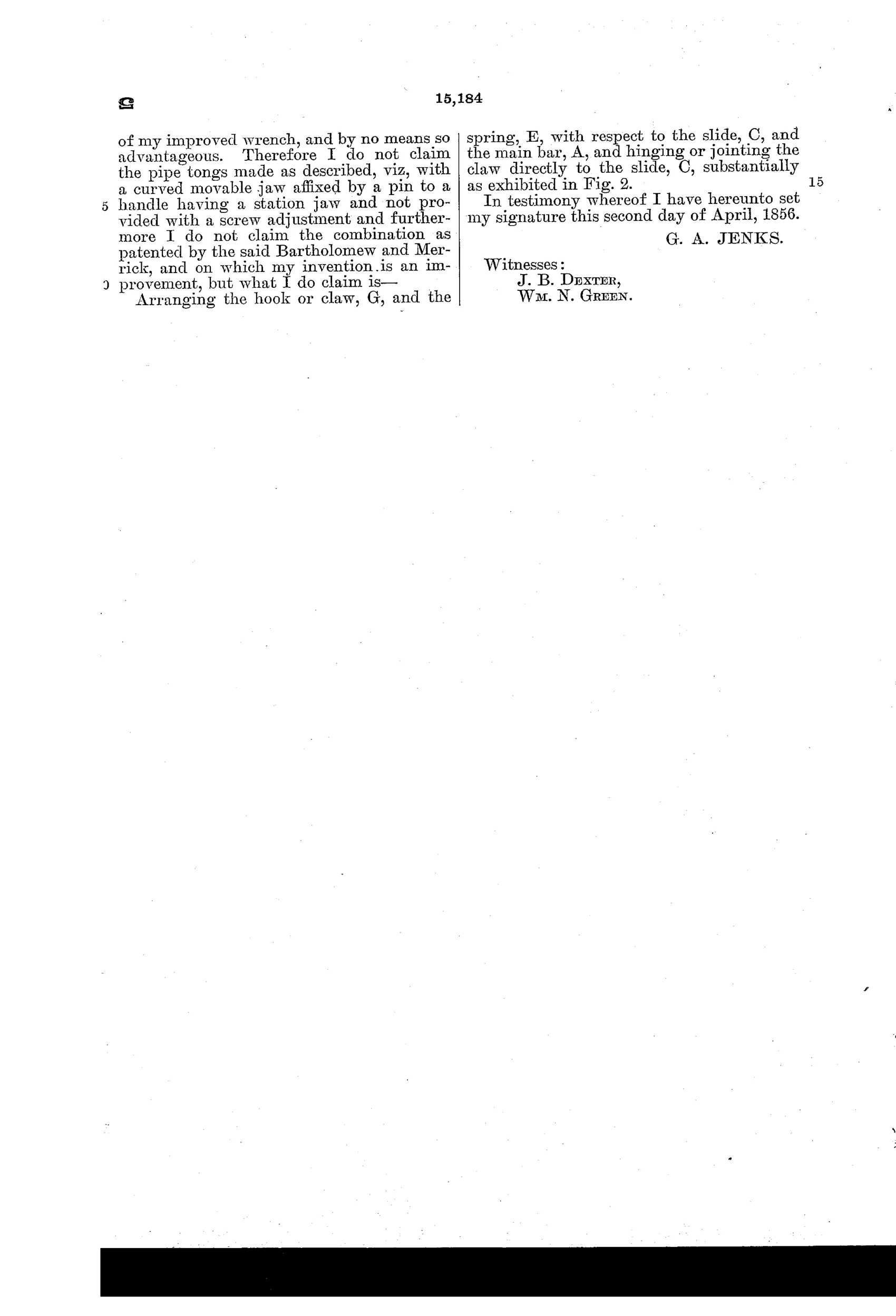
“Arranging the hook or claw, G, and the spring, E, with respect to the slide, C, and the main bar, A, and hinging or jointing the claw directly to the slide, C, substantially as exhibited in Fig. 2.”
In plain English: The claimed improvement is mounting the hooked claw and its spring so that the claw hinges directly onto the sliding jaw-carriage rather than onto a separate jaw lever, as shown in Fig. 2.
⚙ In the inventor’s words
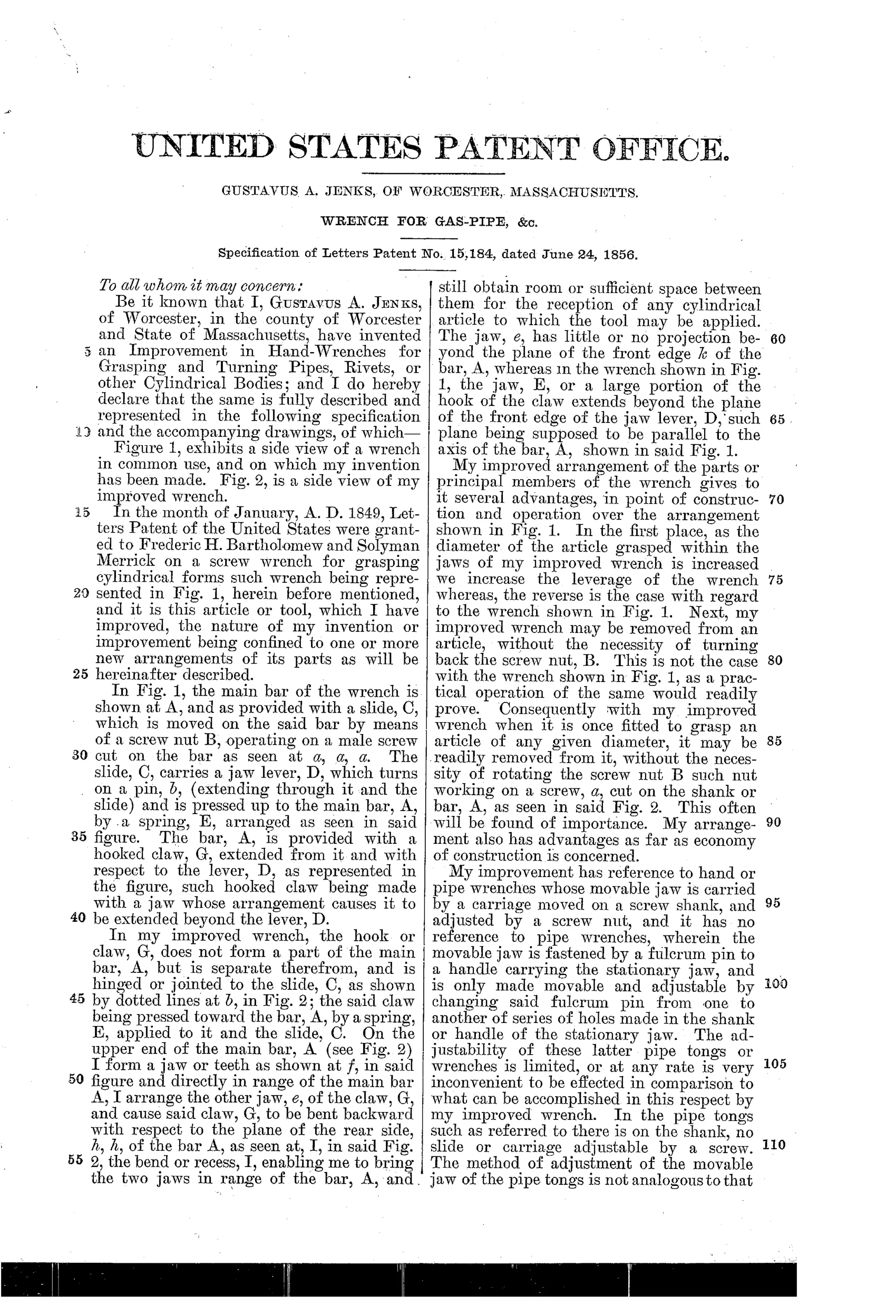
“Consequently with my improved wrench when it is once fitted to grasp an article of any given diameter, it may be readily removed from it, without the necessity of rotating the screw nut B such nut working on a screw, a, cut on the shank or bar, A, as seen in said Fig. 2.”— Gustavus A. Jenks, from the specification
Fate unknown
No manufactured example of this specific design is documented in DATAMP or the collector literature; a marked surviving specimen would settle it.
⚙ Commentary
Jenks was working in Worcester, Massachusetts — the town where Loring Coes had defined the screw wrench fifteen years earlier — and this 1856 patent shows a mind steeped in that mechanism trying to make it serve pipe work. The layout is pure Coes: threaded main bar, knurled nut riding the screw to position a slide. The novelty is all at the top. Instead of hinging the hooked claw to a separate jaw lever, as in the prior art he helpfully draws as Fig. 1, Jenks hinges the claw G directly to the sliding carriage C and backs it with a spring E.
The payoff is stated plainly in the specification: once the wrench is set to a given pipe diameter, you can take it off the work without backing off the nut. On a job with a dozen joints of the same size pipe, that is real time saved — the spring lets the claw yield to slip the tool on and off, then presses it back to bite. It is an early gesture toward the quick-release idea that would obsess wrench inventors for the rest of the century.
The weakness a casual reader might miss: a spring-held hinged claw is only as good as its spring, and heavy pipe torque wants a rigid jaw. Later pipe wrenches solved this with self-tightening geometry rather than springs. Still, drawing your own prior art as Fig. 1 to sharpen the claim is honest, tidy patent work, and the improvement is genuine even if the road went elsewhere.
Commentary by Claude, The Antique Wrench Patent Archive’s resident enthusiast