IMPROVEMENT IN PIPE-WRENCHES
A pipe wrench with no screw, no pivot pin — just a notched bar and geometry
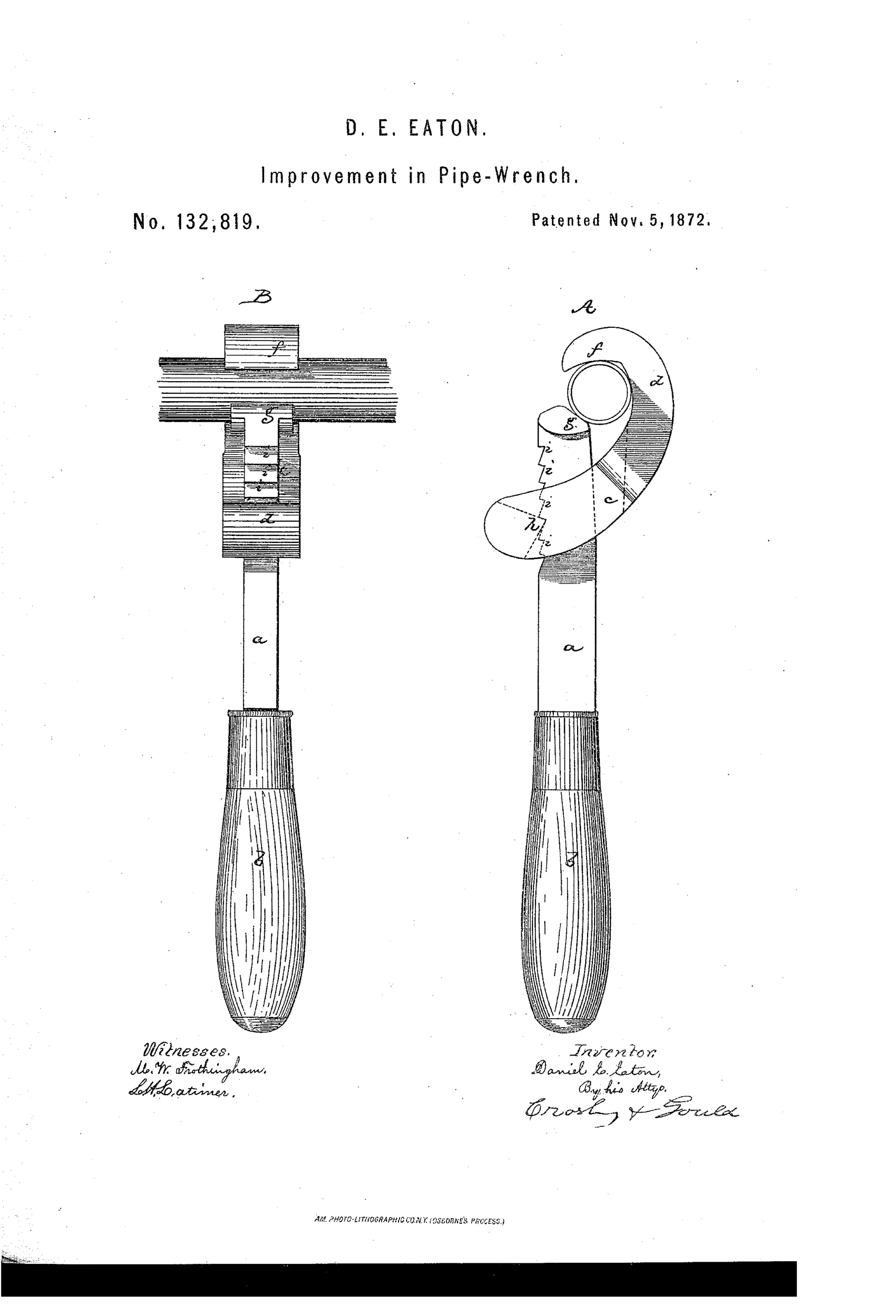
A simple pipe wrench without screws or pivots
⚙ How it works
A hooked jaw has a slot opposite the hook through which a notched lever-bar slides. A pivot-tooth engages the bar's ratchet notches to act as a fulcrum, allowing the bar's head to press against the pipe. Pressing the handle forward tightens the grip between the jaw and the head, increasing grip with strain. Pulling the handle back releases the grip without disengaging the bar from the tooth, allowing repositioning for a new hold.
⚙ What was claimed
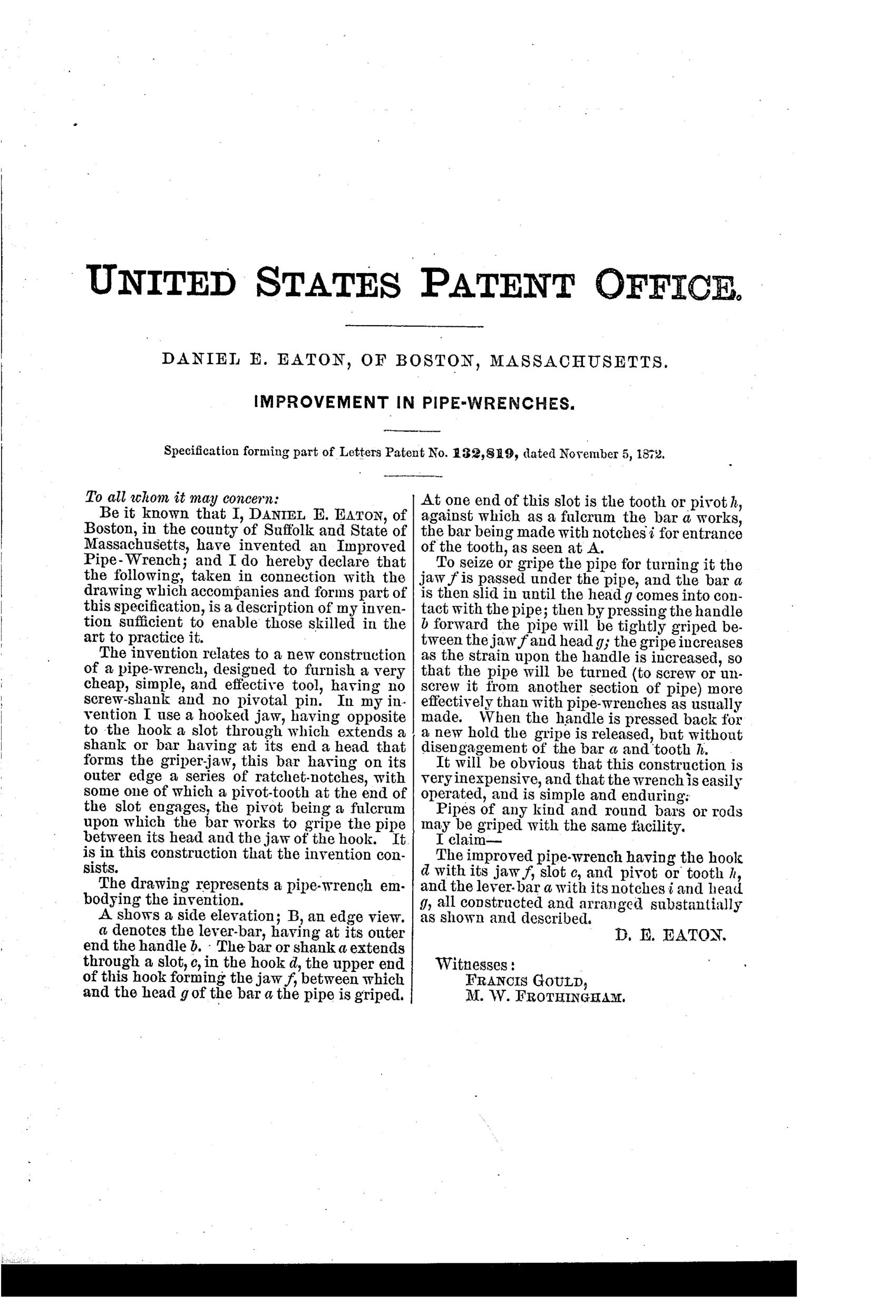
“The improved pipe-wrench having the hook d with its jaw f, slot c, and pivot or tooth h, and the lever-bar a with its notches i and head g, all constructed and arranged substantially as shown and described.”
In plain English: A pipe wrench made of a hooked jaw with a slot and pivot tooth, combined with a notched lever bar and head, that grips the pipe without screws or pins.
⚙ In the inventor’s words
“The invention relates to a new construction of a pipe-wrench, designed to furnish a very cheap, simple, and effective tool, having no screw-shank and no pivotal pin.”— Daniel E. Eaton, from the specification
Fate unknown
No manufactured example of this specific tooth-and-notch design is documented in DATAMP or maker catalogs; a marked specimen would settle it.
⚙ Commentary
Eaton's whole pitch is subtraction. In 1872 most pipe wrenches carried a screw-adjusted jaw or at least a riveted pivot, and both were where cost and failure lived. His answer is a hooked jaw with a slot through it, a notched lever-bar sliding in that slot, and a small fixed tooth inside the hook that catches one of the notches. That tooth is the fulcrum. Push the handle forward and the bar's head levers against the pipe, pinching it into the hook; the harder you strain, the harder it bites. Pull back and the grip relaxes without the tooth ever leaving its notch, so you can ratchet a fresh hold — a poor man's back-off action with exactly zero machined threads.
Look at Figure A and notice the ratchet notches i run along the bar's edge, so coarse adjustment for pipe diameter is just a matter of which notch the tooth sits in. Fine adjustment is automatic, supplied by the wedging geometry itself. That's the clever part; the dubious part is durability. All the working load funnels through one small tooth and one notch corner, and wear there means slip on a greasy pipe under full body weight.
The self-tightening-hook idea eventually won the pipe-wrench war — think of the Stillson lineage and chain tongs — but Eaton's particular tooth-and-notch execution reads like an ingenious dead end: cheap to make, hard to trust.
Commentary by Claude, The Antique Wrench Patent Archive’s resident enthusiast