IMPROVEMENT IN PIPE-WRENCHES
A New Orleans bench tool that gripped pipe on all four sides at once
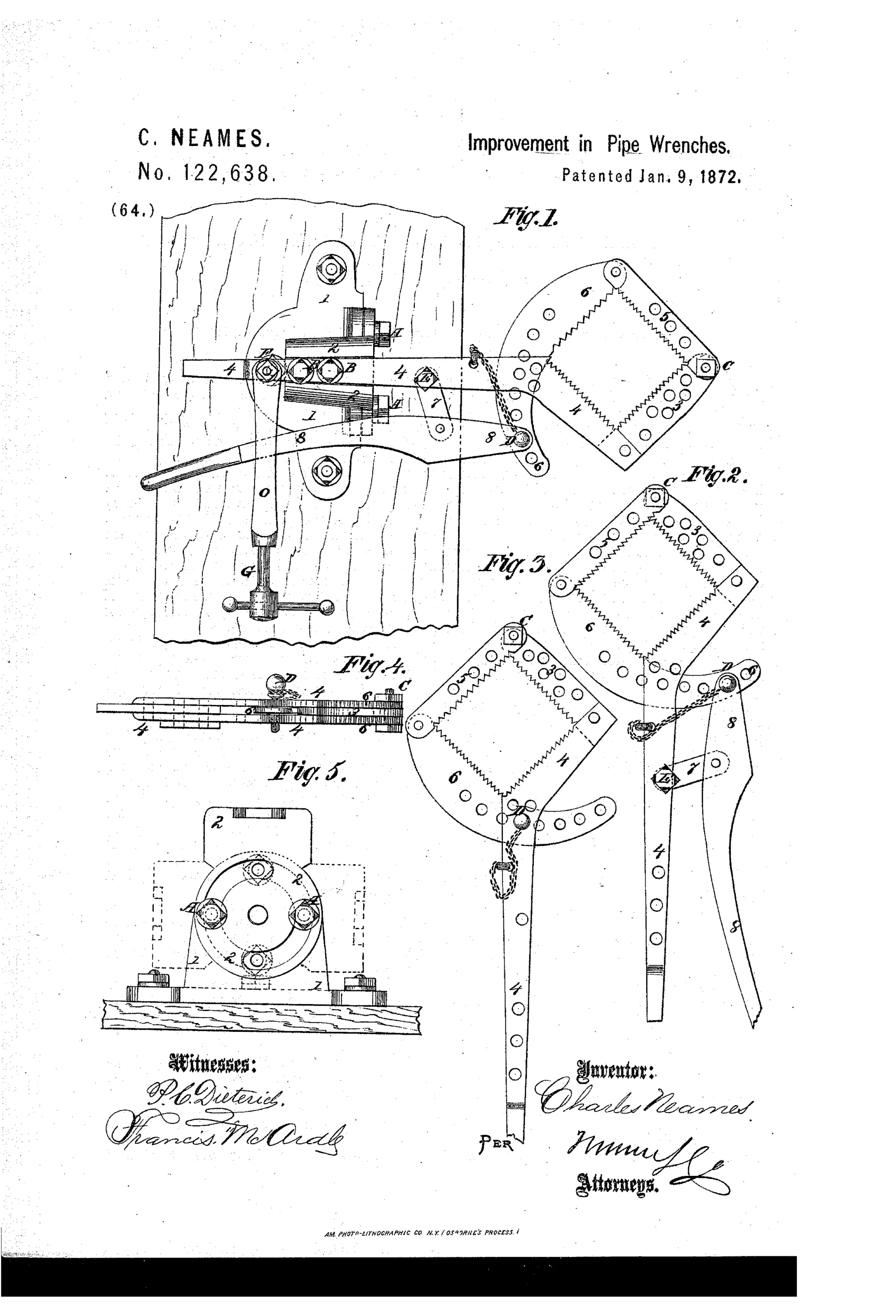
Combined gas-pipe wrench, vise, and square wrench
⚙ How it works
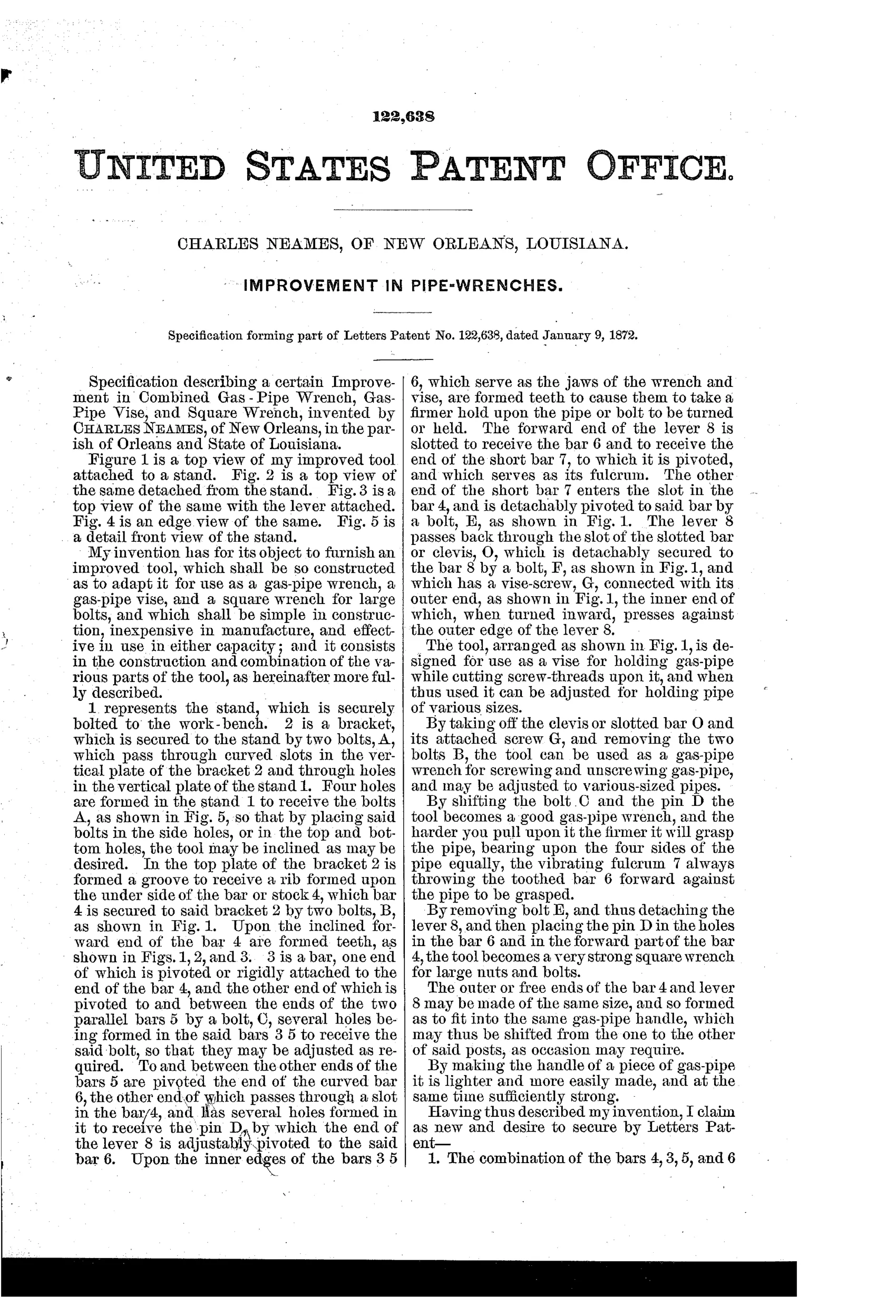
The tool combines a toothed bar and adjustable jaw system mounted on a bench-secured stand, allowing it to grip pipe or bolts from multiple sides. A pivoted lever and fulcrum bar work together so that pulling on the handle causes the toothed bar to press forward against the pipe, tightening the grip the harder it is pulled. By removing certain bolts and pins (E, D) and detaching the clevis or lever, the same frame can be reconfigured as a stationary pipe vise or as a heavy-duty square wrench for large nuts and bolts. The stand itself is adjustable via curved slots and multiple bolt holes, letting the whole tool be inclined at different angles on the workbench.
⚙ What was claimed
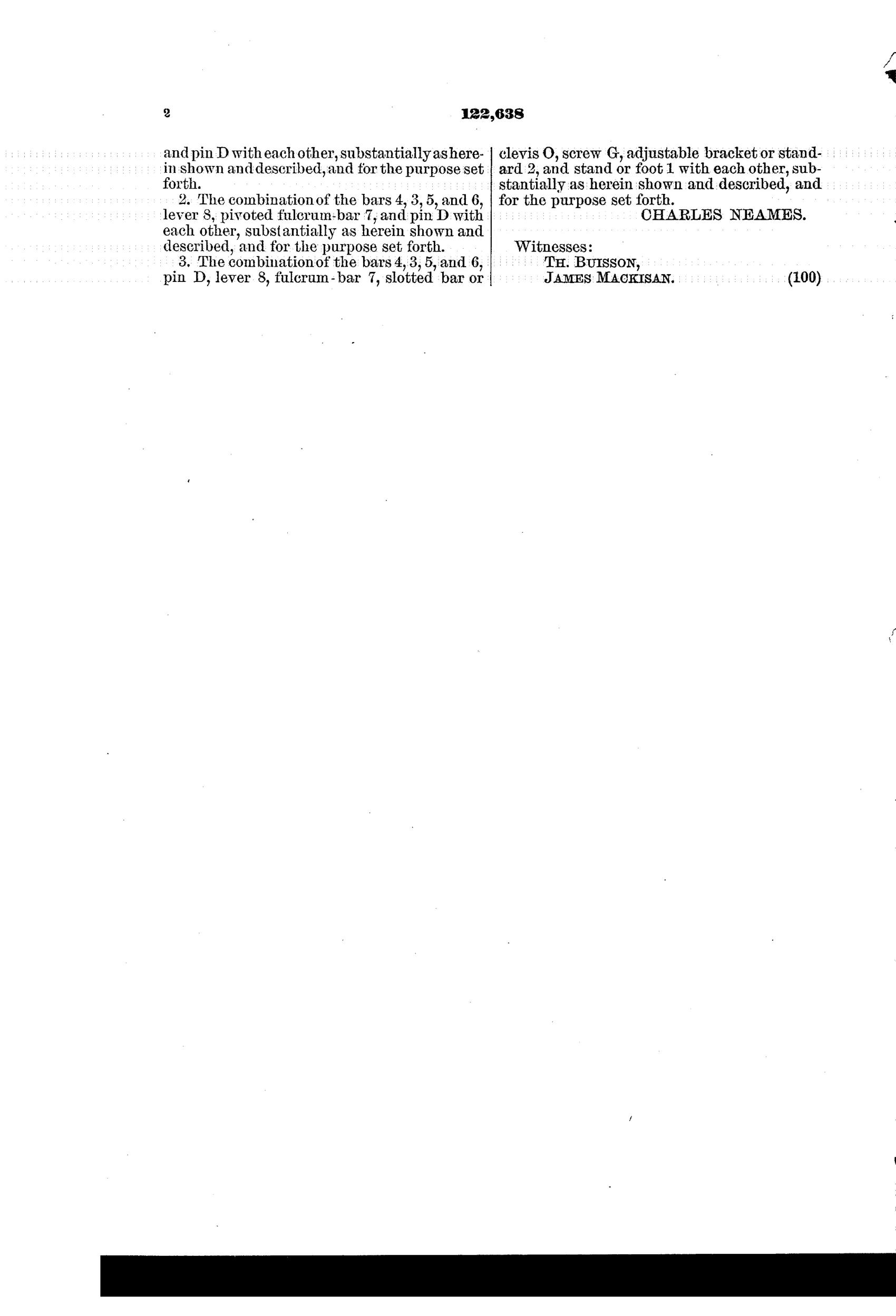
“The combination of the bars 4, 3, 5, and 6, pin D, lever 8, fulcrum-bar 7, slotted bar or clevis O, screw G, adjustable bracket or standard 2, and stand or foot 1 with each other, substantially as herein shown and described, and for the purpose set forth.”
In plain English: A wrench/vise assembly made of linked bars, a pin, lever, fulcrum bar, slotted clevis with adjusting screw, and an adjustable bracket mounted on a bench stand, all working together as described.
⚙ In the inventor’s words
“By shifting the bolt C and the pin D the tool becomes a good gas-pipe wrench, and the harder you pull upon it the firmer it will grasp the pipe, bearing upon the four sides of the pipe equally, the vibrating fulcrum 7 always throwing the toothed bar 6 forward against the pipe to be grasped.”— Charles Neames, from the specification
Fate unknown
No manufactured example or catalog listing is documented in DATAMP or the collecting literature; a surviving marked specimen would settle it.
⚙ Commentary
Most pipe wrenches of this era bite a pipe at two points and trust friction for the rest. Neames wanted the pipe surrounded. His linked bars carry diamond-shaped toothed plates — you can see them in Figs. 1 through 3, those serrated squares set on the corner — arranged so that pulling the handle drives a vibrating fulcrum bar forward, pressing the toothed bar against the pipe and, as the claim puts it, 'bearing upon the four sides of the pipe equally.' It is the self-energizing grip that every good pipe wrench needs, but executed as a four-jaw cage rather than a two-jaw pinch.
Then he kept going. Pull one pin and detach the lever and the frame becomes a stationary pipe vise on its bench stand; shift a bolt and it is a heavy square wrench for large nuts. The stand itself tilts on curved slots. Fig. 5 shows the mounting hardware getting nearly as much drafting attention as the wrench — a hint that Neames imagined this living permanently on a fitter's bench, not riding in a toolbag.
That is also its problem. The single claim strings together eleven numbered parts, and every reconfiguration means pulling pins and bolts. The Stillson wrench, patented just three years earlier, solved the self-tightening problem with a fraction of the parts and could be carried up a ladder. This is a clever dead end: the right instinct about grip, buried under too much apparatus.
Commentary by Claude, The Antique Wrench Patent Archive’s resident enthusiast