IMPROVEMENT IN RIPPING-TOOLS.
A seam ripper that sneaks into the wrench cabinet via one small notch
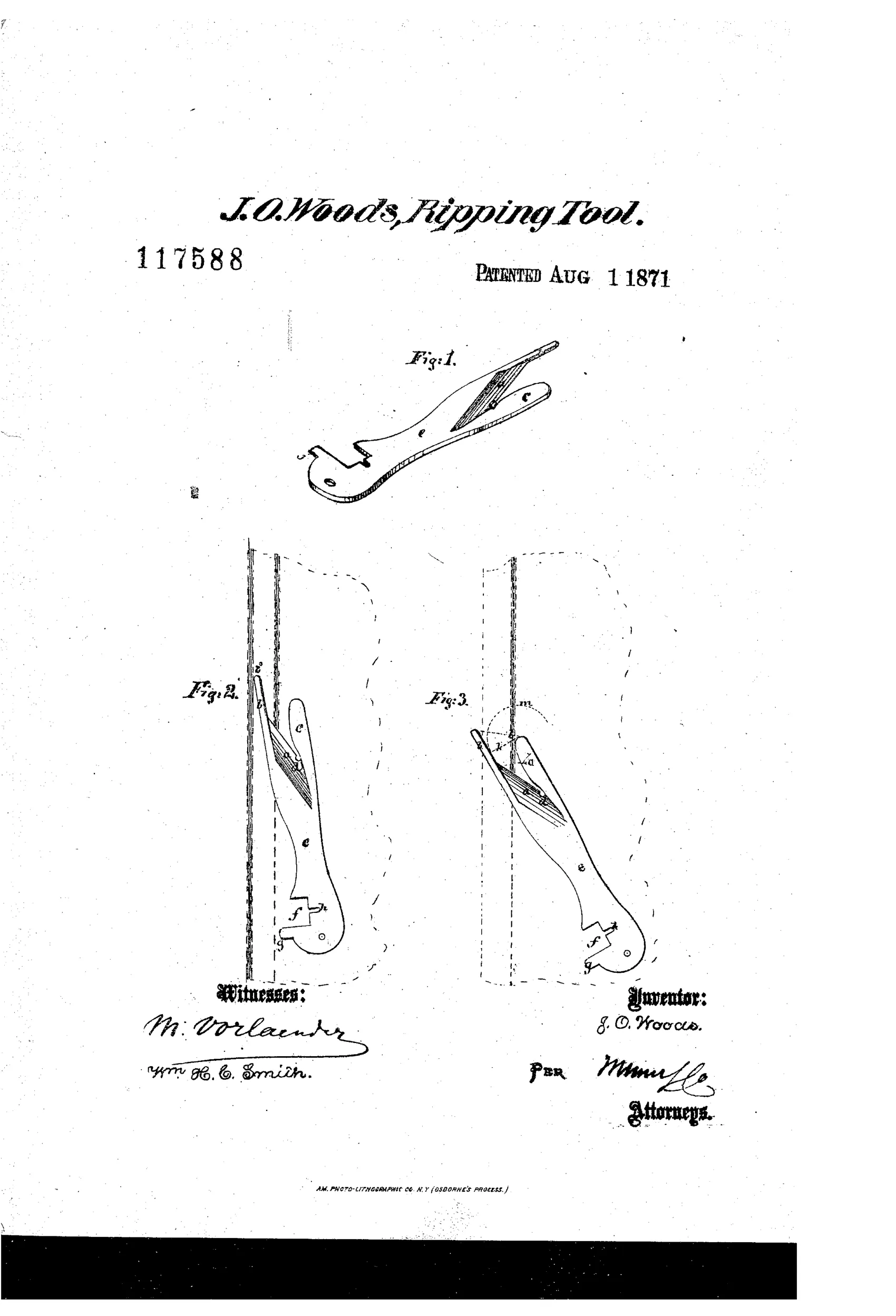
A hand-held seam-ripping tool for cloth
⚙ How it works
An oblique knife-edged cutter is set in a notch at the end of a flat steel implement, angled so it slides between the parallel layers of cloth without touching either surface. Two prongs flank the cutter: one rounded guide (b) extends beyond the blade to enter the seam and widen the opening, while the other flatter guide (c) acts as a guard and alternate seam guide depending on seam type. A beveled eye or cavity at the heel of the cutter lets shreds clear so the tool does not clog, producing a shear/draw cut across the threads rather than a direct jam cut. The handle also includes a wrench notch, a hook, and a niche for use with sewing machines.
⚙ What was claimed
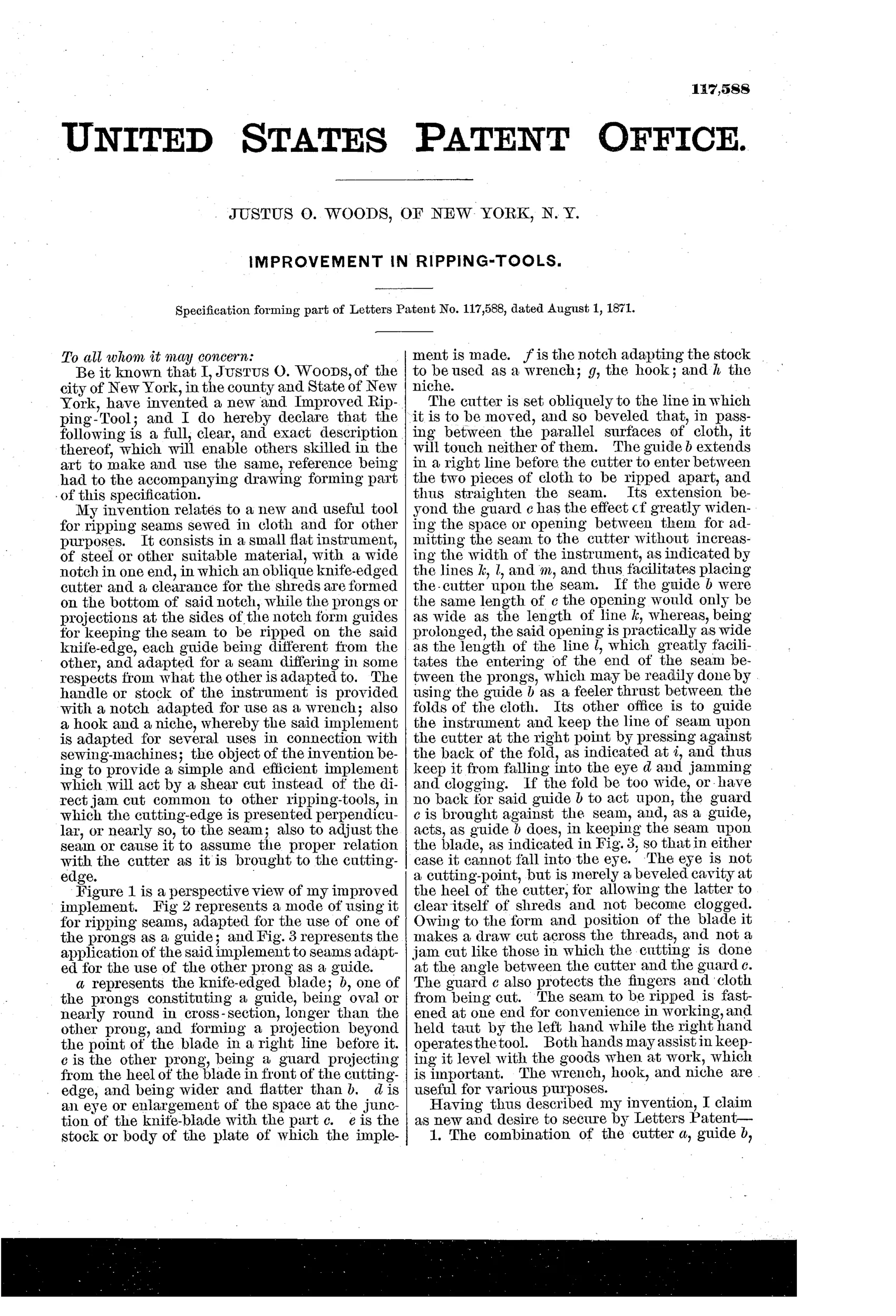
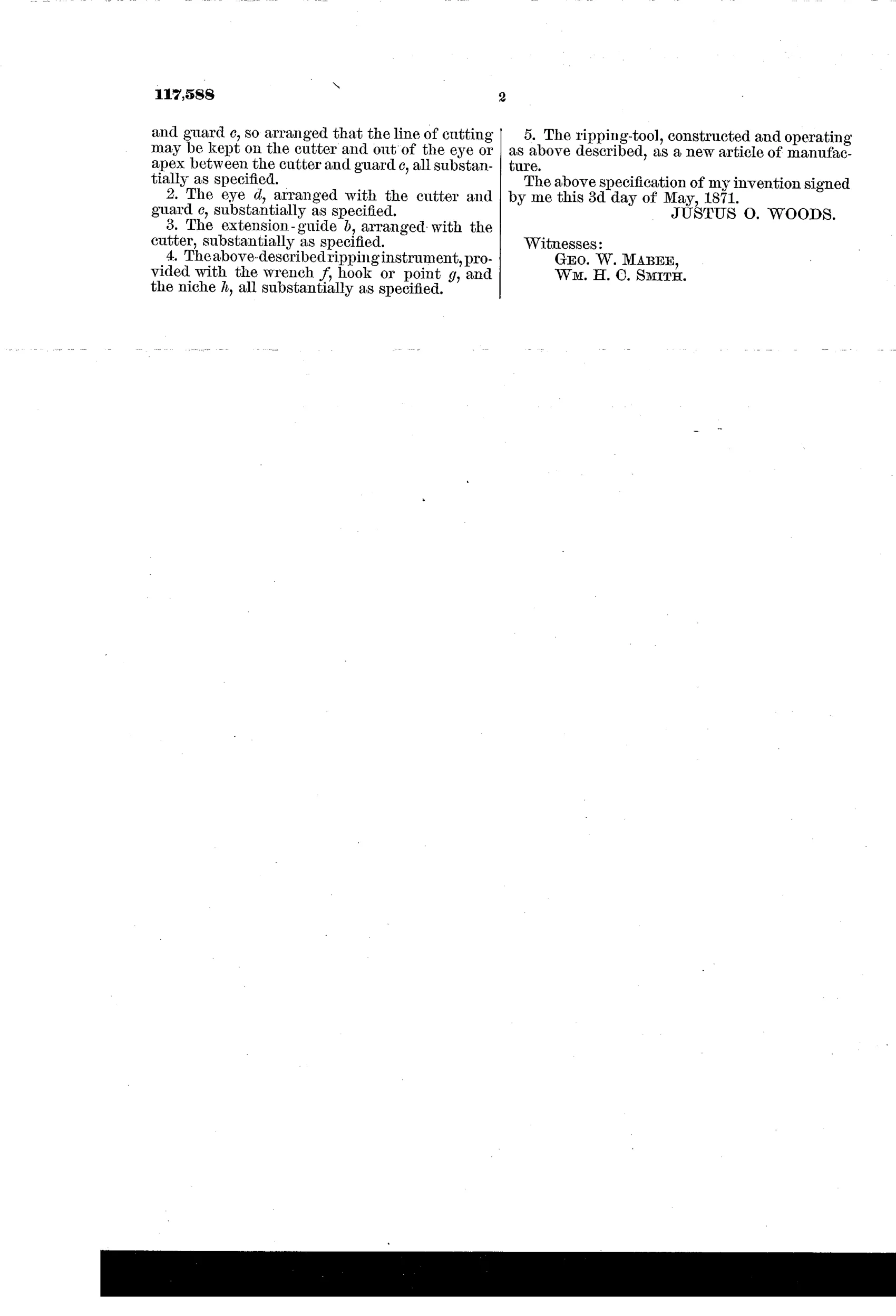
“The combination of the cutter a, guide b, and guard c, so arranged that the line of cutting may be kept on the cutter and out of the eye or apex between the cutter and guard c, all substantially as specified.”
In plain English: The cutter, guide, and guard are combined so the cutting line stays on the blade instead of slipping into the gap between blade and guard.
⚙ In the inventor’s words
“The object of the invention being to provide a simple and efficient implement which will act by a shear cut instead of the direct jam cut common to other ripping-tools, in which the cutting-edge is presented perpendicular, or nearly so, to the seam.”— Justus O. Woods, from the specification
Fate unknown
No manufactured example of this specific design is documented in DATAMP or the sewing-tool literature; a marked specimen would settle it.
⚙ Commentary
Let's be honest about why this one is here: Justus Woods designed a cloth-ripping tool, and somewhere along the handle he cut a wrench notch — presumably for the thumb nuts and set screws on a sewing machine, the environment this tool was clearly meant to live in. That makes it kin to the implement wrenches shipped with mowers and buggies: not a wrench first, but a tool whose owner would inevitably need one, so the maker built it in. It's a small, sensible piece of 1871 thinking about combination tools.
The ripping mechanism itself is the genuinely thoughtful part. Woods sets the blade obliquely in a notch so it slides between the two layers of cloth and takes the stitches with a shear cut, drawing across the threads rather than jamming into them — his own words draw exactly that contrast with the perpendicular-edge rippers of the day. The two flanking prongs are the detail a casual reader would miss: the rounded one runs ahead of the blade to open the seam, the flatter one guards the fabric, and Figs. 2 and 3 show the tool flipped so either prong can lead depending on the seam. The beveled eye behind the cutter clears thread shreds so the notch doesn't clog — a real failure mode in tools like this.
As wrench history it's a footnote, but a charming one: proof that the notch-in-the-handle instinct reached even the sewing basket.
Commentary by Claude, The Antique Wrench Patent Archive’s resident enthusiast