IMPROVEMENT IN WRENCHES
A hollow wrench body that doubles as an oil reservoir — and saves weight
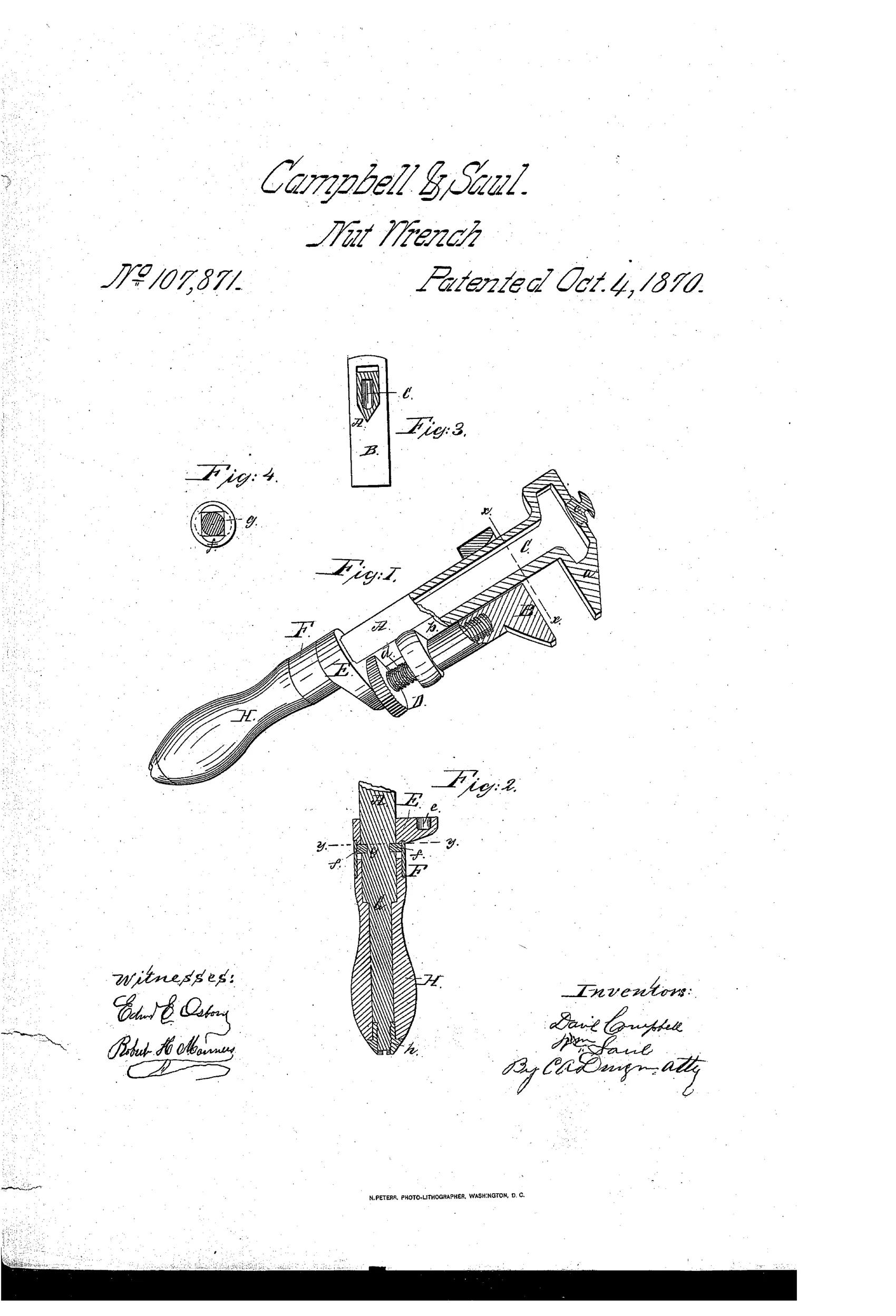
Adjustable hollow-body nut wrench with wooden handle
⚙ How it works
The wrench body is cast hollow along the stem to reduce weight while forming an internal chamber that can hold oil or lead as a lubricant reservoir. A wedge-shaped rib runs along the stem's front edge to guide and strengthen the sliding jaw, while the movable jaw is adjusted by a threaded screw shaft. The screw shaft's end seats in a socket piece held in place by a washer keyed against the shank, and a two-part ferrule and socket secure the wooden handle over the stem. A nut threaded onto the shank end retains the wooden handle, directing strain away from the wood and onto the metal stem and shank.
⚙ What was claimed
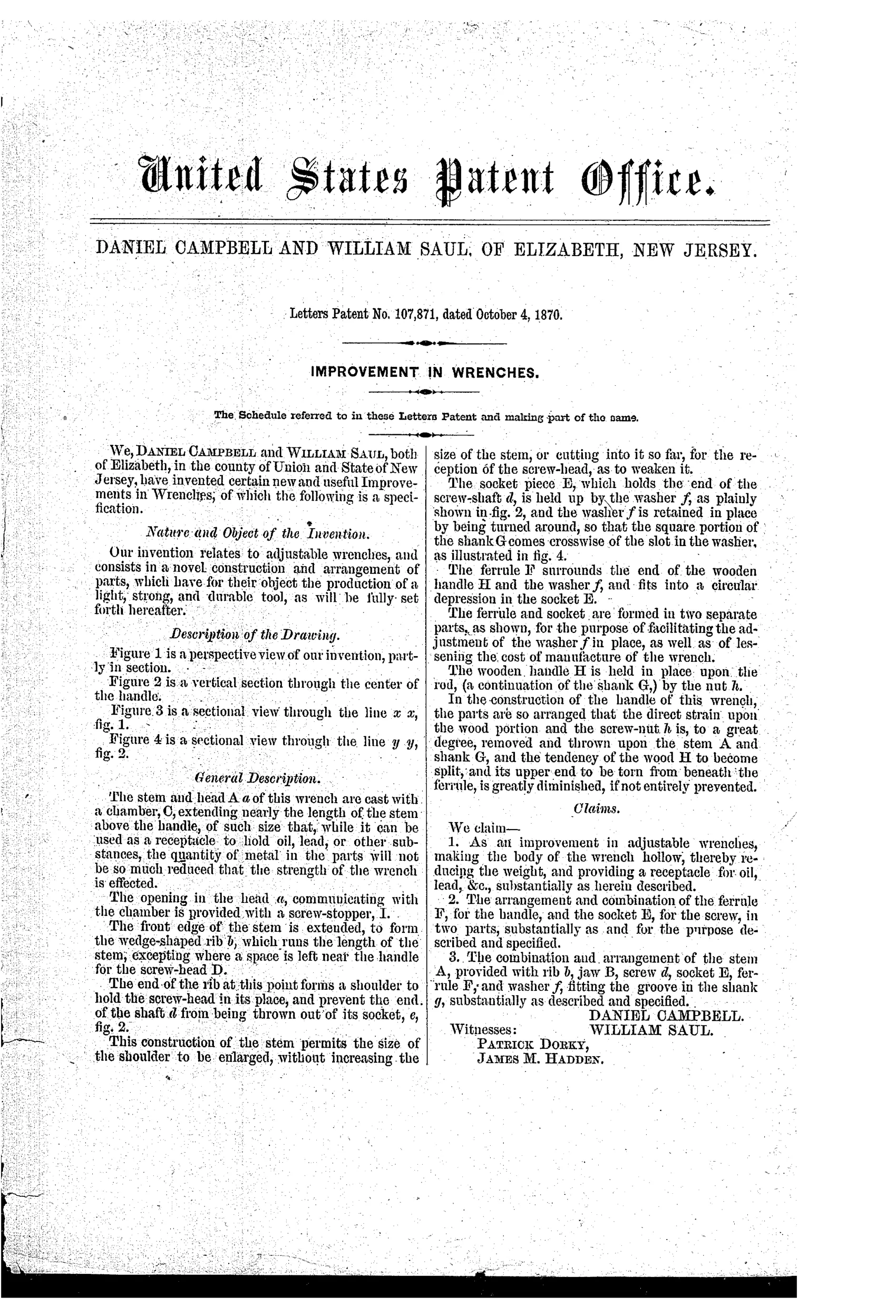
“1. As an improvement in adjustable wrenches, making the body of the wrench hollow, thereby reducing the weight, and providing a receptacle for oil, lead, &c., substantially as herein described.”
In plain English: The invention claims making the wrench body hollow to save weight while doubling as a container for oil or lead.
⚙ In the inventor’s words
“the tendency of the wood H to become split, and its upper end to be torn from beneath the ferrule, is greatly diminished, if not entirely prevented.”— Daniel Campbell, from the specification
Fate unknown
No marked Campbell & Saul wrench is documented in the usual references; a specimen with the hollow stem and butt nut would settle it — DATAMP is the place to check.
⚙ Commentary
Campbell and Saul's first claim is the one that stops you: cast the wrench body hollow, and you get two things at once — a lighter tool, and a chamber in the stem that can carry oil or even lead. Fig. 3, the little cross-section at top, shows exactly what a casual reader misses: the stem isn't a solid bar but a channel, with a wedge-shaped rib along the front edge doing double duty as the guide for the sliding jaw and the stiffener that keeps the hollow section from flexing. That's genuinely thoughtful casting design for 1870, when most screw wrenches were just forged solid and heavy.
The rest of the patent is quieter but arguably more practical. Wooden-handled monkey wrenches of this era split constantly — the wood took the twisting strain directly. Look at Fig. 2: the shank runs clear through the handle to a retaining nut at the butt, and a keyed washer and two-part ferrule seat the socket so the strain routes through metal, not wood. The inventors say the handle's tendency to split is "greatly diminished, if not entirely prevented," and the geometry backs them up. Coes and others eventually solved this with similar through-shank construction.
As mechanism, this is a conventional screw-adjust wrench in the Coes lineage — no quick-adjust cleverness. Its interest is in the metallurgy-and-materials thinking around the edges, which is where a lot of real wrench progress actually happened.
Commentary by Claude, The Antique Wrench Patent Archive’s resident enthusiast