IMPROVEMENT IN MULTIPLE TOOL
A hammer that unscrews from its handle to become a T-lever socket wrench
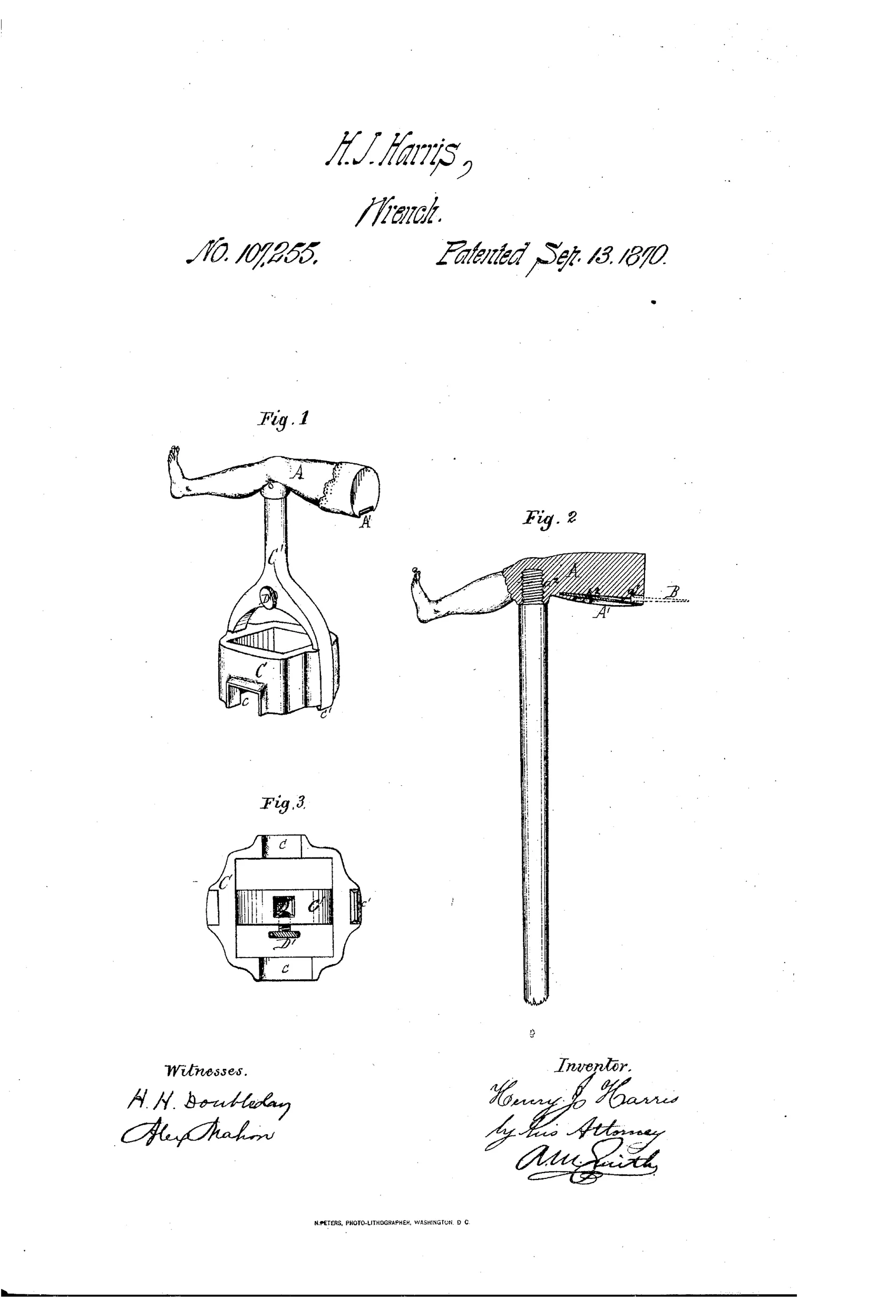
Combination hammer and socket-wrench multiple tool
⚙ How it works
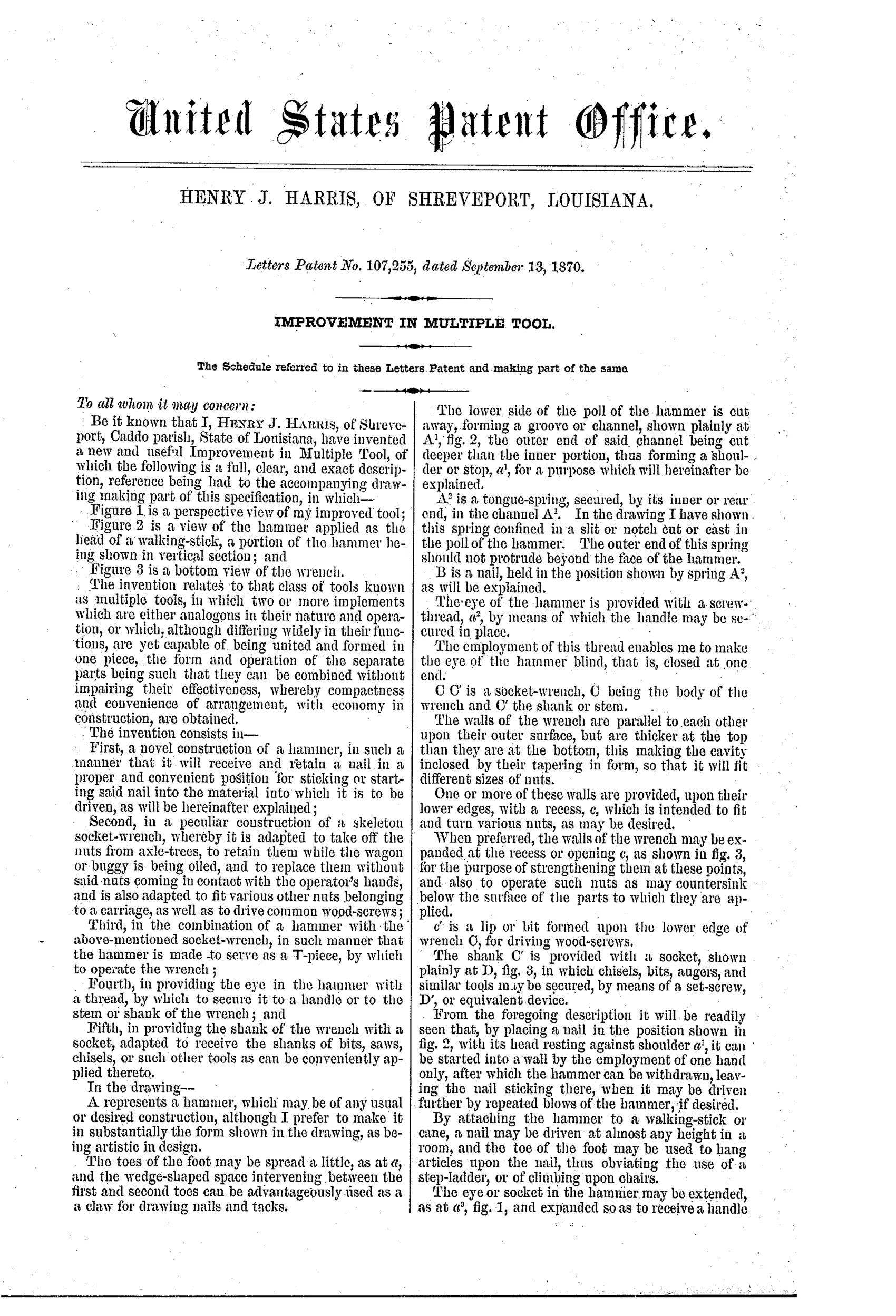
A hammer head is fitted with a screw-threaded eye so it can be secured to a handle or directly onto the shank of a socket-wrench, letting the hammer serve as a T-piece lever to turn the wrench. The hammer's poll has a channel with a shouldered stop holding a tongue-spring that grips a nail so it can be started with one hand and then withdrawn, leaving the nail set for driving. The socket-wrench body and shank have tapering parallel walls forming a cavity that fits various nut sizes, with recesses in the walls to fit and turn different nuts, and a lip on the wrench for driving wood-screws. The wrench shank also includes an internal socket secured by a thumb-screw so that chisels, bits, augers, or saws can be interchangeably mounted.
⚙ What was claimed
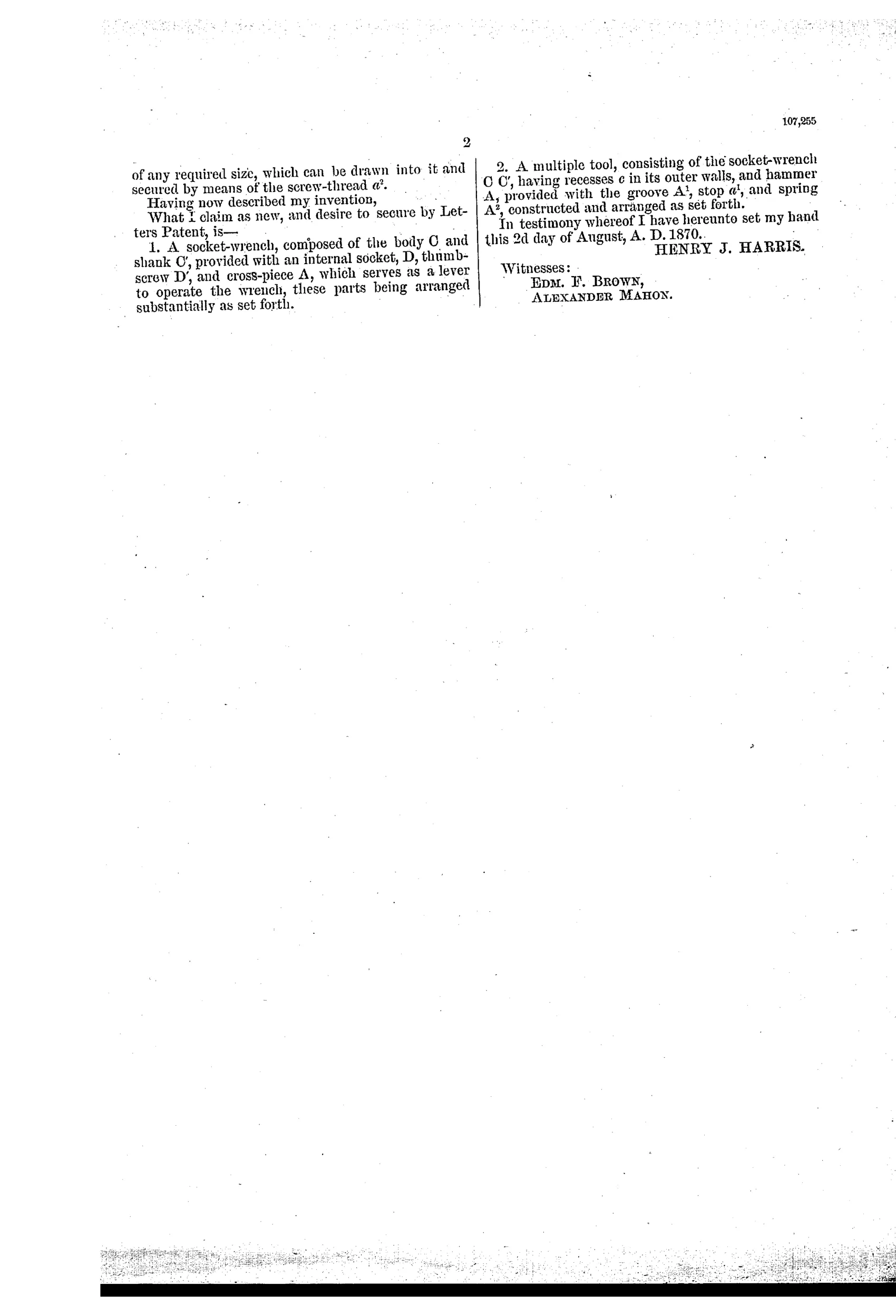
“2. A multiple tool, consisting of the socket-wrench C C', having recesses c in its outer walls, and hammer A, provided with the groove A1, stop a1, and spring A2, constructed and arranged as set forth.”
In plain English: A combined tool made of a socket-wrench with notched outer walls and a hammer having a grooved channel, stop, and spring to hold a nail in place.
⚙ In the inventor’s words
“By attaching the hammer to a walking-stick or cane, a nail may be driven at almost any height in a room, and the toe of the foot may be used to hang articles upon the nail, thus obviating the use of a step-ladder, or of climbing upon chairs.”— Henry J. Harris, from the specification
Fate unknown
No manufactured example or catalog listing is documented; a marked specimen with the threaded-eye hammer would settle it.
⚙ Commentary
Henry J. Harris of Shreveport filed this less than a year after Louisiana's Reconstruction economy would have made a do-everything tool attractive, and he crammed everything he could into it. The core idea is genuinely tidy: the hammer head has a threaded eye, so it screws onto either an ordinary handle or the shank of a socket wrench, where its mass and length turn it into a T-handle for leverage. That part would work — it is the same geometry as every tap wrench and bed-bolt key ever made.
The socket itself, shown in Fig. 3, is the interesting bit for wrench collectors: a stepped square cavity with recesses cut into the tapering walls so one socket engages several nut sizes, plus a lip for driving wood screws and a thumb-screw socket in the shank to hold chisels, bits, or a saw blade. This is the standard multiple-tool gamble — every added function compromises the ones next to it. A stepped square socket that fits many nuts fits none of them well.
Then there is the nail-holding spring in the poll, and the patent's most memorable claim: screw the hammer onto a cane and drive nails near the ceiling, no step-ladder required, then hang your hat using the toe of your foot. It is charming, sincere, and exactly the kind of feature that never survives contact with a manufacturer. DATAMP documents the patent; the tool sits firmly in the crowd chasing the farmer's one-tool toolbox.
Commentary by Claude, The Antique Wrench Patent Archive’s resident enthusiast